

 Quick read
Prime Minister Narendra Modi has identified the green economy and blue economy as the sixth of the seven streams of national strength or Sapt Dhara, calling for India to develop global-scale capabilities in green hydrogen, renewable energy, energy storage, green mobility and green manufacturing.
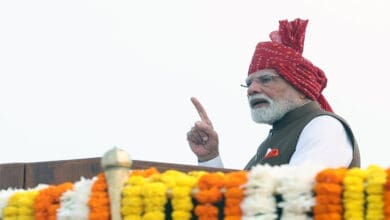
In his Independence Day address from the Red Fort, Modi said these sectors would create significant opportunities for green jobs while enabling India to contribute solutions to the global challenge of climate change.
The Prime Minister said India must achieve green hydrogen, renewable energy, energy storage, green mobility and green manufacturing at a global scale.
He positioned the green economy within the broader Sapt Dhara framework, which seeks to identify the key areas that can drive India’s growth over the coming years.
The green economy is closely connected to the country’s energy-security ambitions. Earlier in his speech, Modi noted that the future economy would require very large quantities of electricity, particularly as India expands semiconductor manufacturing, artificial intelligence and data centres.
The government’s approach therefore combines increasing energy availability with a parallel expansion of alternative and cleaner energy technologies.
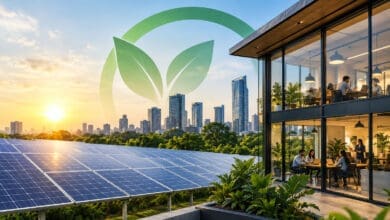
Renewable energy forms an important part of this strategy. Modi said India’s solar capacity had risen from 2 GW before 2014 to 160 GW today.
Green hydrogen has also emerged as an important component of the Prime Minister’s vision, alongside energy storage and green mobility.
The focus is not limited to energy generation. Green manufacturing has also been identified as a priority, reflecting the government’s ambition to build domestic industrial capabilities around the emerging clean-energy economy.
Alongside the green economy, Modi highlighted the potential of India’s blue economy, citing the country’s long coastline and opportunities in fisheries, coastal tourism and ocean technology.
The Prime Minister’s Sapt Dhara framework therefore seeks to connect energy transition with industrial development, employment generation and new economic opportunities.
For India, the objective is increasingly not just to adopt clean technologies developed elsewhere, but to develop manufacturing, technology and innovation capabilities that can operate at global scale.