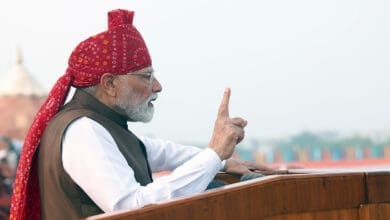
Prime Minister Narendra Modi has placed energy security at the centre of India’s long-term development strategy, highlighting the growing electricity requirements of emerging technologies while calling for greater domestic capabilities across nuclear energy, oil and gas exploration, piped gas and renewable energy.
Addressing the nation from the ramparts of the Red Fort on the occasion of India’s 80th Independence Day, Modi said energy security had become an essential requirement as the country moved towards a technology-driven economy. The rising importance of semiconductors, artificial intelligence and data centres, he said, would significantly increase the demand for electricity.
“It is now difficult to run the new world without energy,” Modi said, stressing that energy security would be critical to India’s ambition of becoming a developed nation by 2047.
The Prime Minister identified nuclear energy as one of the major means of ensuring energy security, while also highlighting efforts to strengthen domestic oil and gas exploration and accelerate alternative energy deployment.
India is targeting 100 GW of nuclear power by 2047 and plans to begin five new nuclear reactors within the current decade. Modi also highlighted the country’s achievement in mastering fast breeder nuclear technology, describing it as a major step towards self-reliance in nuclear fuel.
At the same time, the government is seeking to expand domestic exploration for hydrocarbons. Modi said India had previously designated 99% of its coastal area as a “No-Go Area” for exploration but had now opened it as a “Go-Ahead Area”. He said the government was working to accelerate exploration and discovery of new reserves and had recently decided to allocate ₹85,000 crore for the effort under the Samudra Manthan initiative.
The Prime Minister also highlighted the expansion of piped gas infrastructure. According to him, the number of cities with piped gas infrastructure has increased from 70 before 2014 to 700 today, while the number of households being connected to piped gas has risen from around 20–22 lakh to nearly 1.75 crore.
Renewable energy is another major component of the strategy. Modi said India’s solar energy capacity had risen from just 2 GW before 2014 to 160 GW today, reflecting the rapid expansion of clean-energy capacity.
The Prime Minister’s address therefore presented energy security as a broad national strategy rather than a single-technology objective, combining domestic resource exploration, nuclear power, natural gas, solar energy and other alternative energy sources.
As India moves towards its 2047 development target, the emphasis on domestic energy capabilities is also being linked to the government’s wider objective of reducing dependence on external resources and strengthening the country’s ability to withstand global disruptions.