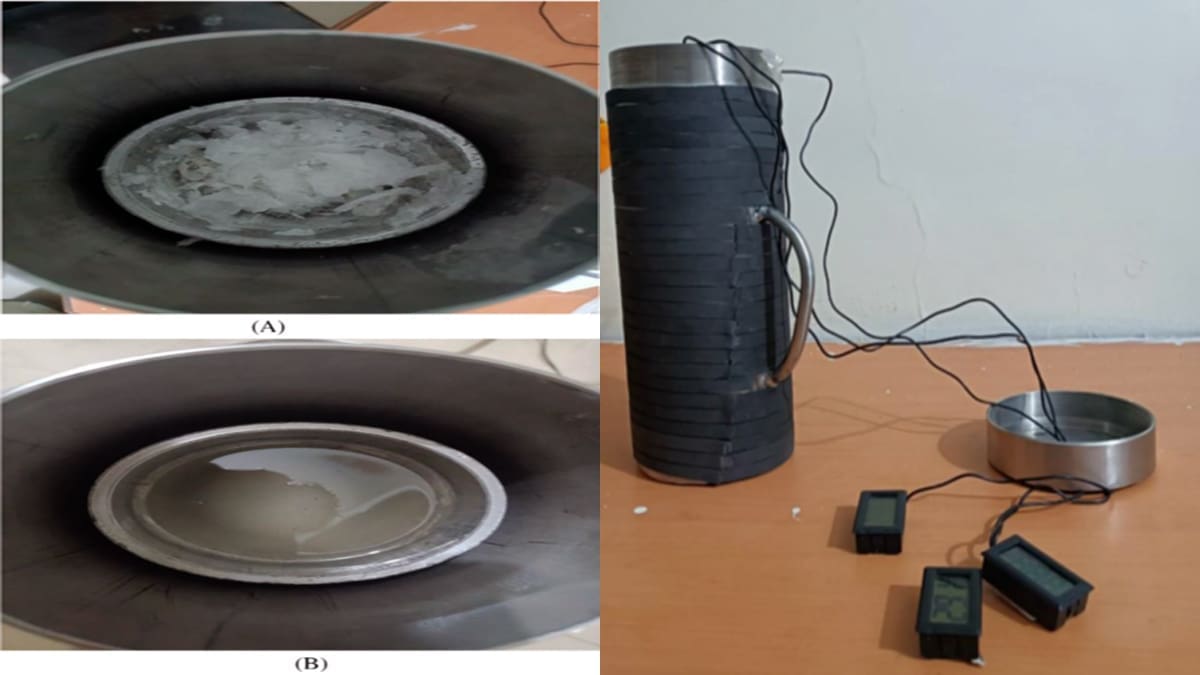
Researchers at MIT World Peace University (MIT-WPU) have developed an innovative solar thermal energy storage system that can provide hot water long after sunset by storing solar heat in a phase change material (PCM)-based thermal battery. The breakthrough addresses one of the key limitations of solar energy, its intermittent availability and could significantly reduce reliance on electricity and fossil fuels for water heating across residential, commercial and industrial sectors.
Developed by Dr. Anita Nene and Dr. Rohit Ghadge from the Department of Mechanical Engineering at MIT-WPU, the technology integrates a Scheffler solar concentrator with a specially designed thermal storage capsule containing paraffin wax, a phase change material capable of absorbing, storing and releasing large amounts of thermal energy. Unlike conventional energy storage systems that depend on electrochemical batteries, the new solution stores energy directly as heat, making it a simpler and more sustainable alternative for thermal applications.
The system features a detachable PCM tube, a water-jacket heat transfer mechanism, and polyurethane insulation to maximize heat retention and improve energy efficiency. Laboratory-scale testing showed that the thermal battery could be fully charged in approximately 18 minutes and completely discharged in around 32 minutes, while continuing to supply hot water even after solar input was removed.
The prototype can store approximately 1.5–2 kWh of thermal energy and maintain water temperatures between 50°C and 60°C for 12 to 14 hours after charging. The researchers reported a thermal efficiency of nearly 55 percent, demonstrating the technology’s potential as an efficient alternative to conventional electric water heaters. By replacing traditional heating systems, the technology could reduce carbon emissions by an estimated 2.5 to 3 tonnes annually, contributing to India’s clean energy and sustainability goals.
“One of the major limitations of solar energy is that it is available only when the sun is shining. Our objective was to develop a simple, cost-effective and sustainable thermal storage solution that can store solar energy and make it available whenever required,” said Dr Anita Nene.
Highlighting the broader significance of the innovation, Dr Rohit Ghadge said, “Thermal energy accounts for a substantial share of overall energy consumption. Technologies that enable efficient storage of solar heat can help reduce dependence on conventional fuels, improve energy security and support the transition towards cleaner and more sustainable energy systems.”
To validate the system’s performance, the research team conducted Computational Fluid Dynamics (CFD) simulations alongside laboratory-scale experiments. The technology has now reached Technology Readiness Level (TRL) 7, indicating that it has been demonstrated in an operational environment and is ready for pilot-scale deployment.
The researchers believe the system has wide-ranging applications, including residential water heating, hotels, hospitals, hostels, educational institutions, industrial process heating, community kitchens, agricultural operations and off-grid rural communities where reliable access to hot water remains a challenge.
MIT-WPU has filed an Indian patent for the innovation under the title “Solar Energy Storage Capsule Using Phase Change Material”. The research team is now seeking industry collaborations to conduct pilot projects and accelerate commercialization.
“The next phase of development will focus on field trials, performance optimization and scale-up for commercial deployment,” Dr Anita Nene added.
The development represents another step forward in advancing renewable energy technologies capable of improving energy efficiency while supporting India’s transition toward a low-carbon and sustainable future.