
China Petroleum & Chemical Corporation (Sinopec) has taken a major step forward in its hydrogen mobility strategy with the successful completion of a landmark logistics journey along the Yangtze River. The achievement was announced at the High-quality Development Promotion Conference for Modern Industrial Chain of Hydrogen Energy Application, hosted by Sinopec in Nanjing.
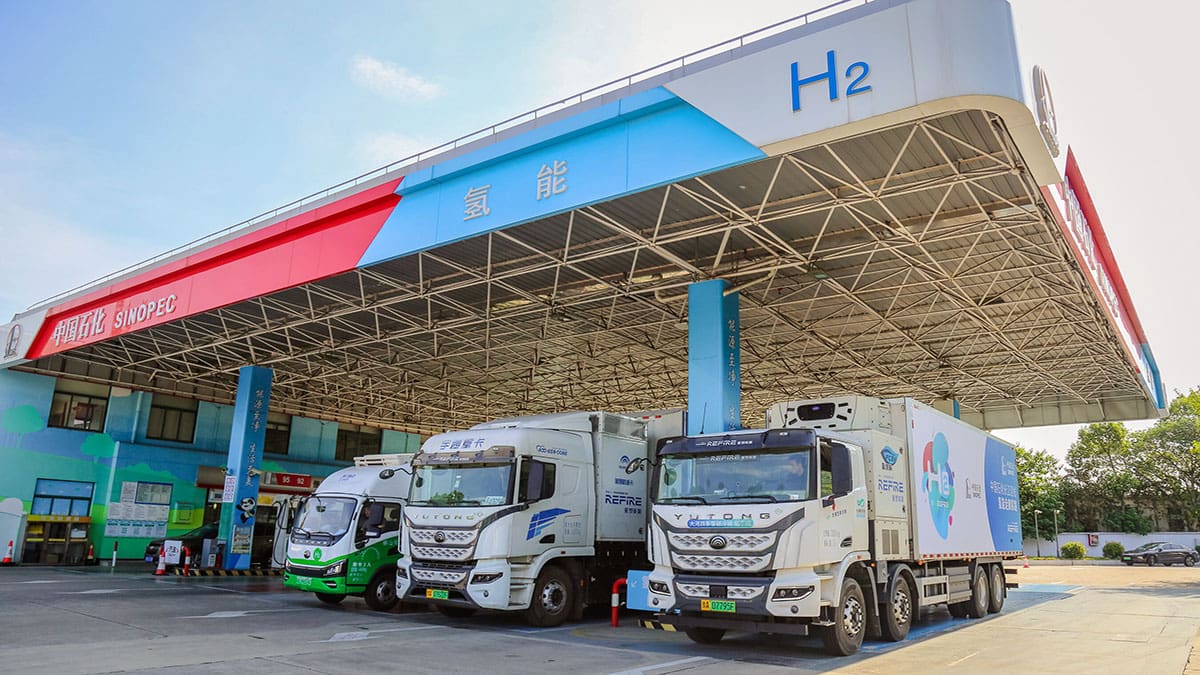
Three hydrogen-powered logistics vehicles of different models completed a 1,500 kilometre test run from the Qingwei Integrated Energy Station in Shanghai’s Qingpu District to the Zhijiang Service Area South Station in Yichang, Hubei. Along the route spanning Shanghai, Jiangsu, Anhui, Jiangxi and Hubei, the vehicles refuelled at six Sinopec hydrogen stations, underscoring the company’s expanding infrastructure network.
This latest demonstration builds on Sinopec’s earlier cross-regional hydrogen logistics tests along the Beijing-Shanghai and Western Land-Sea corridors. To date, Sinopec has established five key intercity hydrogen corridors: Beijing-Tianjin, Chengdu-Chongqing, Shanghai-Jiaxing-Ningbo, Jinan-Qingdao and Wuhan-Yichang.
The Yangtze River hydrogen corridor serves as a new connective axis, linking the Shanghai-Jiaxing-Ningbo and Wuhan-Yichang routes. Sinopec plans to extend this network westward to the Chengdu-Chongqing corridor, creating a comprehensive hydrogen transportation belt along the Yangtze.
“The successful completion of this journey demonstrates that hydrogen powered vehicles can travel long distances with confidence,” Sinopec stated, emphasising the role of its national refuelling network in enabling wider adoption of hydrogen mobility.
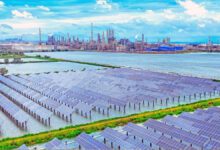
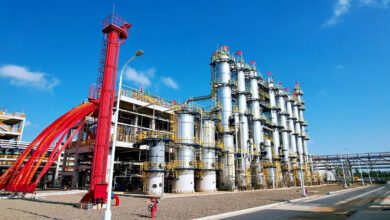
Sinopec has positioned itself as China’s leading hydrogen enterprise, with an annual hydrogen production capacity of 4.45 million tons. Its projects include the country’s first industrial-scale seawater-to-hydrogen facility at Qingdao Refinery and a 100 kW solid oxide electrolysis cell (SOEC) pilot at Zhongyuan Oilfield.
Renewable hydrogen projects are also central to its strategy. The 30,000-ton-per-year Ordos wind-solar hydrogen project in Inner Mongolia supplies hydrogen for coal chemical decarbonisation, while the 1,00,000 ton-per-year Ulanqab project will feed China’s first large-scale, cross-provincial, long-distance pure hydrogen pipeline.
In mobility, Sinopec operates 146 hydrogen stations and 11 supply centres nationwide, covering all “3+2” hydrogen fuel cell pilot city clusters. With this, it has become the world’s largest operator of hydrogen refuelling stations.
Through its “Hydrogen Highway” initiative, Sinopec aims to partner with the State-owned Assets Supervision and Administration Commission (SASAC) to accelerate the buildout of hydrogen refuelling networks along major highways. The initiative is designed to foster large-scale hydrogen mobility, strengthen supply security, and develop sustainable business models that support China’s broader energy transition.