
India’s largest recycling-focused trade platforms, Plastics Recycling Show (PRS) India and the inaugural Bharat Recycling Show (BRS) 2025, opened in Mumbai today, marking a major stride in the country’s journey toward a circular and sustainable industrial future. Organised by Media Fusion and Crain Communications, the co-located shows brought together 150 exhibitors, 8,000 visitors, and delegates from over 10 countries at the Bombay Exhibition Centre. The event showcased a comprehensive range of recycling technologies, policy frameworks, innovations, and business opportunities shaping India’s evolving waste management landscape.
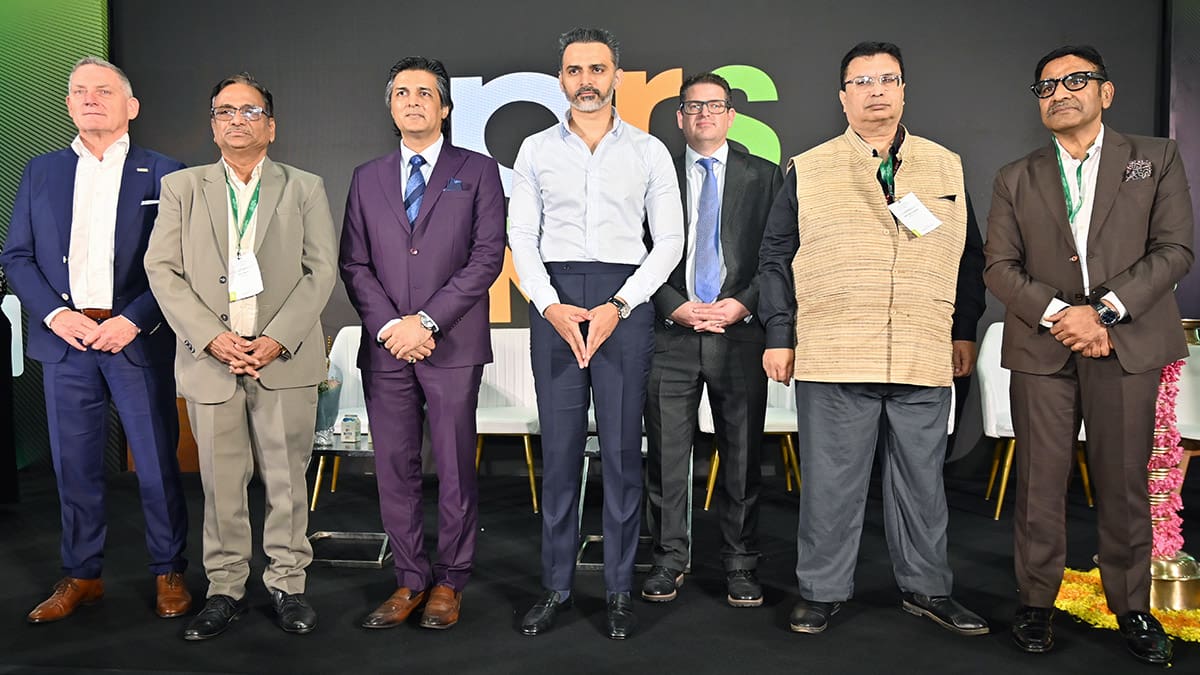
The inauguration featured prominent leaders from government bodies and industry associations, signalling a strong collaborative approach to strengthening India’s recycling ecosystem. Distinguished attendees included senior officials from the All India Institute of Local Self Government, Maharashtra Pollution Control Board, Material Recycling Association of India, Bombay Non-Ferrous Metals Association, Bombay Metal Exchange, and leading organisations from plastics, e-waste, PET recycling, and recycling technologies. Their presence underscored the growing urgency of aligning policy, technology, and investment to accelerate India’s transition to a sustainable material economy.
Speaking at the opening, MPCB Chairman Siddhesh Kadam noted that Maharashtra has long been a pioneer in environmental stewardship, becoming the first Indian state to ban single-use plastics. He highlighted the role of recycling as the foundation of a true circular economy, adding that climate change effects from erratic rainfall to rising temperatures demand immediate action. Kadam announced state-led incubation hubs aimed at supporting youth-led startups in recycling and resource management, urging citizens and businesses alike to view waste as a valuable resource.
Ajit Salvi, Director of RCUES at AIILSG Mumbai, emphasised that India’s ambition of achieving Viksit Bharat 2047 cannot be realised without recognising recycling as a central component of national development. He described the sector as a potential economic pillar that requires greater acknowledgment, investment, and strategic direction. Similarly, MRAI President Sanjay Mehta highlighted the urgent need for credible national data on plastic scrap generation, collection, landfill disposal, and recycling. MRAI aims to compile and publish verified data within the next 12 to 18 months to support stronger policymaking and sectoral organisation.
A key highlight of the event was the industry’s renewed focus on India’s e-waste challenge. BK Soni, CMD of Eco Recycling, stated that the biggest bottleneck for formal recycling is the shortage of raw materials. While only about 5 percent of India’s e-waste is currently recycled, the sector has seen approximately ₹2,500 crore in investment to date. He stressed that full-scale e-waste recycling would require nearly ₹50,000 crore, presenting a significant investment opportunity. Soni added that advanced global technologies already exist to recover high-value materials like gold, silver, palladium, lithium, and cobalt, but their success hinges on consistent material supply and effective policy implementation. He also highlighted citizen driven initiatives such as the #OneBillionCharger campaign, which aims to encourage individuals to recycle even the smallest electronic items to help close the material gap.
On the policy side, Sumit Kumar, Principal Commissioner of Customs & CGST, reiterated the government’s commitment to simplifying compliance and supporting businesses through reforms such as GST-2 and streamlined customs processes. He emphasised the importance of direct engagement with industry stakeholders to ensure clarity, transparency and timely redressal of issues. Industry leaders from Media Fusion and Crain Communications stressed the global momentum toward sustainable production and waste recovery, noting that India now hosts more than 2,447 recycling plants across categories, with strong growth anticipated as mechanical and chemical recycling technologies advance.
Across sectors plastics, paper, metals, e-waste the message was clear: India’s recycling potential remains significantly underutilised. While the plastics industry processes over 10 million tonnes of waste annually and the paper sector uses 45% recycled inputs, metals such as zinc still have recycling rates as low as 10%. This uneven landscape underscores the vast opportunity for scaling sustainable practices, improving material efficiency and adopting next-generation recycling solutions.
The shows have garnered support from numerous national and international industry associations, further establishing PRS India and BRS 2025 as vital meeting points for recyclers, innovators, policymakers, and investors. Exhibitors showcased cutting-edge technologies ranging from advanced baling and shredding systems to AI-driven sorting solutions, PET recycling innovations, and integrated hydrotech and mechanical recycling equipment tailored for Indian market conditions.