
In a remarkable stride toward a sustainable future, MIT World Peace University (MITWPU) has announced two groundbreaking innovations in the field of clean energy, ahead of World Earth Day. The university has developed a novel process to produce green hydrogen from sugarcane juice using microorganisms, alongside an advanced biodiesel production system utilising agro-waste-based heterogeneous catalysts.
These pioneering efforts reflect MITWPU’s strong commitment to supporting India’s green energy transition and contributing to the Government of India’s Green Hydrogen Mission.
MITWPU researchers have devised a unique bio-process to generate hydrogen from sugarcane juice, seawater, and wastewater—entirely at room temperature. The process not only produces green hydrogen but also converts carbon dioxide into acetic acid, resulting in a zero-discharge, sustainable energy solution.
“This is a significant leap in reducing hydrogen production costs and environmental impact,” said Dr Bharat Kale, Emeritus Professor and Director of Materials Science (COE). “We aim to bring hydrogen costs down to $1/kg while ensuring valuable byproducts and no waste generation.”
A patent for the technology has already been filed, and the project has been submitted to the Ministry of New and Renewable Energy (MNRE) for funding. MITWPU has also proposed the establishment of a Centre of Excellence on Green Hydrogen to MNRE.
Work is ongoing in hydrogen storage as well, focusing on Metallo-Organic Frameworks (MOFs) for hydrogen and CO₂ capture, further enhancing the university’s contribution to clean energy research.
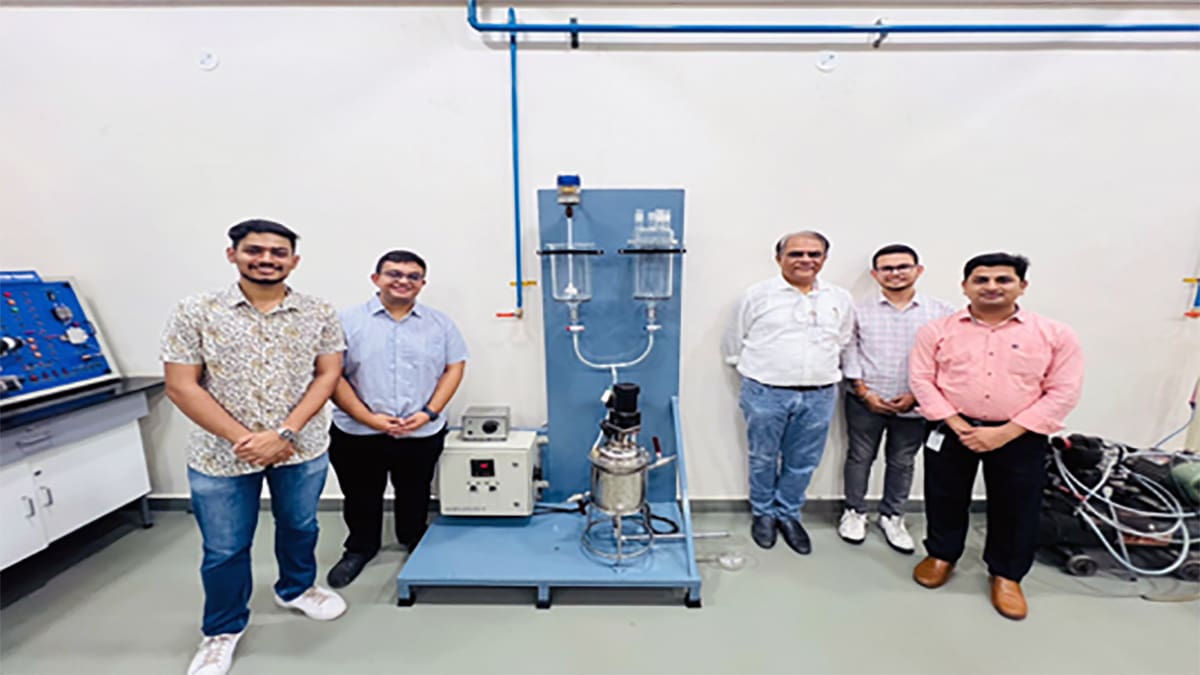
In parallel, MITWPU has developed an efficient batch reactor system for biodiesel production using an agro-waste-based heterogeneous catalyst. This innovation transforms agricultural residues into affordable, thermally stable catalysts that enhance biodiesel production efficiency while minimising environmental harm.
The catalyst’s porous structure increases surface area, enabling more effective conversion and thermal stability during production.
“Biodiesel made from this system is a cost-effective, eco-friendly alternative to fossil fuels,” said Dr Kale. “The patented catalyst and process design ensure sustainable scalability, particularly for regions like Punjab and Haryana, where biomass burning is a major concern.”
Commercial viability for both the hydrogen and biodiesel technologies is expected within six months to a year, provided industry partnerships and supportive government policies are in place. MITWPU is actively seeking collaborations to scale and commercialise these innovations.
These sustainable energy projects are being spearheaded by a dedicated team of scientists and faculty members including Dr Sagar Kanekar, Dr Bharat Kale, Dr Anand Kulkarni, Prof Niraj Topare, Dr Santosh Patil, Dr Dev Thapa, Dr Biswas, and Dr Ratnadip Joshi.