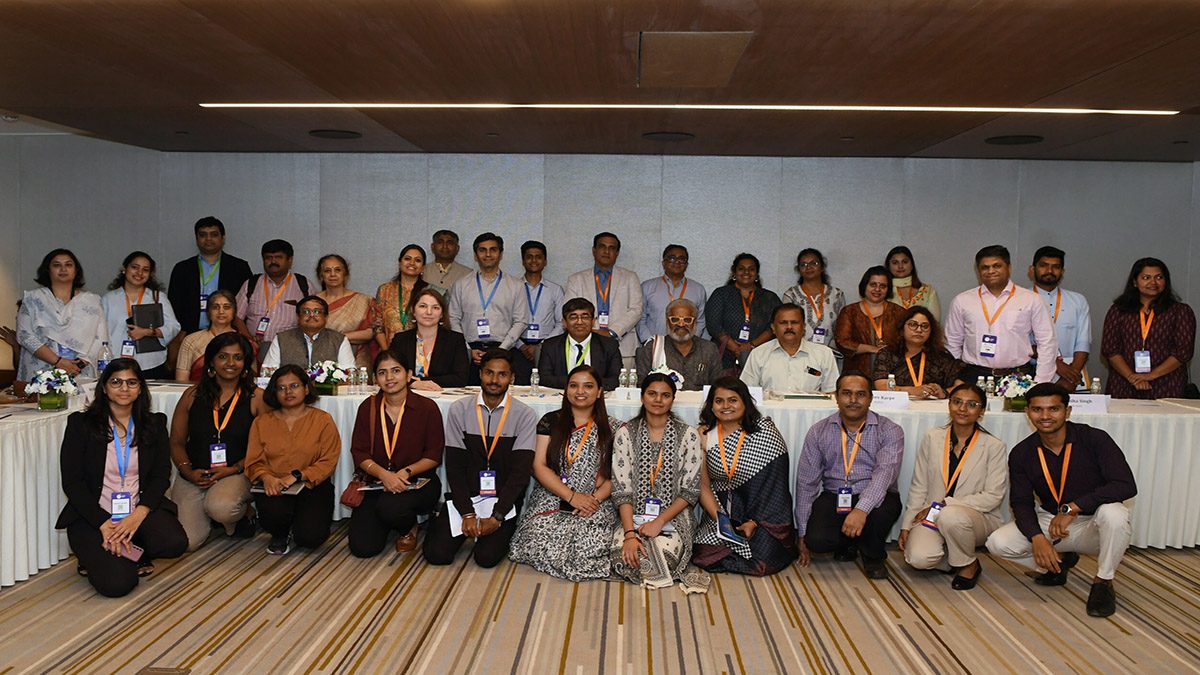

Maharashtra is exploring an ambitious roadmap to transform bamboo into a driver of ecological restoration and agro-economic growth, as policymakers, industry leaders and development practitioners convened at Mumbai Climate Week 2026.
The roundtable, titled “Bamboo Value Chains: Driving Agro-Economic Growth in Maharashtra,” was co-hosted by Transform Rural India (TRI), WRI India and Maharashtra Institution for Transformation (MITRA). Discussions focused on building solutions across the bamboo value chain from plantation and ecological restoration to industrial production, market linkages and cluster development.
Participants emphasized that while India has the world’s second-largest area under bamboo cultivation, its contribution to GDP remains marginal compared to China. The challenge, speakers noted, lies not just in plantation expansion but in ensuring survival rates, productivity and value addition.
“While innovation is taking place across the sector, it remains fragmented,” said Neeraja Kudrimoti, Associate Director (Climate Action) at TRI. She pointed to a widening gap between market demand and supply, particularly as new industrial applications including plywood, construction materials and fuel pellets grow faster than current production systems can support.
Bridging this gap, she said, requires shifting from plantation-led schemes to a market-linked production system, supported by the right incentives and implementation guidance.
Praveen Pardeshi, CEO of MITRA and a retired IAS officer, underscored that natural regeneration in forest and common lands can sometimes outperform plantation-based approaches. For industrial bamboo, he advocated targeted strategies based on suitability mapping.
“Regions such as North Maharashtra, parts of eastern Vidarbha and the Konkan show strong potential,” Pardeshi said, adding that scaling up bamboo’s contribution will require moving decisively toward higher-value industrial uses.
One of the key proposals emerging from the session was the creation of a Green Maharashtra Authority, alongside an Asian Development Bank-supported plan to link bamboo plantations directly with industrial demand. The framework would potentially use production-linked incentives to ensure that farmers and businesses both benefit from long-term sectoral growth.
Participants stressed the importance of high-quality planting material and responsible tissue culture practices to ensure productivity and sustainability across the value chain.
Dr Ruchika Singh, Executive Program Director for Food, Land and Water at WRI India, highlighted the broader opportunity bamboo presents in the context of landscape restoration.
“As Maharashtra builds a bamboo-based restoration economy, keeping communities at the centre will be critical,” she said. Restoration, she noted, can generate durable local livelihoods if supported by strong demand, resilient supply chains, enabling policies and risk-mitigation tools such as insurance.
The discussion also urged diversification of the bamboo sector beyond an ethanol-centric focus, steering investments toward higher-value applications across construction, materials and rural industries.
As a next step, TRI, WRI India and MITRA strengthened their tripartite Memorandum of Understanding to advance bamboo value chain development and landscape restoration, aligned with the state’s broader Green Maharashtra vision.
The deliberations signaled a coordinated push to transform bamboo from a traditional craft material into a strategic green-growth asset linking ecological restoration with industrial expansion and rural income generation across Maharashtra.