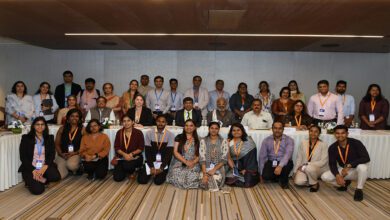

DAs part of the lead-up to Mumbai Climate Week 2026, Avid Learning convened a timely and wide-ranging discussion on the future of India’s food systems in an era of climate disruption. Titled Edible Futures: Tasting Tomorrow in a Warming World, the interdisciplinary session brought together experts from agriculture, governance, sustainability and media to examine how climate change is reshaping the way India grows, distributes and consumes food.
Hosted in collaboration with the National Gallery of Modern Art, Mumbai, the Tata Institute of Fundamental Research (TIFR) and Project Mumbai, the event was presented in partnership with the Government of Maharashtra’s Department of Environment and Climate Change and supported by the Brihanmumbai Municipal Corporation. The programme forms part of a series of spoke events across the city ahead of Mumbai Climate Week 2026, positioning food systems at the heart of the climate conversation.
The discussion centred on the mounting pressures facing Indian agriculture, including rising temperatures, erratic rainfall, water stress and deteriorating soil health. Panellists underscored how these environmental stressors are directly impacting food production and farmer livelihoods, while also posing serious risks to public health and national food security. The conversation highlighted the urgency of transforming food systems to be both climate-resilient and socially equitable.
Shishir Joshi, Co-Founder and CEO of Project Mumbai and Founder of Mumbai Climate Week, described the theme as central to this year’s climate agenda. He noted that in countries of the Global South, food security, farmer livelihoods and climate resilience are deeply interconnected. India, he said, has the potential to demonstrate how community-led, climate-smart food systems can serve as a model for the world. By creating platforms that encourage dialogue, collaboration and citizen engagement, he added, the transition toward sustainable food systems can be significantly accelerated.
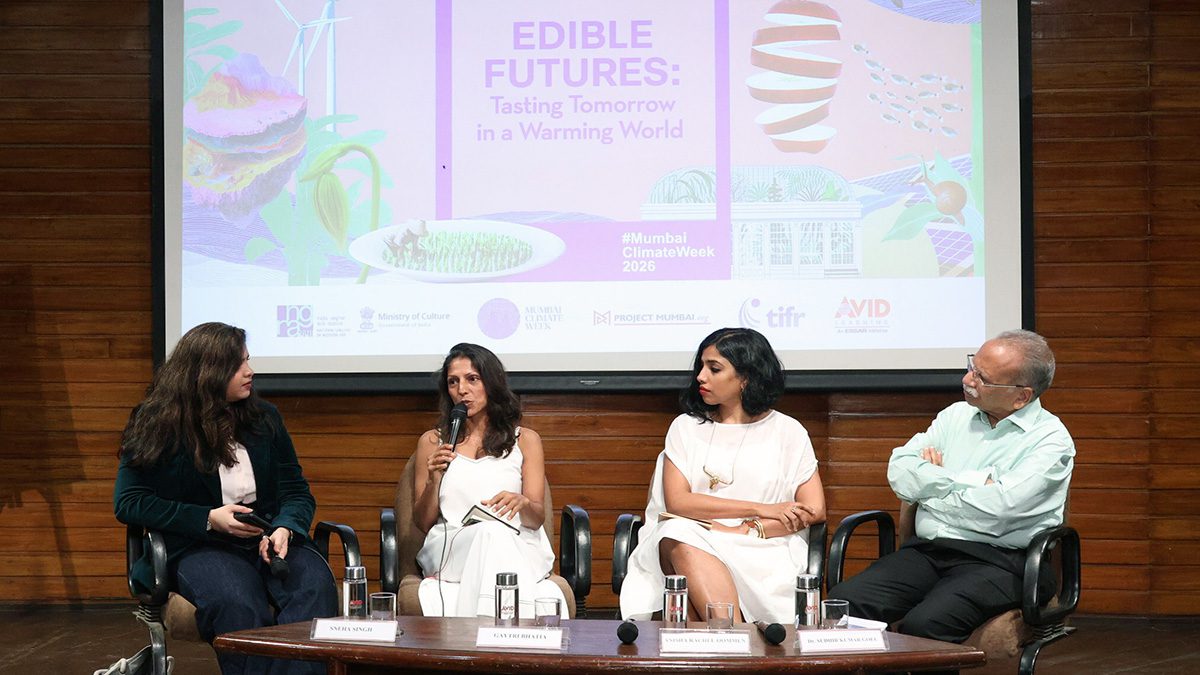
The panel featured Gaytri Bhatia, Proprietor and Steward of the Land at Vrindavan Farm; Dr Sudhir Kumar Goel, Former Additional Chief Secretary, Agriculture and Marketing, Government of Maharashtra; and Anisha Rachel Oommen, Founder and Director of Goya Media. The session was moderated by Sneha Singh, Managing Director of the Good Food Institute India. Drawing on practical case studies and policy perspectives, the speakers examined how integrating agriculture with water stewardship and energy efficiency can reduce emissions while strengthening resilience.
Participants also highlighted the growing importance of indigenous crops, regenerative agricultural practices, urban farming models, and climate-smart technologies. These approaches, they argued, offer scalable and locally relevant solutions to the challenges posed by a rapidly warming climate. The discussion further explored the role of dietary shifts and increased consumer awareness in shaping more sustainable food futures.
Emphasising the need for cross-sector collaboration, the session called for stronger partnerships between farmers, communities, businesses and policymakers to build adaptive and sustainable food ecosystems. Speakers stressed that addressing climate change through food systems requires systemic change, supported by inclusive policy frameworks and active citizen participation.
Speaking on the sidelines of the event, Asad Lalljee, CEO of Avid Learning, said that as climate change increasingly influences what societies grow and consume, food systems must be examined through the lens of long-term environmental responsibility. He described Edible Futures as part of Avid Learning’s broader commitment to sustainability and its effort to convene diverse stakeholders to advance practical, scalable solutions for climate resilience.
With Mumbai Climate Week 2026 on the horizon, the conversation underscored a clear message: transforming food systems is no longer optional, but central to safeguarding livelihoods, public health and environmental stability in the years ahead.