The Ministry of Steel has issued a clarificatory order emphasising the enforcement of existing Quality Control Orders (QCOs) regarding steel products under the Bureau of Indian Standards (BIS) regime. While no new QCO has been issued since August 2024, the ministry’s latest directive dated June 13, 2025, aims to bring greater clarity on compliance requirements for intermediate materials used in the manufacture of final steel products.
The order underlines that all intermediate steel materials used to manufacture finished goods under BIS standards must also conform to applicable BIS norms. This clarification was necessitated by concerns over unequal standards between domestic manufacturers and importers. Indian steel producers are mandated to use BIS compliant intermediate materials throughout the production process, whereas no such requirement was explicitly imposed on importers of finished steel products. This regulatory gap risked putting Indian manufacturers at a competitive disadvantage in their own market.
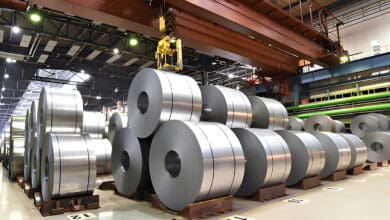
According to the ministry, ensuring that intermediate inputs meet BIS standards is essential to maintaining the quality of final steel products. For instance, a significant portion of coated steel imported into India uses hot rolled (HR) or cold rolled (CR) coils as base material. If these coils are not BIS compliant, the final coated steel product cannot be considered BIS compliant either, even if the coating process adheres to standards. Hence, compliance at all stages of production is critical to prevent substandard products from entering the market.
The order also addresses growing apprehensions around the import of substandard steel, especially in the context of excess global steel production capacity and falling demand in several countries. With India being one of the fastest-growing large economies globally, there is an increased risk of foreign producers dumping cheap and inferior quality steel in the Indian market. If left unchecked, this could severely damage the domestic steel industry, particularly smaller players, and potentially lead to significant job losses.
The ministry clarified that integrated steel plants that manage the entire production cycle in-house from intermediate to finished products, are already covered comprehensively under existing BIS certification. These plants do not require separate BIS licences for each stage of production, as their full manufacturing process is evaluated during the certification. Further clarifications on this aspect will be issued by the Ministry of Steel following consultations with BIS.
Concerns about a potential increase in steel prices following the June 13 clarification have been dismissed as unfounded. The ministry stated that India’s current steel manufacturing capacity stands at 200 million tonnes, which is sufficient to meet current domestic demand. Therefore, the order is not expected to have any inflationary impact on steel prices.
The clarificatory order also points to the global trend of imposing safeguard measures such as sectoral tariffs and tariff rate quotas (TRQs) by several countries to protect their domestic industries from low-quality steel imports. These actions further heighten the risk of India becoming a dumping ground for cheap and substandard steel products, making it all the more imperative to enforce BIS compliance across the board.
India has witnessed an exceptional growth in steel consumption, registering over 12% annual growth over the past three years, driven by significant public and private investment in infrastructure, real estate, and manufacturing sectors. This rapid expansion is expected to continue, with projections indicating a requirement of 300 million tonnes of steel capacity by 2030 and 400 million tonnes by 2035. To achieve this, the sector would need capital investments of around $200 billion by 2035.
The ministry warned that if substandard steel imports undermine the domestic industry’s viability, it could jeopardise the ambitious capacity expansion goals and strain the financial health of both integrated and smaller steel producers. This, in turn, could stall the country’s infrastructure growth and derail employment generation in the steel sector.
The Ministry of Steel’s clarification underscores the importance of ensuring quality and fair competition in the Indian steel market, protecting both consumers and domestic manufacturers from the threat of substandard imports while preparing the industry for its next phase of growth.