
The Ministry of Steel is actively fostering research and development in the iron and steel sector through its initiative, ‘Promotion of Research & Development in Iron & Steel Sector.’ The scheme provides financial assistance to reputed academic institutions, research laboratories, and Indian steel companies to enhance innovation and efficiency. Emphasizing collaborative research among steel companies, CSIR laboratories, and academic institutions, the initiative focuses on addressing common challenges in the industry, such as improving efficiency, product quality, energy utilization, and waste management, while reducing greenhouse gas emissions.
Under this scheme, 11 research projects specifically target the reduction of carbon footprints in the steel industry. These projects are being undertaken by various prestigious institutions, including IIT Bombay, IIT Hyderabad, IIT Kharagpur, IIT Roorkee, IIT Bhubaneswar, CSIR CGCRI Kolkata, and CSIR IMMT Bhubaneswar. The research covers a range of topics, from developing hydrogen-based direct reduced iron (DRI) production methods to investigating coal-biomass blends for CO2 mitigation. Other key areas include optimizing process parameters for DRI production, designing sustainable CO2 capture and mineralization technologies, and advancing electrocatalytic CO2 conversion.
The Bureau of Indian Standards (BIS), in collaboration with the Ministry of Steel, has implemented stringent measures to ensure only high-quality steel is produced or imported into India. As part of this effort, 151 BIS standards have been notified under the Quality Control Orders (QCOs) to safeguard industry standards. Steel imports require a BIS license, and in cases where certain steel grades are not covered by BIS standards, a No Objection Certificate (NOC) from the Ministry of Steel is mandatory. To facilitate smooth trade, applications for advance NOCs from Japanese exporters are regularly processed.
As steel is a deregulated sector, the government plays a crucial role as a facilitator by crafting policies that encourage growth and self-reliance. Several measures have been introduced to improve raw material security, enhance research activities, reduce import dependence, and cut production costs, ultimately supporting India’s ambition of becoming self-sufficient in steel production. Among these initiatives is the implementation of the Domestically Manufactured Iron & Steel Products (DMI&SP) Policy, which promotes the use of locally made steel in government procurement. Additionally, the Production Linked Incentive (PLI) Scheme for Specialty Steel aims to bolster domestic manufacturing and attract investment, with an expected capital infusion of ₹27,106 crores, a downstream capacity boost of approximately 24 million tonnes, and the creation of nearly 14,760 direct jobs.
The Union Budget for FY 2024-25 has also provided a significant boost to infrastructure expansion, indirectly increasing steel consumption. To further aid the industry, the government has reduced the Basic Customs Duty on Ferro Nickel from 2.5% to zero and extended duty exemptions on ferrous scrap until March 31, 2026. The Steel Scrap Recycling Policy has also been introduced to enhance the availability of domestically sourced ferrous scrap.
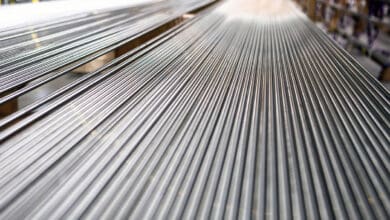
The Ministry of Steel has revamped the Steel Import Monitoring System (SIMS) to monitor imports effectively and provide detailed insights to the domestic industry. Quality Control Orders have been introduced to prevent the entry of substandard or defective steel products into the market, ensuring that only high-quality steel conforming to BIS standards reaches consumers. To further protect domestic manufacturers, anti-dumping duties have been imposed on various steel products imported from China, Korea, Japan, Vietnam, and Thailand. Additionally, countervailing duties have been placed on welded stainless steel pipes and tubes from China and Vietnam.
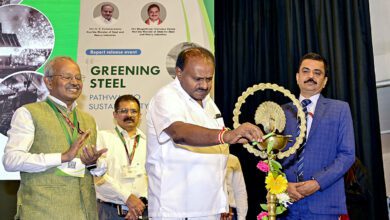
As part of India’s commitment to sustainable steel production, the Ministry of Steel has released the ‘Greening the Steel Sector in India: Roadmap and Action Plan.’ This comprehensive document outlines strategies to achieve the nation’s net-zero carbon emissions target by 2070. In line with this vision, the government is supporting research and industrial initiatives to decarbonize the steel sector through alternative production methods and carbon capture technologies.
India’s steel production and consumption have been witnessing steady growth over the past three years. In 2021-22, finished steel capacity stood at 152.81 million tonnes, with production reaching 113.60 million tonnes and consumption at 105.75 million tonnes. By 2023-24, these figures had grown to 170.77 million tonnes in capacity, 139.15 million tonnes in production, and 136.29 million tonnes in consumption. Major steel producers, including the Steel Authority of India Limited (SAIL), Tata Steel Limited, and JSW Steel, have significantly contributed to this growth.
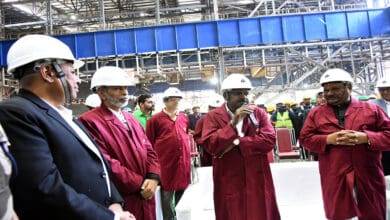
SAIL has been expanding its market presence while upholding high standards of customer service. The Salem Steel Plant has undergone modernization to increase stainless-steel slab production capacity to 1,80,000 tonnes per annum, with cold rolling capacity rising from 65,000 tonnes to 1,46,000 tonnes. Additionally, SAIL operates an e-portal for easy TMT order booking and has introduced schemes to support MSMEs and new entrepreneurs in the steel sector.
Despite being a deregulated sector, the government continues to implement strategic measures to reduce steel imports and enhance domestic competitiveness. Policies such as the PLI Scheme, quality control mandates, anti-dumping duties, and customs duty exemptions are instrumental in strengthening India’s steel industry and making it self-reliant. The country is steadily progressing toward a sustainable and robust steel ecosystem, ensuring that both large manufacturers and smaller enterprises benefit from these policy interventions.