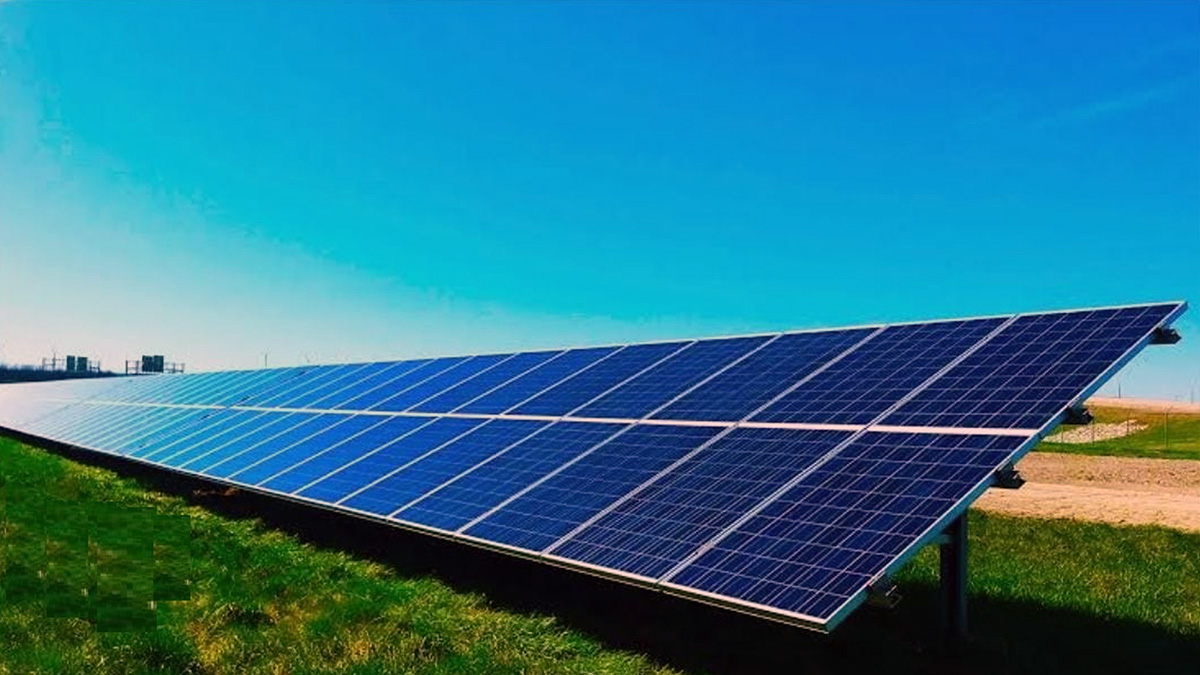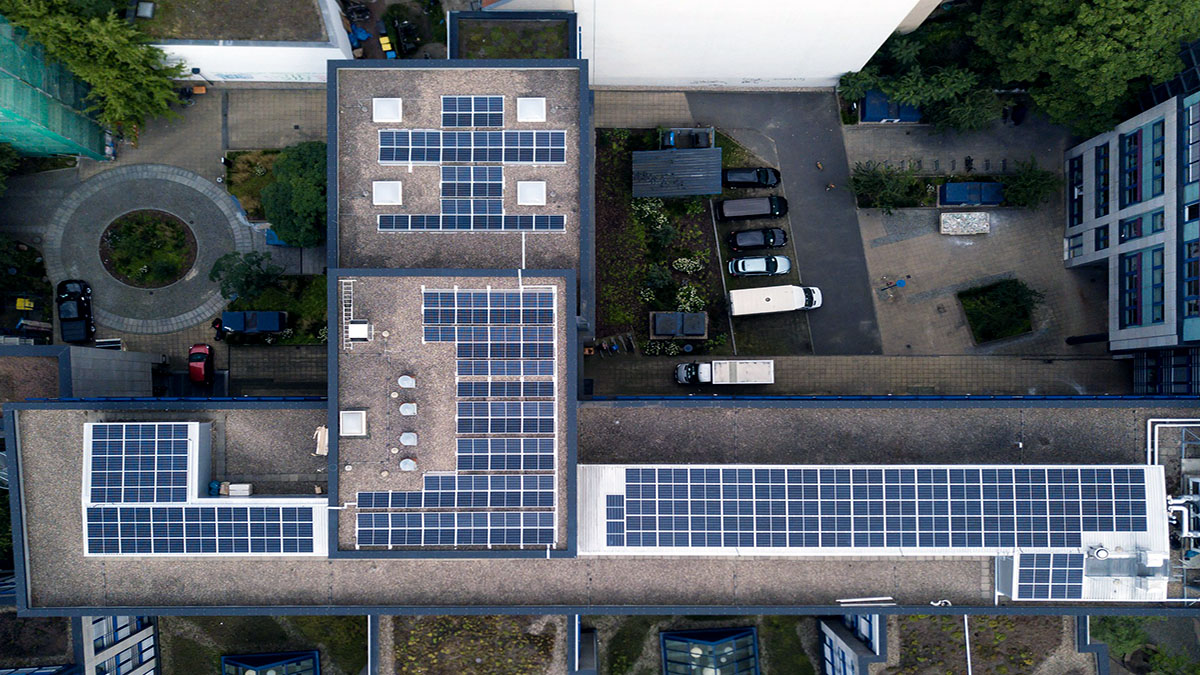

The Government of India’s flagship rooftop solar initiative, PM Surya Ghar: Muft Bijli Yojana, is showing significant nationwide impact, with more than 7.71 lakh households reporting zero electricity bills during at least one billing cycle and over 24.35 lakh households benefiting overall from rooftop solar installations as of December 9, 2025. The scheme, launched in February 2024 with an ambitious target of installing rooftop solar systems in one crore residential households by FY 2026–27, carries a total outlay of ₹75,021 crore.
A total of 19,45,758 rooftop solar (RTS) systems have been installed across states and Union Territories, said MoS for New and Renewable Energy, Shripad Yesso Naik. Central Financial Assistance (CFA) amounting to ₹13,926.25 crore has been disbursed to 17,74,131 residential consumers, while 8,30,617 collateral-free loan applications have been sanctioned under the scheme at an interest rate of 5.75%, calculated as the repo rate plus 0.50 basis points.
Gujarat has emerged as the leading state in terms of scale, with 4,93,161 RTS installations benefiting 7,10,102 households. Of these, 3,62,675 consumers reported zero energy charges during at least one billing period. The state has received ₹3,714.47 crore in central subsidies, while 42,408 loan applications have been sanctioned. Maharashtra follows with 3,63,811 installations covering 5,80,271 households, including 1,05,003 consumers with zero electricity bills, supported by ₹2,613.21 crore in subsidies and 1,38,592 sanctioned loans.
Uttar Pradesh has recorded 3,02,140 installations benefiting 3,05,397 households, with 42,707 consumers achieving zero energy charges. The state has received ₹2,074.53 crore in CFA, alongside 1,86,297 sanctioned loan applications. Kerala has also shown strong adoption, with 1,69,227 installations covering 1,74,097 households and 1,17,697 consumers reporting zero bills, backed by ₹1,216.82 crore in subsidies and 76,421 loans.
Rajasthan has seen 1,08,584 installations benefiting 1,11,521 households, with 8,472 zero-bill consumers and ₹763.80 crore in CFA, while Madhya Pradesh recorded 78,062 installations for 81,361 households, 40,594 zero-bill consumers, ₹570.24 crore in subsidies and 37,602 sanctioned loans. Andhra Pradesh reported 76,617 installations benefiting 79,210 households, with 36,381 consumers receiving zero bills, supported by ₹511.11 crore in CFA and 61,607 loans.
In the eastern and northeastern regions, Assam recorded 63,887 installations benefiting 64,525 households, with 4,973 zero-bill consumers and ₹442.26 crore in subsidies, while Bihar saw 13,649 installations for 14,096 households, ₹97.50 crore in CFA and 9,204 loan sanctions, though no zero-bill consumers were reported. West Bengal recorded 1,107 installations benefiting 1,170 households, with 20 zero-bill consumers and ₹2.46 crore in CFA.
Southern states show mixed trends. Tamil Nadu recorded 48,652 installations benefiting 56,258 households, with ₹334.85 crore in CFA and 11,801 loans, but no zero-bill consumers reported so far. Karnataka logged 14,471 installations benefiting 22,833 households, with 245 zero-bill consumers and ₹108.68 crore in subsidies. Telangana recorded 23,675 installations benefiting 34,110 households, with 10,234 zero-bill consumers and ₹168.51 crore in CFA.
Among smaller states and Union Territories, Haryana recorded 44,937 installations benefiting 50,434 households, Himachal Pradesh 5,556 installations for 5,679 households, Goa 1,304 installations for 1,596 households and Uttarakhand 55,229 installations benefiting 55,391 households with 23,367 zero-bill consumers. Delhi recorded 5,059 installations covering 8,671 households, with 1,733 consumers reporting zero bills. Jammu and Kashmir recorded 15,985 installations benefiting an equal number of households, while Ladakh reported 1,077 installations, notably with 2,744 consumers reporting zero energy charges, reflecting seasonal and consumption variations. Lakshadweep recorded 685 installations with 1,126 zero-bill consumers, and Puducherry recorded 2,066 installations with 785 zero-bill consumers.
Very small-scale adoption was reported in states such as Arunachal Pradesh with one installation, Meghalaya with 32 installations, Sikkim with 23 installations and Nagaland with 129 installations, reflecting geographical and infrastructural constraints. Union Territories including Andaman and Nicobar Islands, Chandigarh, Dadra and Nagar Haveli and Daman and Diu also recorded modest but growing participation.
The Ministry of New and Renewable Energy has underlined that, beyond subsidies and affordable loans, guidelines have been issued to promote rooftop solar adoption among rural households and economically weaker sections through Utility Led Aggregation and RESCO models.