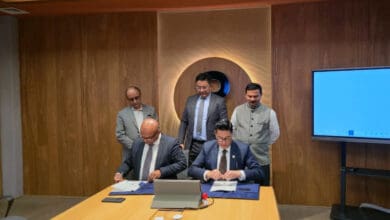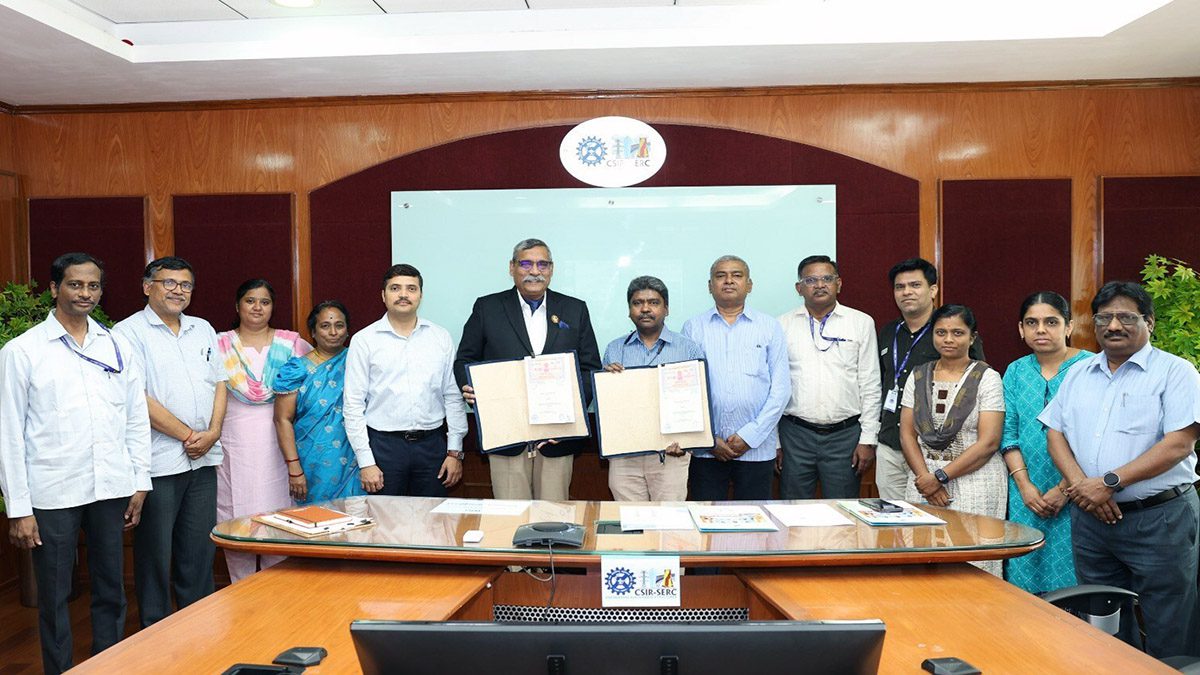

InSolare Energy Limited has entered into a Memorandum of Understanding (MoU) with the CSIR-Structural Engineering Research Centre (CSIR-SERC), a premier laboratory under the Council of Scientific and Industrial Research, to enhance the structural validation and engineering evaluation of renewable energy technologies. The collaboration aims to integrate advanced scientific testing and analytical expertise into the development and deployment of renewable infrastructure.
Under the agreement, CSIR-SERC will provide comprehensive testing, technical evaluation, validation and analytical support for InSolare’s proprietary renewable energy systems and structural components. The partnership will operate on a project-to-project basis, ensuring that each innovation undergoes rigorous scientific scrutiny and engineering validation before being deployed at scale.
Speaking on the collaboration, Dr Sunit Tyagi, Founder and Managing Director of InSolare Energy Limited, emphasised the importance of structural reliability in renewable infrastructure. He noted that as renewable systems grow in scale and complexity, engineering excellence and structural integrity become fundamental to long-term performance. According to him, the partnership with CSIR-SERC will embed scientific rigor into InSolare’s innovation and deployment process, ensuring that renewable assets are resilient, thoroughly tested and capable of sustaining decades of operation.
With renewable energy projects expanding across diverse climatic and load-bearing conditions in India, structural resilience is increasingly becoming a key factor in ensuring performance and safety. Through the MoU, InSolare aims to institutionalise third-party validation and advanced structural assessments across its solar, hybrid and hydrogen-related installations, bridging laboratory-grade research with real-world infrastructure development.
Col Pankaj Sharma, Vice President (R&D) at InSolare Energy Limited, said the collaboration will embed advanced structural testing and analytical evaluation into the company’s technology development lifecycle. He highlighted that aligning scientific research with practical execution will help accelerate the deployment of indigenous clean energy technologies while ensuring reliability and scalability.
Commenting on the partnership, Dr N Anandavalli, Director of CSIR-SERC, said the initiative connects advanced structural research with the large-scale deployment of renewable energy systems. She added that the centre will support the collaboration through rigorous testing, validation, and analytical assessments to improve the safety, durability and performance of emerging clean energy technologies.
As India continues to accelerate its renewable energy expansion, collaborations between industrial innovators and scientific research institutions are expected to play a crucial role in building resilient, safe, and scalable energy infrastructure. Through this partnership, InSolare aims to reinforce its technology-driven approach, ensuring that renewable deployments are backed by precision engineering and scientific validation.