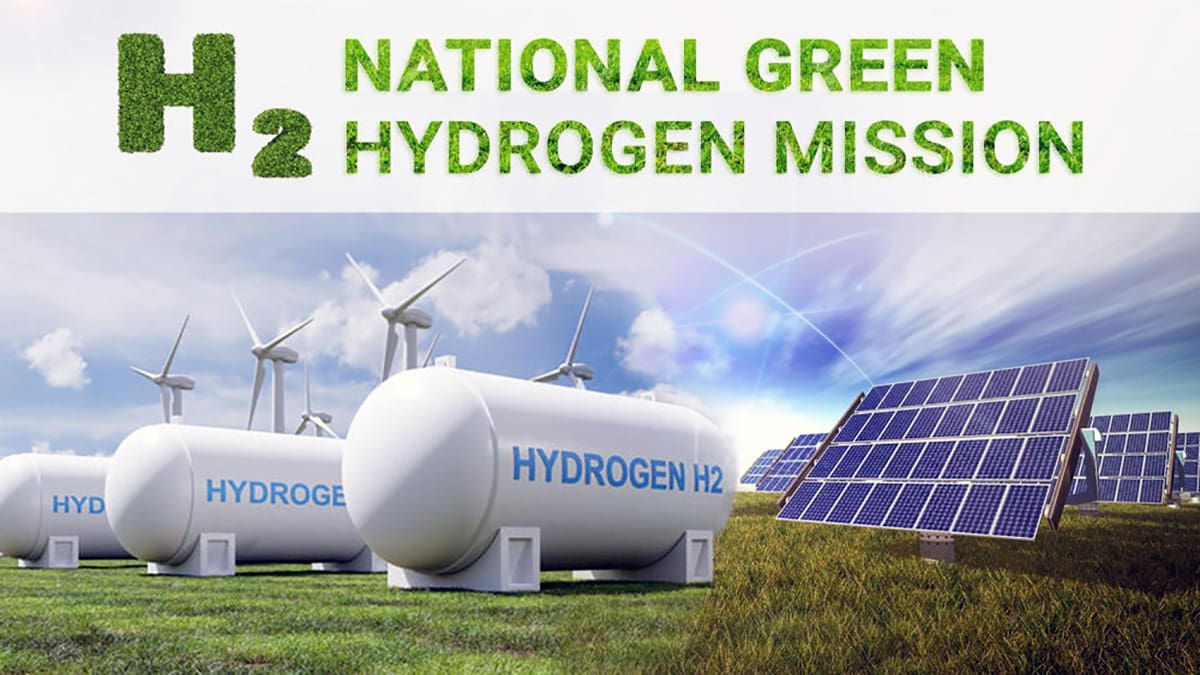

The Government of India has announced substantial progress in strengthening the country’s renewable energy ecosystem, particularly through the National Green Hydrogen Mission (NGHM). Launched with a financial outlay of ₹19,744 crore, the mission aims to transform India into a global centre for the production, usage and export of green hydrogen. Several key milestones have been reached as of November 2025, reflecting accelerated momentum in India’s clean energy transition.
Under the incentive scheme for green hydrogen production, 18 companies have been awarded a cumulative production capacity of 8,62,000 tonnes per annum, marking a significant push toward industrial-scale green hydrogen adoption. In addition, the incentive scheme for electrolyser manufacturing has allocated a combined manufacturing capacity of 3,000 MW per annum to 15 companies. To encourage early demand creation, the government has also awarded two companies the procurement of 20,000 tonnes per annum of green hydrogen for refinery operations. Pilot projects exploring the use of green hydrogen across steel, shipping and transport sectors have been sanctioned, indicating the mission’s widening footprint across hard-to-abate industries.
The government is simultaneously advancing multiple solar energy initiatives designed to boost decentralised and rooftop solar deployment. Key schemes such as the Pradhan Mantri Surya Ghar: Muft Bijli Yojana, PM-KUSUM and the new solar programme for Tribal and Particularly Vulnerable Tribal Groups under PM JANMAN and DAJGUA are being implemented across the country. These initiatives offer financial assistance to facilitate rapid installation of solar mini-grids and rooftop systems, especially in rural and underserved regions.
To ensure that renewable energy projects progress swiftly and the country remains on track to achieve its 2030 clean energy targets, the government has enhanced its monitoring and coordination mechanisms. This includes regular inter-ministerial review meetings, improved coordination between central and state agencies and the rollout of the National Renewable Energy Portal (NREP) for tracking solar, wind and Green Energy Corridor projects. Real-time monitoring systems have been instituted using data from Renewable Energy Implementing Agencies, state nodal bodies and developers. Moreover, competitive bidding guidelines now include prescribed timelines, and monthly stakeholder meetings are held to identify and resolve project-related bottlenecks.