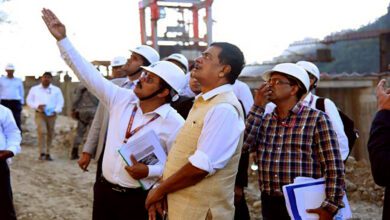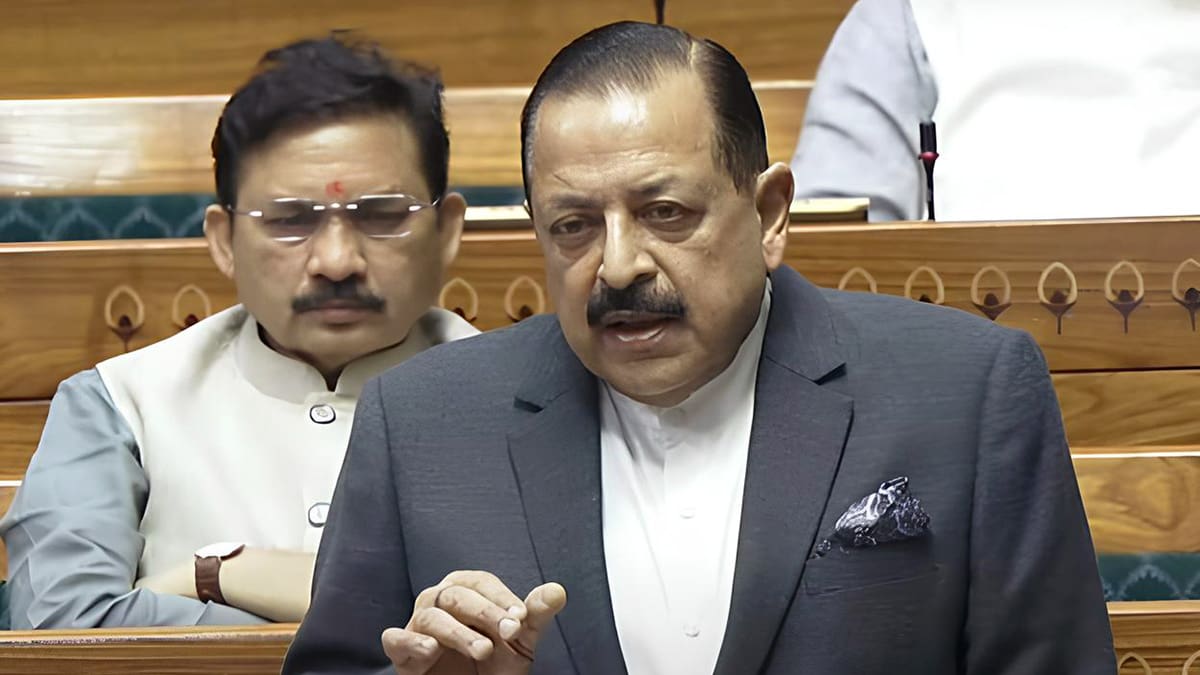

In a major boost to India’s nuclear energy ambitions, Union Minister Dr Jitendra Singh announced that North India’s first nuclear power project will be set up in Gorakhpur, Haryana. The move aligns with the government’s broader vision of expanding nuclear energy capacity to meet the country’s clean energy targets.
Dr Singh made this revelation while reaffirming the government’s commitment to the Jaitapur Nuclear Power Project in Maharashtra, which is poised to become India’s largest nuclear power facility. Addressing concerns in the Lok Sabha, he clarified that the environmental clearance for the Jaitapur project is under renewal and that stringent safeguards are in place to mitigate ecological and safety risks.
He assured that despite objections from conservation groups and concerns over the project’s seismic location, the government remains confident in its safety measures. “Every time concerns about risks to marine life and local livelihoods have been raised, the government has provided evidence-based studies proving that there is no such risk to fisheries or the people living nearby,” he stated.
The Minister also clarified that the environmental clearance for the Jaitapur project had expired in December 2022 due to procedural delays, not new environmental objections. “If there were serious environmental hazards, we would not have received clearance earlier,” he explained.
Tracing the project’s timeline, he noted that while initial approvals were granted in 2008, progress was hindered due to shifts in agreements with French stakeholders. With technical agreements now finalised, discussions are ongoing to settle commercial terms. Once operational, the Jaitapur plant will house six nuclear reactors, each with a capacity of 1,730 MW, collectively generating 10,380 MW—contributing 10% of India’s 100 GW nuclear energy target by 2047.
Dr Singh also addressed concerns regarding nuclear liability, stating that India’s Civil Liability for Nuclear Damage (CLND) framework provides clear safeguards. The primary responsibility rests with the operator, and an insurance pool of ₹1,500 crore has been set up, with additional government commitments if required. India has also aligned with global compensation mechanisms to ensure financial security in case of an incident.
In a significant policy shift, the government is opening the nuclear energy sector to private participation to accelerate expansion. The Gorakhpur Nuclear Power Plant in Haryana is a major step in this direction, marking the first nuclear project in North India.
With India aiming for net-zero emissions by 2070, the Jaitapur and Gorakhpur projects are expected to play a pivotal role in achieving clean energy goals while strengthening the nation’s position as a leader in nuclear technology.