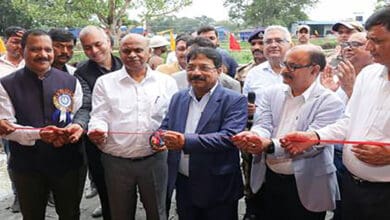

In a transformative stride for India’s clean energy ambitions, MIT-World Peace University (MIT-WPU) has inaugurated the country’s first battery research and fabrication centre established by a private state university. The state-of-the-art facility is dedicated to advancing lithium-ion (Li-ion) and sodium-ion (Na-ion) battery technologies, aligning strongly with the national goals of Atmanirbhar Bharat and Make in India.
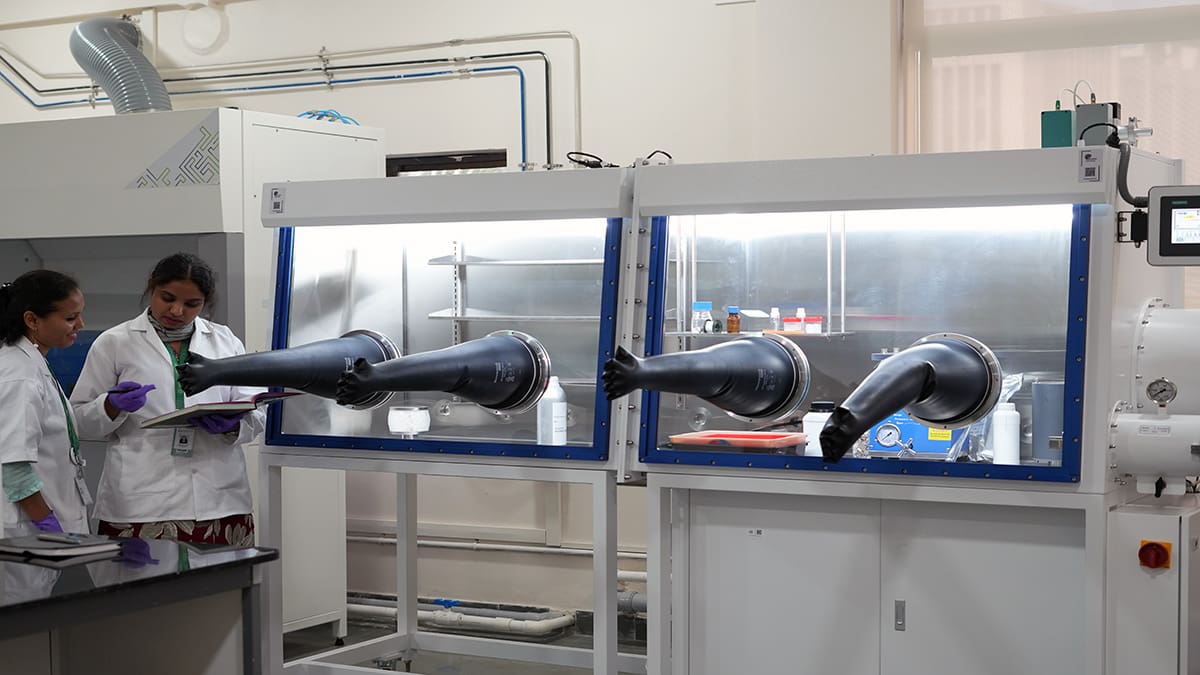
This cutting-edge research centre marks a milestone in India’s journey toward self-reliance in energy storage solutions. It offers an end-to-end battery development ecosystem under one roof, encompassing active material synthesis, coin cell fabrication, and electrochemical performance evaluation. The facility is fully equipped to support both academic research and industrial collaboration, paving the way for innovation, scalability, and real-world application.
“At MIT-WPU, we are committed to pushing the boundaries of sustainable energy technologies,” said Prof Dr Bharat Kale, Director of the Centre of Excellence in Materials Science at MIT-WPU and former Director of C-MET, MeitY, Government of India. “This initiative not only demonstrates our leadership in advanced battery research but also reaffirms our alignment with India’s energy independence vision. From developing high-performance electrode materials to next-generation solid-state electrolytes, we aim to contribute significantly to the evolution of safe, efficient, and high-capacity batteries.”
One of the facility’s major research thrusts includes the development of solid-state electrolytes (SSEs), which offer safer and more thermally stable alternatives to conventional liquid electrolytes. Researchers at MIT-WPU are experimenting with high ionic conductivity materials and innovative composites like glass-polymer electrolytes, with the goal of improving safety and efficiency.
Pioneering research is also underway on paper-based batteries, in collaboration with MID Sweden, and the development of high-purity solvents and electrolytes to support domestic battery manufacturing with premium-grade raw materials. These innovations hold promise for next-generation battery applications, particularly in electric vehicles and grid storage.
The facility is also gearing up to expand its manufacturing capabilities by integrating tools for cylindrical and prismatic cell production, broadening its applicability to diverse sectors and accelerating the commercialisation of homegrown technologies.
Beyond innovation, the research centre plays a vital role in education and skill development. It offers a dynamic platform for engineering and science students to engage in hands-on learning and high-impact research. Opportunities for PhD scholars and early career researchers are being actively cultivated, contributing to a growing pipeline of talent in India’s energy technology landscape.
Dr Rahul Karad, Executive President of MIT-WPU, emphasised the larger vision behind the initiative: “Our mission is to empower MIT-WPU students with the creative competence to lead in future-forward domains like clean energy. This facility is a bold step in equipping them with not only theoretical knowledge but practical experience in transformative technologies.”
The centre is also actively pursuing partnerships and funding from national agencies like the ANRF (Anusandhan National Research Foundation) and others, underscoring the importance of public-private collaboration in realising India’s energy and climate goals.
With this initiative, MIT-WPU establishes itself as a trailblazer in battery research among private institutions in India, signalling a powerful shift toward academic excellence, industrial synergy, and environmental responsibility.