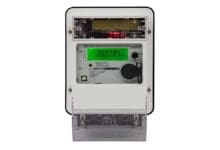
The Government of India’s push to modernise the country’s power distribution infrastructure has seen significant progress under the Revamped Distribution Sector Scheme (RDSS). As of July 15, 2025, a total of 20.33 crore smart meters have been sanctioned across 28 States and Union Territories, with 2.41 crore meters already installed.
The state of Gujarat, which has been a key participant in this initiative, has been sanctioned 1.67 crore smart meters under the RDSS. Of these, 20.94 lakh smart meters have been successfully installed by mid-July 2025. The smart metering effort in Gujarat is still in its early stages, with full division-wise saturation currently underway. State utilities report that improvements in operational performance will become more visible as the saturation of specific areas is achieved.
Smart meters play a vital role in enhancing the operational efficiency of power distribution utilities. By providing real-time consumption data, these meters eliminate the need for estimated readings, thereby reducing billing inaccuracies. The automated data collection process helps minimise human error, and the technology also aids in the identification and prevention of electricity theft. As a result, distribution companies can ensure better revenue realisation and service reliability.
The central government has been supporting states and their distribution utilities with a range of initiatives to improve performance. The RDSS itself was launched to improve the quality and reliability of power supply while ensuring the financial and operational sustainability of the power distribution sector. Under the scheme, the disbursement of funds is linked to the utilities’ progress in meeting specific performance criteria, including the reduction of the Aggregate Technical and Commercial (AT&C) losses and the gap between the average cost of supply (ACS) and the average revenue realised (ARR).
Additional incentives have been made available, such as permitting States an extra borrowing space of 0.5% of their Gross State Domestic Product (GSDP) if they implement approved loss-reduction measures. The government has also introduced stricter prudential norms for sanctioning loans to state-owned power utilities, tying financial assistance to the performance of distribution utilities against these prescribed parameters.
Furthermore, new rules have been established to ensure the timely implementation of Fuel and Power Purchase Cost Adjustment (FPPCA) and cost-reflective tariffs. These measures are aimed at guaranteeing that all prudent costs involved in the supply of electricity are passed through to consumers and recovered on time.
These comprehensive reform measures are applicable across all levels, including Tier-II and Tier-III towns within utility jurisdictions. Due to sustained implementation of these initiatives, India has seen a noticeable improvement in power sector efficiency. Nationally, the AT&C losses have declined from 21.91% in the financial year 2020-21 to 16.12% in 2023-24. Likewise, the ACS-ARR gap has narrowed significantly from ₹0.69 per kWh in FY21 to just ₹0.19 per kWh in FY24.