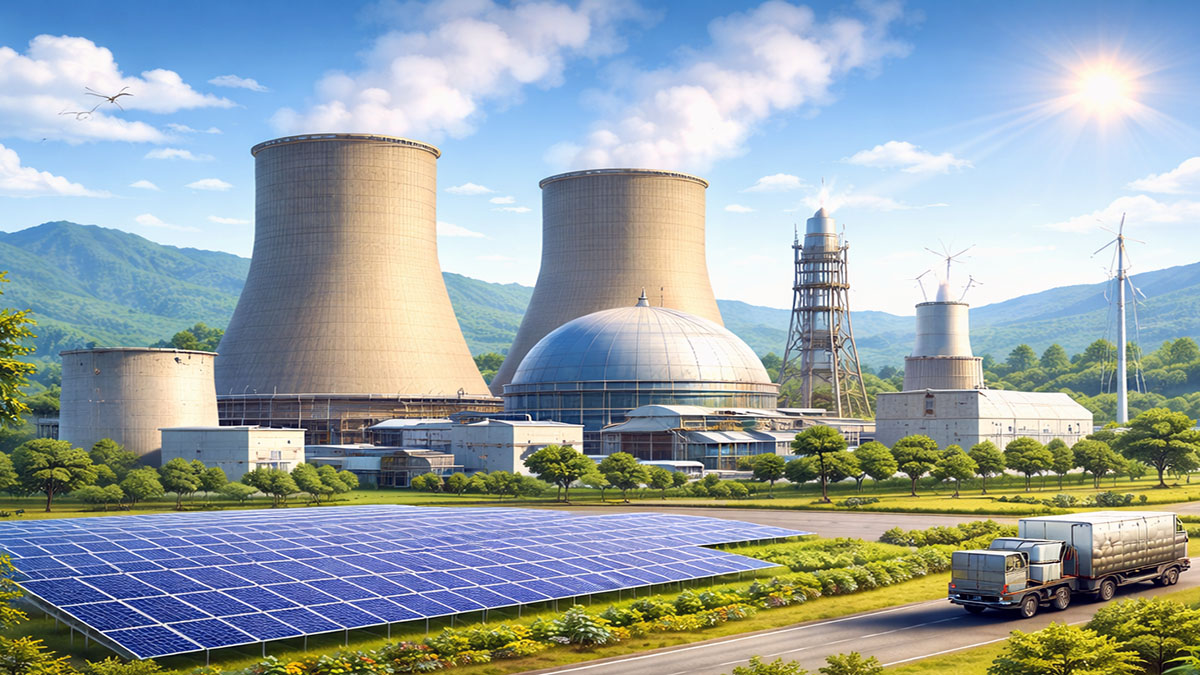

India continues to advance its energy self-reliance through the adoption and development of Closed Nuclear Fuel Cycle technology, in alignment with its long-standing three-stage nuclear power programme. This approach is designed to optimise the use of the country’s limited uranium resources and leverage its vast thorium reserves to ensure long-term energy security.
Unlike the open fuel cycle followed by many countries, where spent nuclear fuel is treated as waste, India’s closed fuel cycle focuses on the recovery and recycling of fissile and fertile materials from spent nuclear fuel (SNF). This not only maximises resource utilisation but also significantly reduces the volume of high-level radioactive waste. The first stage of the programme involves using domestic uranium in Pressurised Heavy Water Reactors (PHWRs). In the second stage, plutonium recovered from reprocessed PHWR spent fuel is used in Fast Breeder Reactors (FBRs). The third stage will see the widespread use of thorium to breed Uranium-233 from Thorium-232, which will subsequently be used as reactor fuel.
To support this vision, India has operationalised facilities for the reprocessing of spent fuel from PHWRs. Infrastructure to support the second stage of the programme, including the Fast Breeder Test Reactor and related research facilities, has been established. The Prototype Fast Breeder Reactor (PFBR), along with an integrated nuclear reprocessing plant for fast reactor fuel, is currently under construction at Kalpakkam.
Research into thorium utilisation remains a top priority for the Department of Atomic Energy (DAE). Significant R&D efforts are being carried out by the Bhabha Atomic Research Centre (BARC) and other DAE-affiliated institutions. Thorium oxide (Thoria) pellets have already been used in the initial cores of PHWRs, generating valuable operational experience. Thoria-based fuels have also been irradiated in BARC’s research reactors, and the irradiated fuel elements have undergone post-irradiation examination in BARC’s laboratories.
The reprocessing of irradiated Thoria pins from research reactors has led to the successful extraction of Uranium-233. This Uranium-233 has been fabricated into fuel and is currently powering the 30kW thermal KAMINI reactor at the Indira Gandhi Centre for Atomic Research (IGCAR) in Kalpakkam, the only reactor in the world using Uranium-233 as fuel. Additionally, the technology for fabricating Thoria-based fuel pellets containing Uranium-233 has been developed at the laboratory scale.
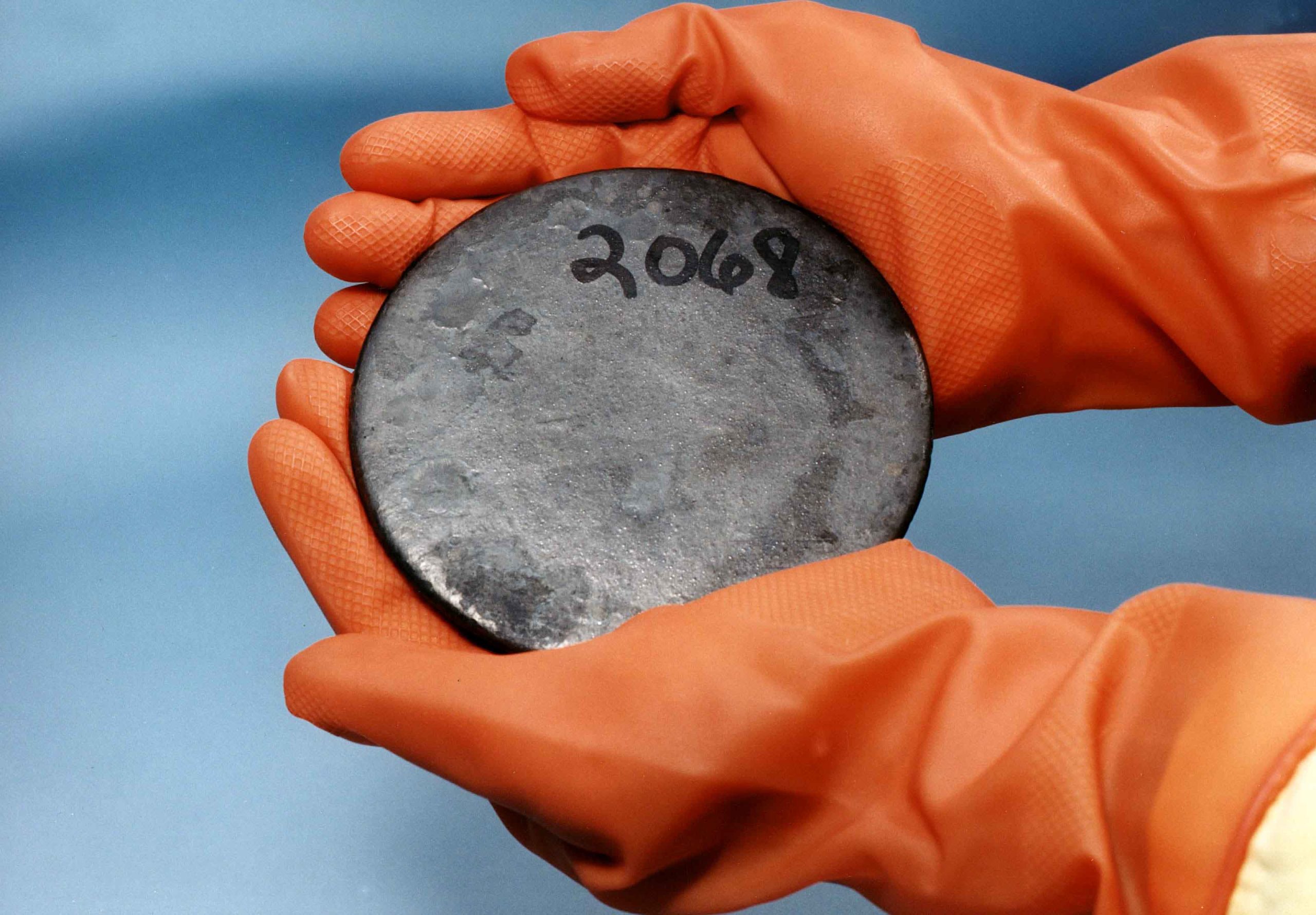
The Uranium Corporation of India Ltd. (UCIL), a Public Sector Undertaking under the DAE, is tasked with mining and processing uranium ore across the country. UCIL has laid out an expansion plan that includes modernising and increasing the capacity of existing units, along with debottlenecking processes to ensure a steady supply of uranium for India’s nuclear power plants.
Meanwhile, the Atomic Minerals Directorate for Exploration and Research (AMD), a DAE constituent unit, is charged with identifying, evaluating, and augmenting the country’s uranium and thorium resources. AMD is employing integrated and multi-disciplinary exploration methods, including heliborne and ground geophysical surveys, geological mapping, geochemical and radiometric surveys, and extensive drilling in key target regions using cutting-edge technologies.
As of now, AMD has identified 4,33,800 tonnes of in-situ uranium (U3O8) resources across 47 deposits in states including Andhra Pradesh, Telangana, Jharkhand, Meghalaya, Rajasthan, Karnataka, Chhattisgarh, Uttar Pradesh, Uttarakhand, Himachal Pradesh, and Maharashtra. Additionally, it has confirmed 1.18 million tonnes of thorium oxide (ThO2) resources contained within 13.15 million tonnes of in-situ monazite across 136 coastal and inland placer deposits in Kerala, Tamil Nadu, Odisha, Andhra Pradesh, Maharashtra, Gujarat, West Bengal, and Jharkhand. Further, an additional 29,900 tonnes of in-situ thorium oxide has been identified in hard rock deposits associated with rare earth resources in Gujarat.