
In a significant step toward achieving its climate commitments and ensuring energy security, the Government of India has unveiled an ambitious Nuclear Energy Mission under the banner of Viksit Bharat. The mission targets an expansion of nuclear power capacity to 100 GW by 2047, a crucial contribution to the country’s goal of achieving Net Zero carbon emissions by 2070.
The mission focuses on increasing nuclear power generation with minimal carbon emissions while addressing the country’s growing base load electricity demand, which is currently met predominantly by fossil fuel-based power plants. To accomplish this, the initiative envisions the deployment of both large-scale and small nuclear power plants across greenfield and brownfield locations. It also plans for captive plants and off-grid nuclear installations in remote areas. The mission places a strong emphasis on collaboration with the private sector, development of Small Modular Reactors (SMRs), and adoption of enabling measures for advanced nuclear technologies.
As part of the mission, three types of SMRs are being designed and developed indigenously by the Bhabha Atomic Research Centre (BARC) for demonstration purposes. These include the 200 MWe Bharat Small Modular Reactor, a 55 MWe Small Modular Reactor, and a 5 MWth High Temperature Gas Cooled Reactor. The latter is aimed specifically at hydrogen production through thermochemical processes, supporting the transportation sector’s transition to clean fuels. In-principle approval has already been granted for the construction of these demonstration reactors, which are expected to be completed within 60 to 72 months following administrative sanctions. The lead units of the BSMR and SMR are planned to be installed at Department of Atomic Energy (DAE) sites in collaboration with the Nuclear Power Corporation of India Limited (NPCIL).
These upcoming nuclear plants are strategically designed to be used as captive power sources, for the repurposing of decommissioned fossil fuel plants and for supporting hydrogen production, all aligned with the broader objective of decarbonising India’s industrial and transport sectors.
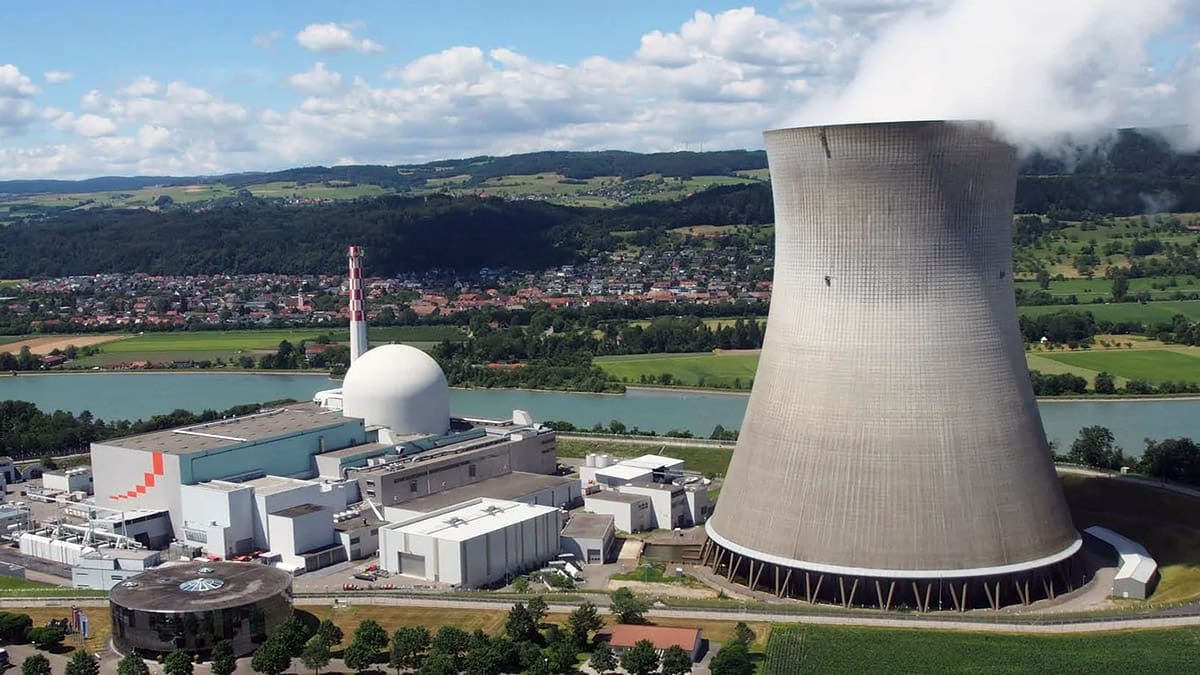
Currently, India’s nuclear power infrastructure includes 24 operational reactors with a combined capacity of 8,780 megawatts (MW), excluding RAPS-1 (100 MW), which is under long-term shutdown. The recently commissioned units KAPS-3 and KAPS-4 (2×700 MW) and RAPP-7 (700 MW) have added significant capacity to the national grid. Additionally, 18 reactors with a total capacity of 13,600 MW are under various stages of construction and implementation, including the 500 MW Prototype Fast Breeder Reactor (PFBR) being developed by BHAVINI. Upon their completion, India’s total installed nuclear power capacity will rise to 22,380 MW.
To meet the future demand for nuclear fuel, the Department of Atomic Energy has identified and established 4,33,800 tonnes of in-situ U3O8 (Tri uranium octoxide) resources across 47 uranium deposits in states such as Andhra Pradesh, Telangana, Jharkhand, Meghalaya, Rajasthan, Karnataka, Chhattisgarh, Uttar Pradesh, Uttarakhand, Himachal Pradesh, and Maharashtra. Notably, in recent years, an additional 26,437 tonnes of uranium oxide resources have been confirmed in the Jaduguda North-Baglasai Mechua deposit located in East Singhbhum district, Jharkhand, marking a significant extension of the existing Jaduguda uranium reserve.
Ensuring safety remains paramount in the mission. All aspects of nuclear power, ranging from site selection and design to construction, commissioning and operation are governed by stringent safety protocols. Nuclear plants in India are built around robust safety principles such as defence-in-depth, redundancy, diversity, and fail-safe designs, ensuring multiple containment barriers between radioactive sources and the environment. Operational procedures are executed by highly trained, licensed professionals, and safety oversight is maintained by the independent Atomic Energy Regulatory Board (AERB), which continuously monitors and reviews plant operations.