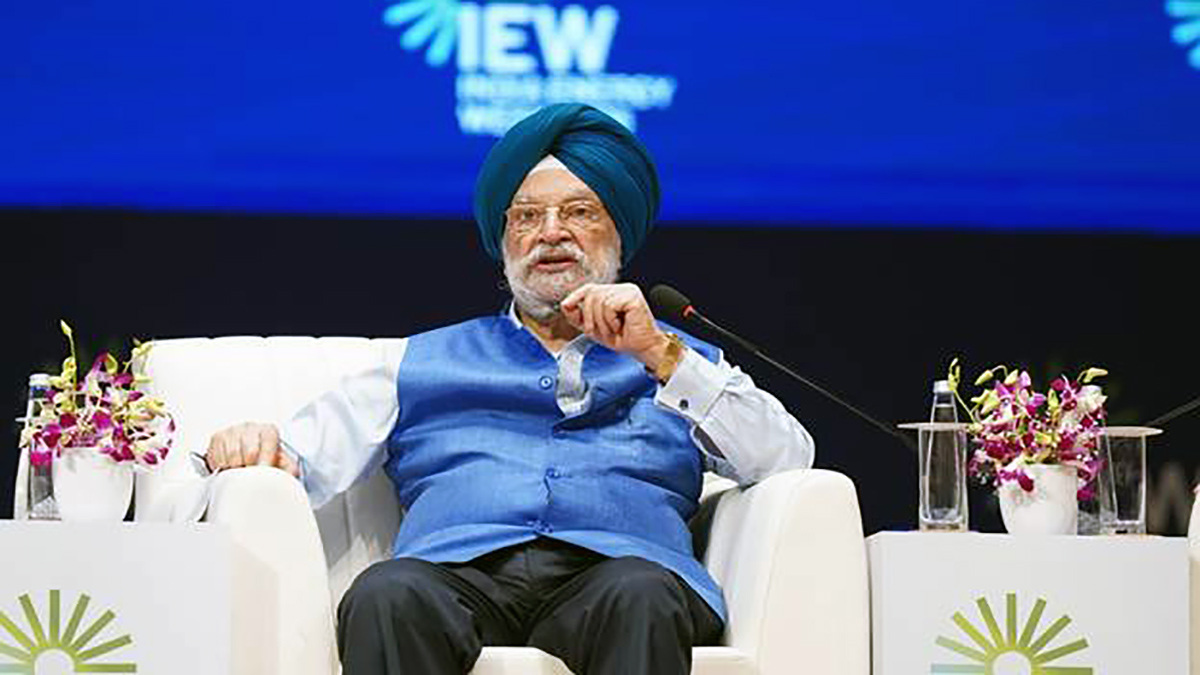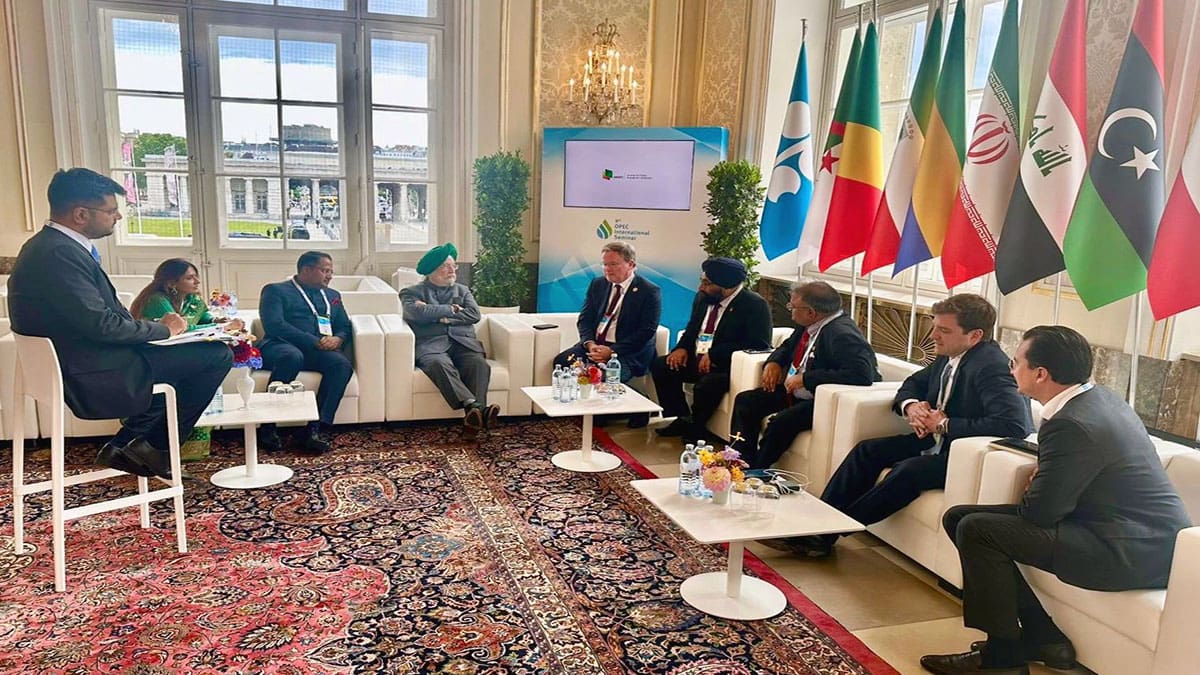

Union Minister of Petroleum and Natural Gas, Hardeep Singh Puri, held a series of high-level bilateral and business meetings on the sidelines of the 9th OPEC International Seminar in Vienna, as India intensifies efforts to strengthen global energy partnerships and meet its growing domestic energy demands.
At the prestigious event, Minister Puri met with several global energy leaders, reinforcing India’s commitment to securing stable, affordable, and diversified energy supplies. Among the key meetings was his discussion with HE Tareq Sulaiman Al-Roumi, Kuwaiti Minister of Oil and Chairman of Kuwait Petroleum Corporation. With Kuwait ranking as India’s 6th largest crude oil supplier and 4th largest LPG source, the two leaders explored avenues to deepen this strategic and time-tested energy relationship.
In another important engagement, Puri held talks with HE Sen Heineken Lokpobiri, Nigerian Minister of State for Petroleum Resources. Building on their previous interaction at the World Economic Forum in Davos earlier this year, the two sides discussed expanding hydrocarbons trade. Nigeria remains a consistent and significant supplier of crude to India.
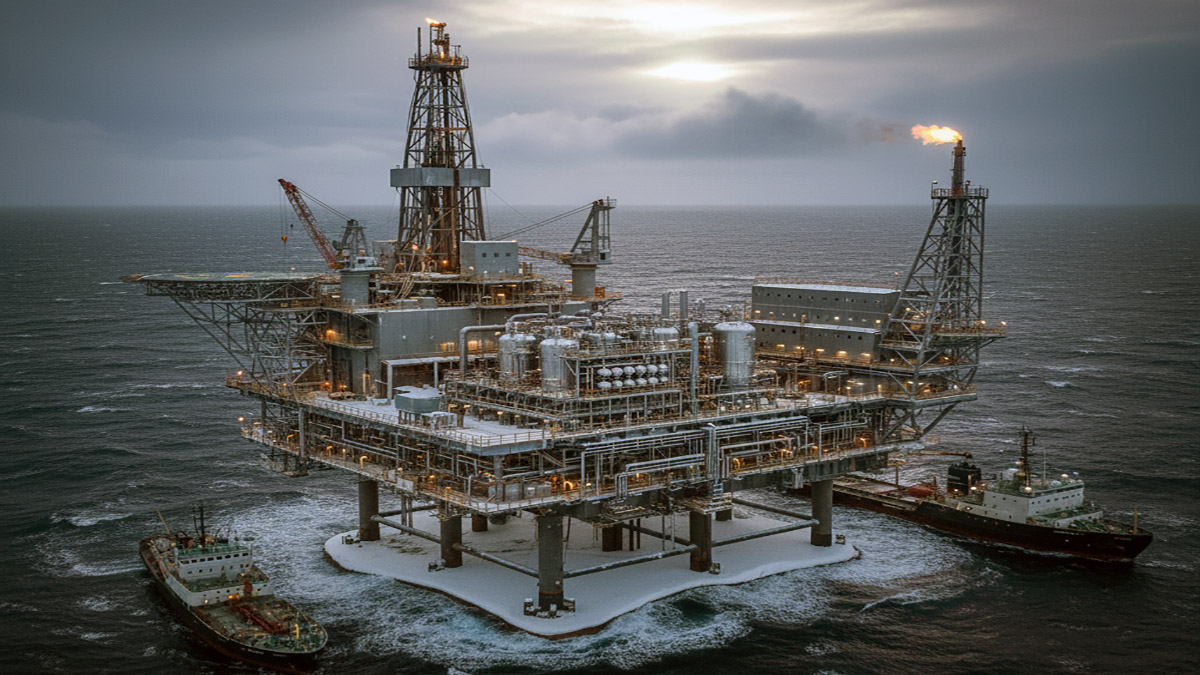
The Minister also engaged with global industry leaders, including Shell CEO Wael Sawan, to explore technological collaborations. India’s ambitious plans to unlock nearly 2.5 lakh sq km of offshore and onshore exploration under the Open Acreage Licensing Policy (OALP) were highlighted, with Puri underscoring the opportunity for companies like Shell to contribute advanced technologies to India’s upstream sector. He reiterated the country’s goal to increase the share of natural gas in its energy mix from 6% to 15%, positioning India as a promising partner in cleaner energy transitions.
A productive meeting with OPEC Secretary General HE Haitham Al Ghais further emphasised India’s close cooperation with oil-producing nations. Puri noted that OPEC and India, the world’s third largest oil importer, share a unique and symbiotic relationship. Their conversation focused on ensuring oil market stability amidst global geopolitical uncertainties and transitioning towards green and alternative energies.
During a meeting with bp CEO Murray Auchincloss, discussions centred on expanding bp’s involvement across India’s upstream and downstream sectors. Puri acknowledged bp’s robust engagement in India, including their participation in OALP Round-9 and contributions in compressed biogas, retail, and natural gas infrastructure. He also praised the company’s Global Business & Technology Centre in Pune, which is providing cutting-edge services worldwide.
Additionally, Puri met Vitol Group CEO Russel Hardy to deliberate on current challenges in the global energy market. Their talks touched upon collaboration opportunities across the hydrocarbons value chain and the global response to India’s accelerated push for infrastructure growth under PM Narendra Modi’s leadership.
Responding to questions about India’s purchase of Russian crude oil, Minister Puri defended India’s pragmatic energy policy. He noted that with Russia producing over 9 million barrels per day, nearly 10% of global supply excluding Russian oil entirely from the global market would have been economically catastrophic.
“Had those barrels vanished, prices could have skyrocketed to $130–200 per barrel,” he stated. He clarified that India has never bought sanctioned cargoes and that Russian oil was not under international sanctions but rather subject to a price cap.
“Only those unfamiliar with the complexities of oil markets offer naive criticisms,” he said, asserting that India, under Prime Minister Modi, has been a stabilising force in global energy prices.
He also highlighted India’s domestic achievements, noting that despite soaring global LPG prices, the government ensured affordable access to clean cooking fuel for 330 million households. Ujjwala beneficiaries, he said, continued receiving LPG at some of the lowest prices globally, just 0.4 dollars/kg or about 7–8 cents/day.
India’s proactive engagement at the 9th OPEC International Seminar reflects its rising influence on the global energy stage. As the nation pursues self-reliance in energy and a sustainable transition, strategic alliances and robust dialogue with key producers and technology partners remain central to its vision.