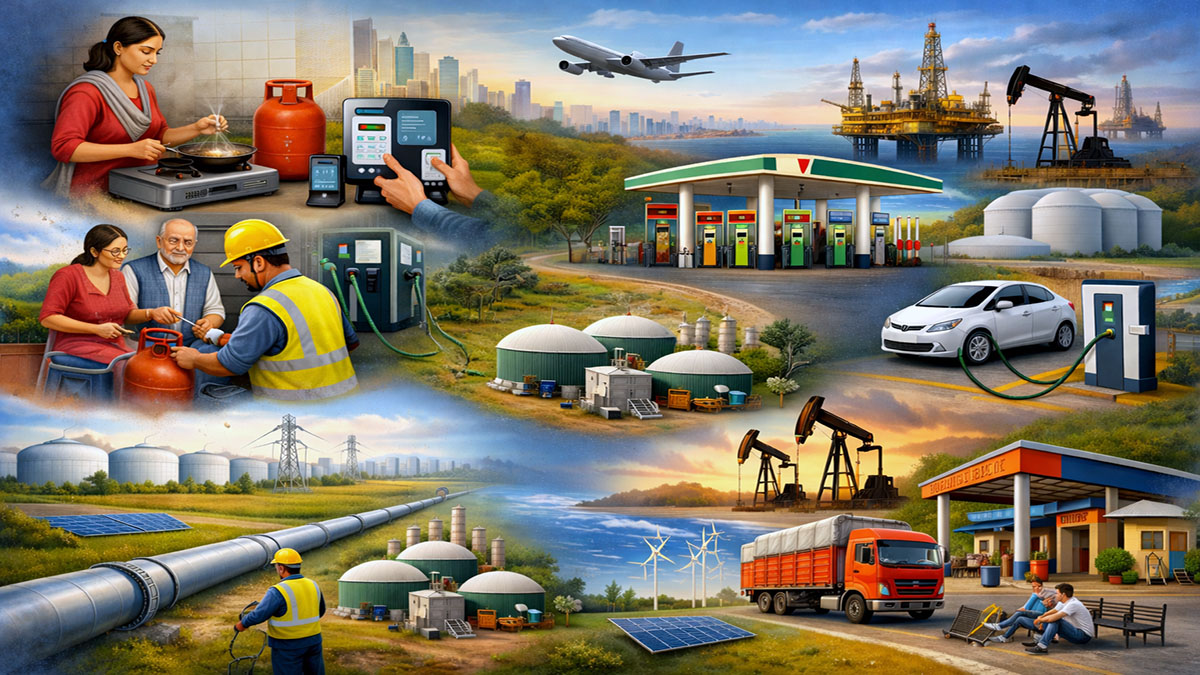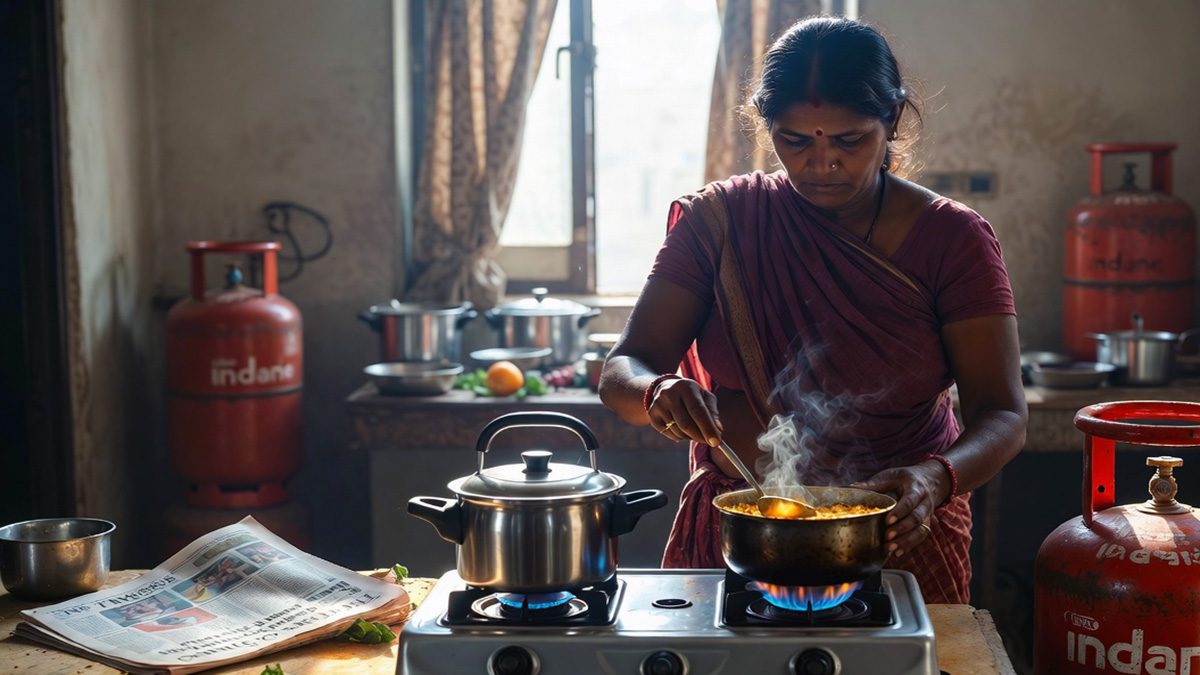

With tensions in West Asia choking vital shipping lanes, India is staring down a serious cooking gas crunch. In a rare and firm intervention, the Petroleum Ministry has turned to the Essential Commodities Act to ensure that every drop of LPG produced in the country goes straight to ordinary homes first.
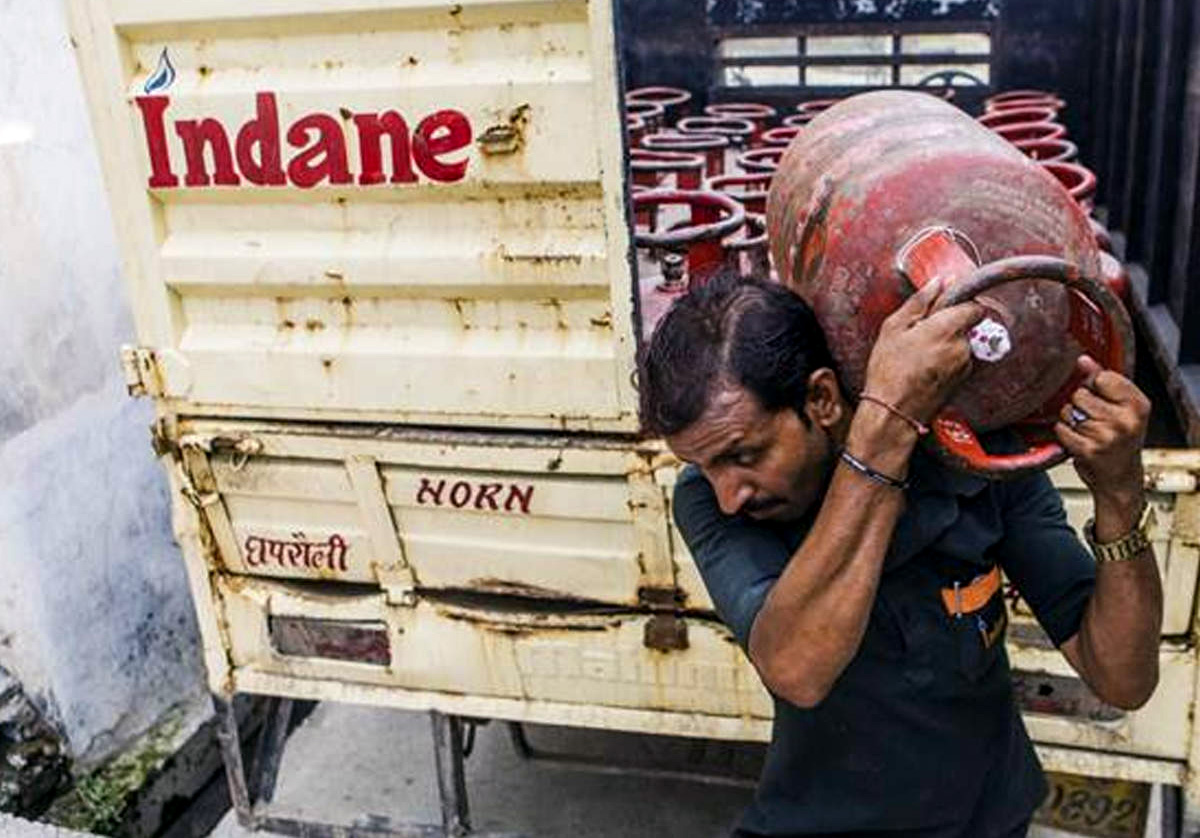
The quietly issued order by the Petroleum Ministry is that, All refineries whether government-run or private, must crank up LPG output and hand it over exclusively to the three big public sector oil companies that supply nearly every household in the country. No more diverting precious propane and butane to petrochemical plants or other industrial uses. The message is clear: the aam aadmi’s kitchen comes first.
It’s a sobering reminder of just how dependent India remains on the outside world. Around 60% of the LPG used in Indian homes is imported, and most of those shipments still pass through the troubled Strait of Hormuz. With fresh disruptions following recent developments involving Iran, buffer stocks have thinned dangerously. Some internal assessments suggest the country is sitting on just about 25 days of reserves in certain pockets.
The impact is already rippling through the economy. Hotels, restaurants and small eateries in Mumbai, Bengaluru, Chennai, Hyderabad and Kolkata are scrambling. Many have started turning away customers or cutting back menus because commercial cylinders simply aren’t arriving. The National Restaurant Association of India has warned of widespread closures if things don’t improve quickly. In Tamil Nadu, hoteliers say some establishments could shut their doors within days. Even the famous Morbi tile cluster in Gujarat is feeling the heat, with units worried about production lines grinding to a halt.
To prevent panic buying and black-marketing, the government has quietly extended the minimum gap between two domestic LPG refills from 21 to 25 days. At the same time, prices were nudged up recently, ₹60 more for domestic cylinders and ₹115 for commercial ones, adding to the pain for small businesses already struggling with thin margins.
Karnataka Chief Minister Siddaramaiah has publicly voiced his worry over the double burden of higher prices and uncertain supplies. Industry bodies like the Federation of Hotel and Restaurant Associations of India have shot off urgent letters to Petroleum Minister Hardeep Singh Puri, pleading for relief.
Yet officials in the ministry insist there is no immediate threat to household users. They point to emergency measures already underway, fresh cargoes lined up from the United States, UAE, Australia, Algeria and Canada. “Deliveries have started coming in,” a senior official told this correspondent on condition of anonymity. At the same time, India’s surplus refining capacity is being pushed to the limit to produce more LPG domestically.
This isn’t the first time the Essential Commodities Act has been dusted off during an energy squeeze, but the sweeping nature of the current directive covering private players as well, shows how seriously the government is treating the situation. With crucial state elections on the horizon, the political message is unmistakable: no family should have to worry about the cooking gas running out.
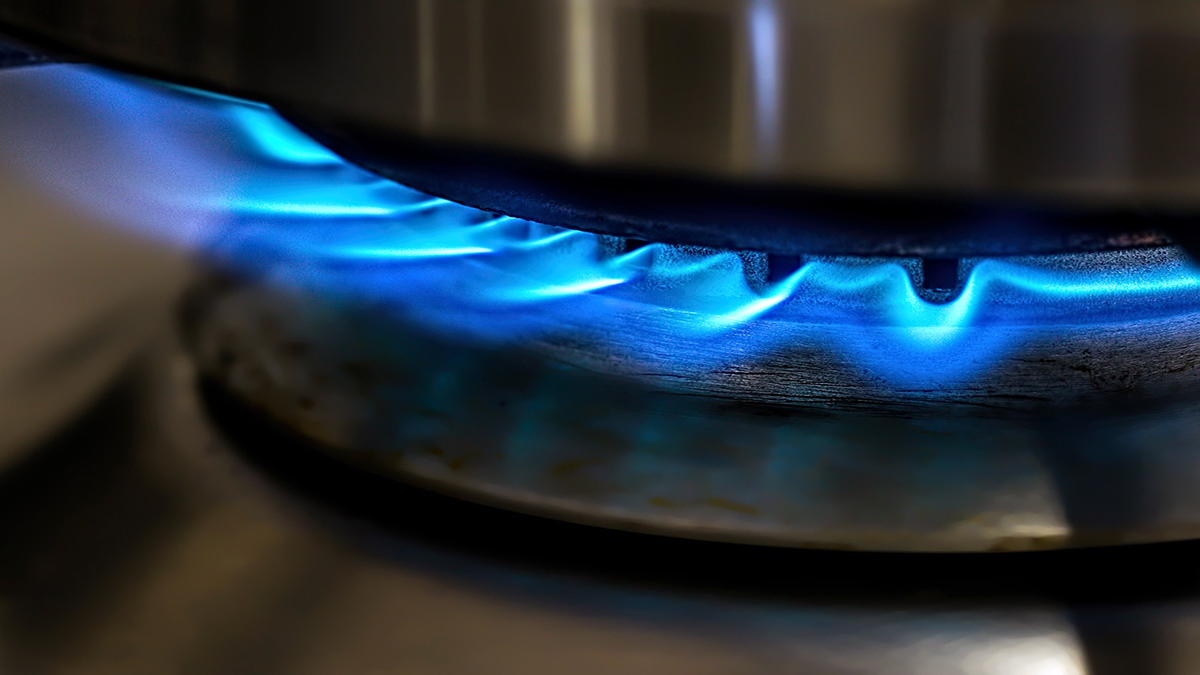
For now, the focus remains on keeping those millions of kitchen flames burning across the country. But as crude prices climb above $100 a barrel and global energy markets stay on edge, the coming days will test whether this tightrope walk between protecting homes and keeping businesses alive can hold. For millions of ordinary Indians, the daily meal still depends on it.