
India’s natural gas sector is entering a decisive phase of market-led transformation, with industry leaders and policymakers calling for deeper reforms, wider participation and stronger market infrastructure to accelerate the country’s gas-based economy.
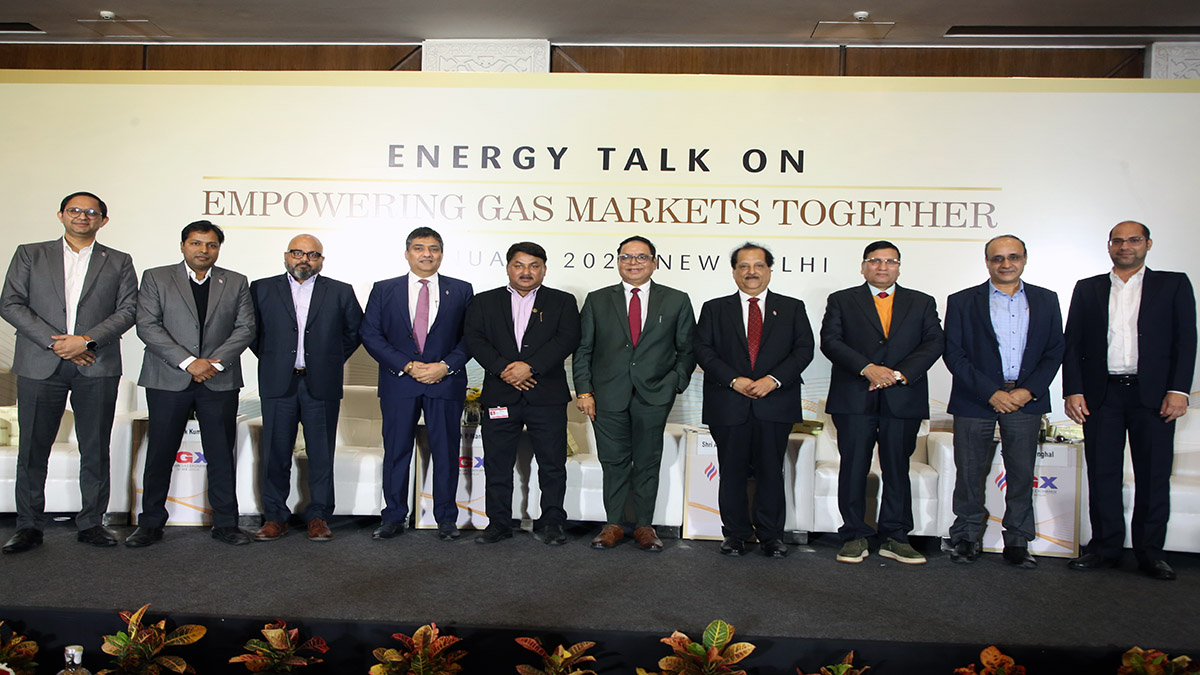
These themes dominated the event, ‘Empowering Gas Market Together’, organized by Indian Gas Exchange (IGX), India’s first automated national gas trading platform. The event brought together senior policymakers, regulators and industry stakeholders to deliberate on enablers for empowering gas markets, digital initiatives by IGX, and the launch of India’s first gas futures linked to the Gas Index (GIXI).
Addressing the gathering, Dr Anil Kumar Jain, Chairperson of the Petroleum and Natural Gas Regulatory Board (PNGRB), said India has already laid a strong physical foundation for a gas-based economy through the expansion of pipelines, LNG terminals and city gas distribution networks.
“The focus now must shift to growing gas consumption through greater market openness, higher participation and improved efficiency,” he said, highlighting the role of platforms like IGX in enhancing transparency, enabling price discovery and facilitating gas and LNG capacity trading. He added that reforms such as the entry–exit system and alignment with global best practices would help improve efficiency, reduce costs and support sustainable growth of the gas ecosystem.
Echoing similar views, AK Tiwari, Member, PNGRB, described India’s gas sector as being at a ‘critical juncture’. He emphasized the need for collaboration across the value chain to strengthen liquidity and price discovery.
“IGX has been introducing new products that are instrumental in deepening exchange-led trading,” he said, adding that longer-tenure contracts such as one-year and two-year products, LNG trading, regasification capacity booking platforms and renewable gas certificates could further strengthen the market.
IGX Managing Director and CEO Rajesh Mediratta said that while infrastructure development and reforms have progressed steadily, the next phase of growth requires stronger market institutions.
“Strengthening market infrastructure through exchanges is critical to deepen competition, simplify access and reinforce market-based price discovery,” he said. Mediratta noted that the approval of gas futures linked to GIXI, to be launched on National Stock Exchange of India (NSE), would provide structured tools for managing price risk and planning with greater certainty as India’s gas economy expands.
Alongside the announcement on gas futures, IGX unveiled a suite of digital and capability-building initiatives aimed at widening participation and improving operational efficiency. These include the IGX App, offering real-time price visibility and on-the-go market access; the IGX Academy, focused on market education and capacity building; and a Gas Management System, designed to streamline gas allocations, nominations and operational coordination across the value chain.
During the event, IGX also shared insights from the recently launched Vision 2040 – Natural Gas Infrastructure in India report by PNGRB. The roadmap outlines key reforms required to enhance market transparency and streamline access to infrastructure, including market-driven pricing, removal of destination and resale restrictions in LNG contracts, transparent third-party access to pipelines and terminals, and the creation of institutional mechanisms such as an Independent System Operator.
Together, speakers agreed that these reforms are essential to enable gas-on-gas competition and support the emergence of a national gas trading hub, positioning natural gas as a key pillar of India’s evolving energy transition.