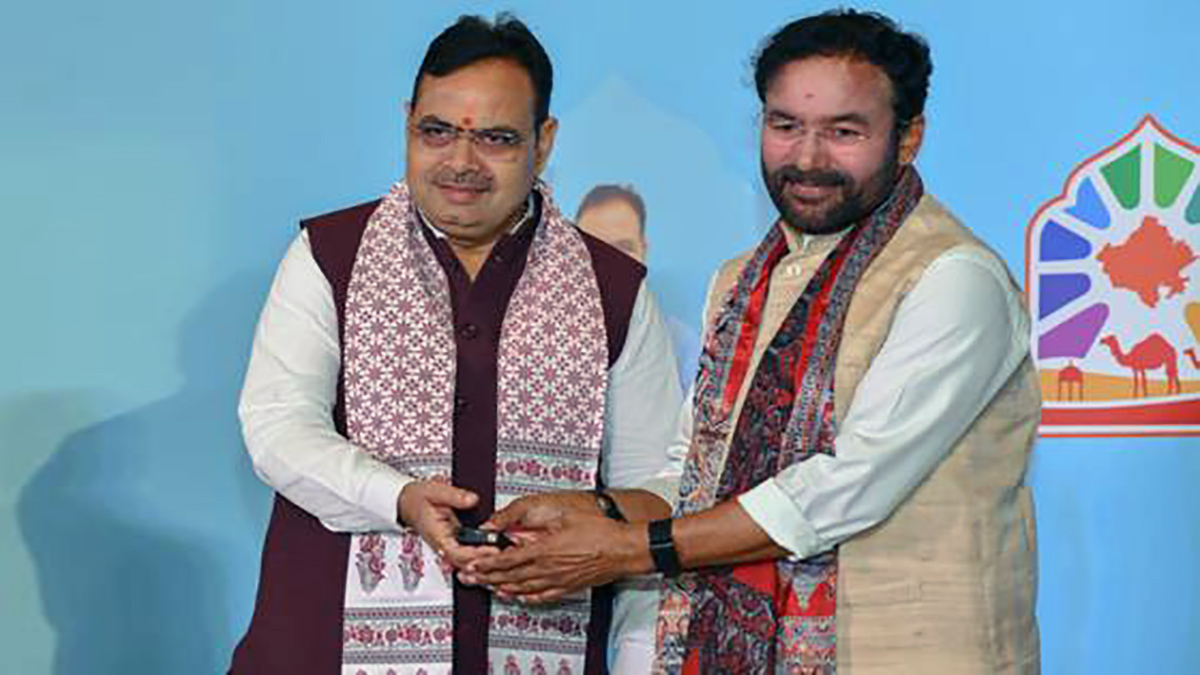

Union Minister of Coal and Mines G Kishan Reddy emphasised the crucial role of the Indian diaspora in elevating India’s mining sector to global standards. Speaking at the Pravasi Rajasthani Divas celebrations in Jaipur, he extended warm greetings to overseas Indians and noted that despite living far from home, the diaspora remains deeply connected to India’s cultural and economic spirit. He said their contributions go far beyond remittances, bringing investment, innovation, and global expertise that can significantly strengthen India’s industrial growth. Recalling Prime Minister Narendra Modi’s reference to the diaspora as “Rashtradhoot,” he stressed that their global presence enhances India’s image and influence worldwide.
Reddy highlighted Rajasthan’s long-standing mining heritage, describing the state as not only a cultural jewel but also a major pillar of India’s mineral economy. He noted that Rajasthan has historically led advancements in mineral extraction and continues to be a top producer of marble, granite, sandstone, and slate. This mineral wealth, he said, makes the state central to India’s mineral security and future growth in the sector.
The minister also pointed to the sweeping mining reforms introduced under the Modi government, including transparent auction systems, increased private sector participation, and permission for 100% FDI in exploration. These efforts, he said, are rooted in cooperative and competitive federalism, enabling India to harness the full potential of its mineral-rich states. Improved ease of doing business has further encouraged new investments and modernisation within the sector.
Discussing India’s strategic push toward securing critical minerals, Reddy underscored the importance of the National Critical Minerals Mission, which carries an outlay of ₹34,300 crore. He said the country has, for the first time, auctioned Exploration Licenses, with seven blocks already awarded, boosting private involvement and accelerating exploration activities. He also highlighted the government’s ₹1,500 crore Recycling Scheme, designed to generate around 3 lakh tonnes of annual recycling potential and recover nearly 40,000 tonnes of critical minerals by 2030.
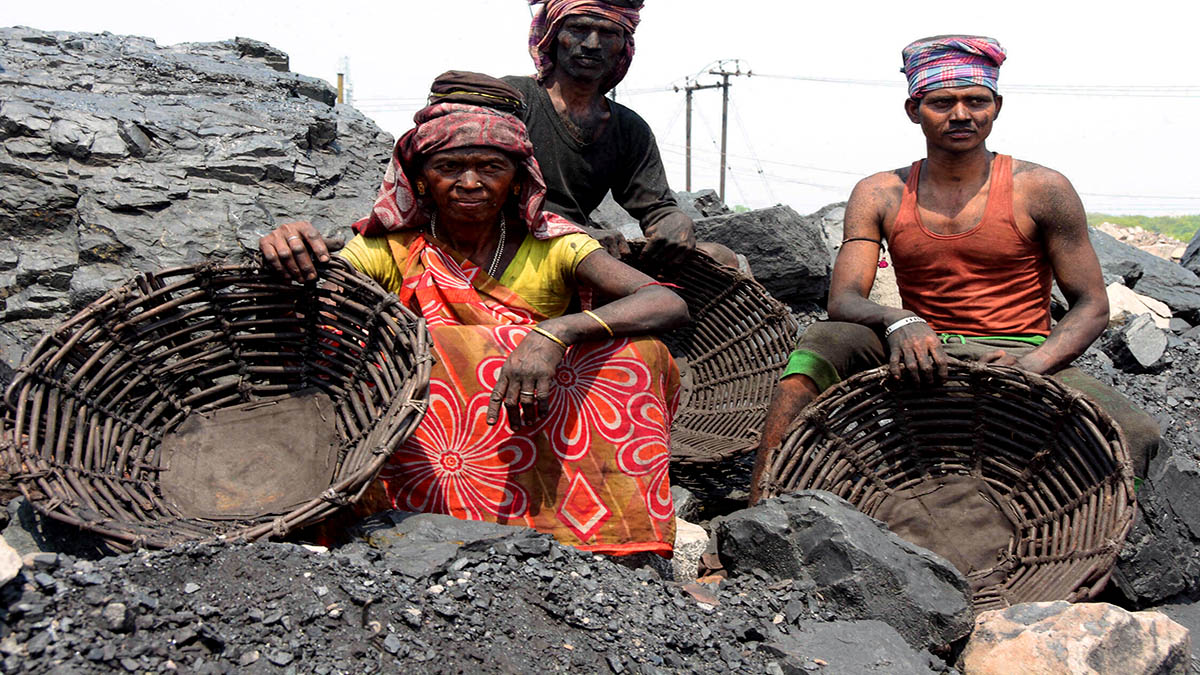
The minister added that India’s coal sector has undergone transformative changes, particularly with the introduction of commercial coal mining, which has expanded private participation and increased competition. He noted growing investment avenues in coal gasification and pointed out that underground coal gasification blocks have also been auctioned for the first time, marking a significant milestone in the sector’s modernisation.
Reddy concluded by stressing that India’s mining sector stands at a moment of immense opportunity, offering vast potential for investment, innovation, and global competitiveness. He urged the Indian diaspora to partner with institutions such as KABIL for overseas critical mineral acquisitions and contribute their global experience toward strengthening India’s mineral strategy. Calling upon them to help transform Rajasthan into a hub of opportunity, he reaffirmed that their involvement will be vital in shaping India into a global mining powerhouse.