
Recent studies have revealed significant concentrations of Rare Earth Elements (REEs) and trace elements in coal-derived waste materials, offering India a promising new source of critical minerals essential for clean energy technologies, electronics, and defence applications. These findings come at a crucial time when the government has launched focused initiatives to boost domestic mineral security and reduce import dependence.
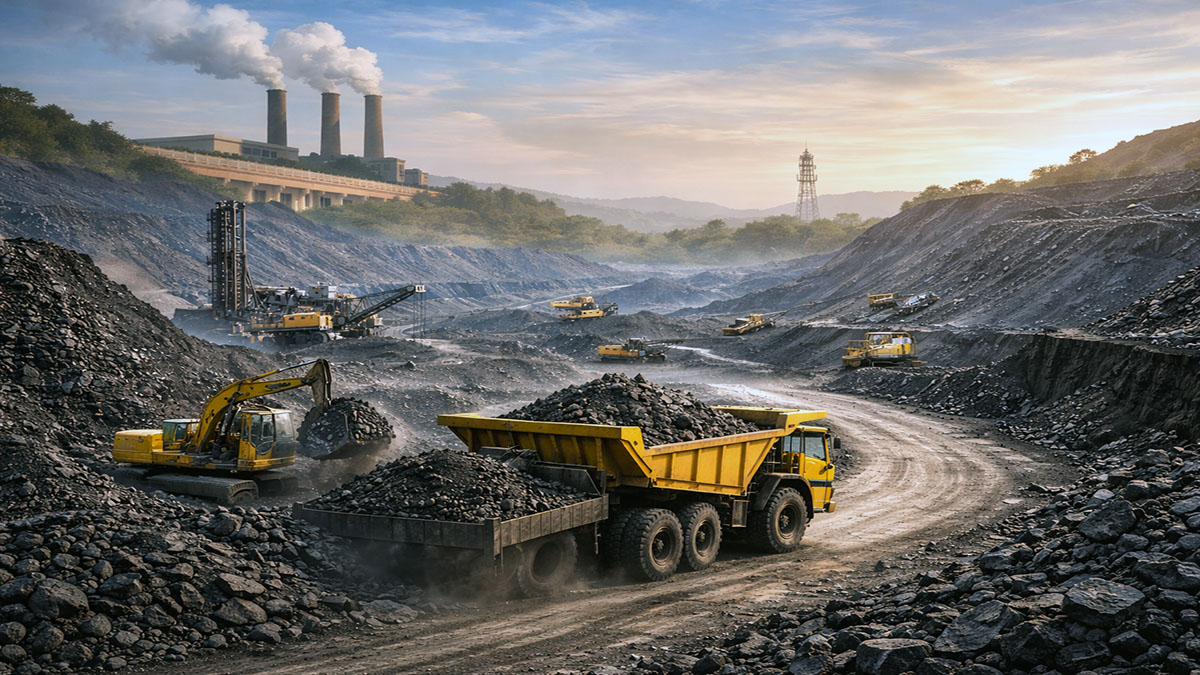
Comprehensive analyses conducted on fly ash and bottom ash samples from the Singareni Thermal Power Plant (STPP) and overburden clay have shown total REE concentrations of around 400 parts per million (ppm). Additionally, samples collected from NLC India Limited’s lignite mines and thermal power plants in Neyveli reveal even more encouraging results. Fly ash from these thermal plants was found to contain REEs at concentrations of 2100 mg/kg, with a significant Yttrium content of 300 mg/kg. These findings highlight the potential of utilizing coal by-products as alternative sources of critical minerals.
In response to these promising developments, the Government of India has approved the establishment of the National Critical Mineral Mission (NCMM) on January 29, 2025. The mission, set to run through 2030–31, aims to accelerate research and pilot projects for extracting critical minerals from unconventional sources such as overburden, tailings, fly ash, and red mud. A budget allocation of ₹100 crore has been made for these pilot initiatives, and detailed guidelines for setting up a Centre of Excellence (CoE) under the mission were approved on April 6, 2025.
Coal India Limited (CIL) has also taken active steps to explore the potential of REEs in coal mine waste through various research and development projects. In the North Eastern Region (NER) coalfields, while the total REE content was found to be relatively low, the proportion of heavy REEs is considerably high, making it a strategically valuable source. Similarly, studies conducted on Gondwana sediments, including coal, clay, shale, and sandstone in the Singrauli coalfield, suggest a promising enrichment of REEs approximately 250 ppm in coal samples and 400 ppm in non-coal materials. However, the commercial viability of extracting these elements depends on further technological advancements and achieving economies of scale.
To address this, indigenous technology development for the extraction of critical minerals from coal overburden has been initiated. The focus areas include developing enrichment techniques using physical separation methods and extraction techniques using ion-exchange resin for critical metals present in non-coal strata and acid mine drainage.
Furthermore, Singareni Collieries Company Limited (SCCL) has signed Memoranda of Understanding (MoUs) with leading institutions such as the Institute of Minerals and Materials Technology (IMMT) in Bhubaneswar, the Non-Ferrous Materials Technology Development Centre (NFTDC) in Hyderabad, and the Indian Institute of Technology (IIT), Hyderabad. These collaborations aim to advance research and innovation in the field of critical mineral extraction from coal-based waste.