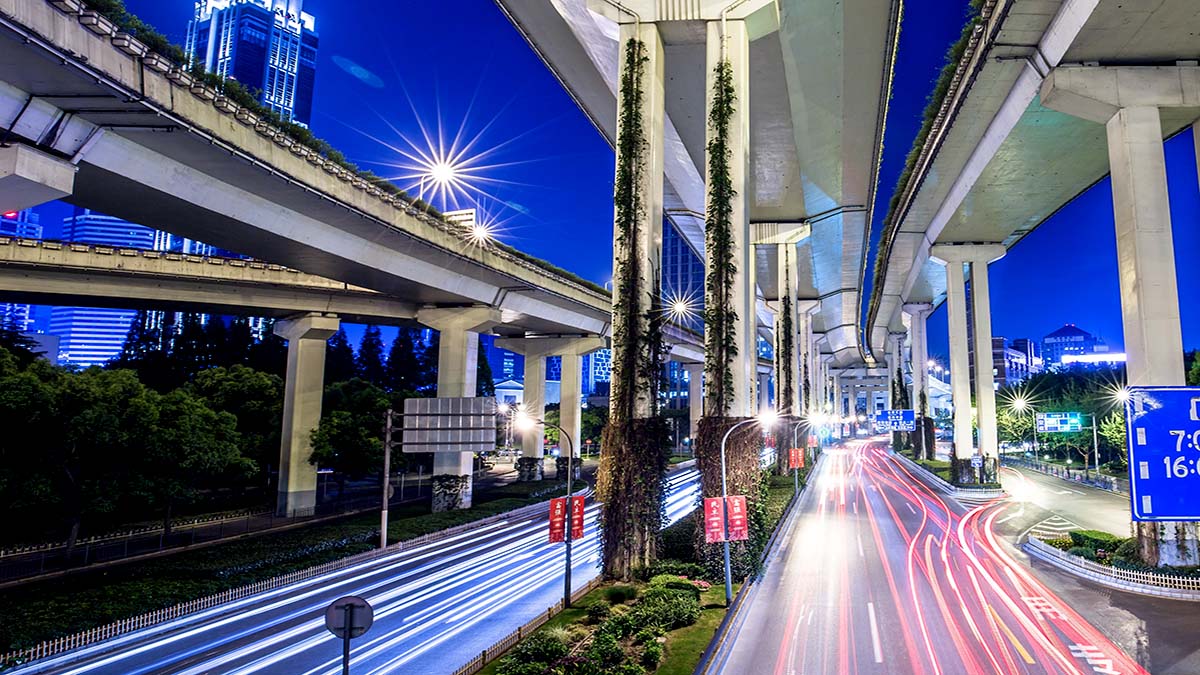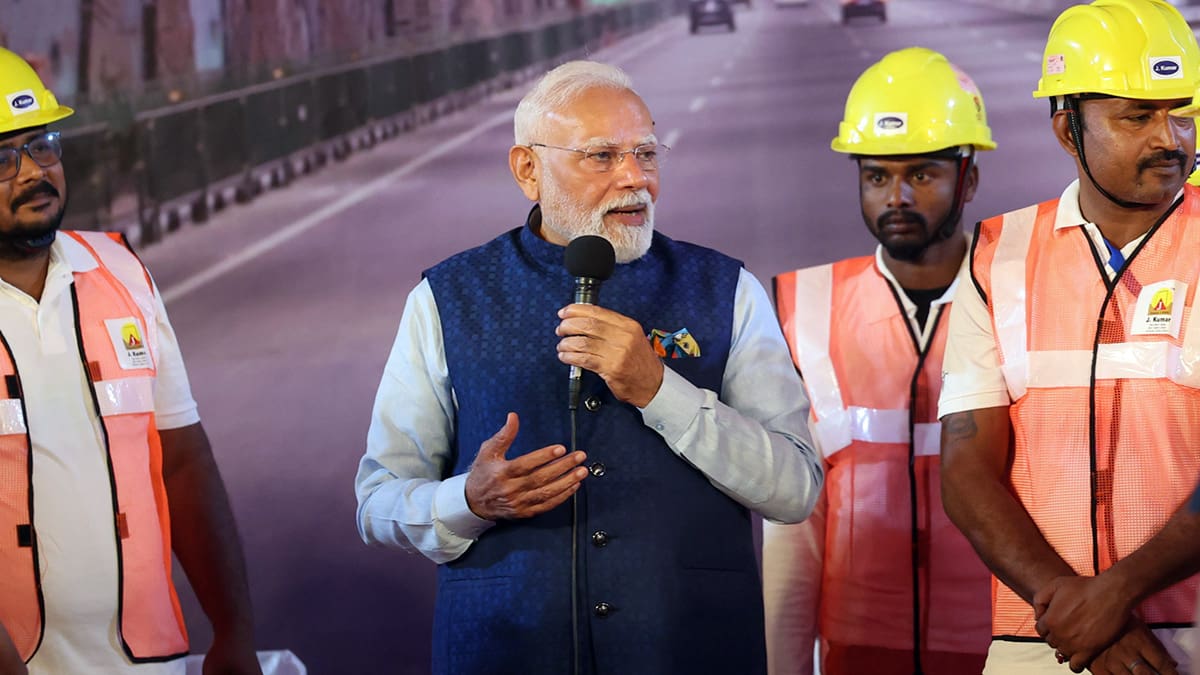

Prime Minister Narendra Modi inaugurated two major National Highway projects, the Delhi section of the Dwarka Expressway and the Alipur–Dichaon Kalan stretch of the Urban Extension Road-II (UER-II) worth nearly ₹11,000 crore, aimed at easing traffic congestion, improving connectivity, and accelerating economic growth in the Delhi-NCR region.
Speaking at a public gathering in Rohini, the Prime Minister said the developments symbolised “a revolution in connectivity and infrastructure” in the national capital. “Delhi-NCR is now among the most connected regions in the world in terms of metro and rapid rail networks, and these highways will further save time, improve convenience, and benefit traders, entrepreneurs, and farmers,” he remarked.
PM Modi linked the inauguration to the spirit of Janmashtami, noting the symbolism of Dwarka and Rohini, and urged citizens to embrace the philosophy of both “Chakradhari Mohan” (Lord Krishna) for strength and “Charkhadhari Mohan” (Mahatma Gandhi) for self-reliance. “To make India stronger and self-reliant, let us be vocal for local and buy products made in India,” he said.
The Prime Minister highlighted that lakhs of tonnes of waste material from Delhi’s landfill sites had been scientifically repurposed in building the UER-II, helping reduce garbage mounds. He also noted progress under the BJP-led Delhi government, including the launch of 650 electric buses (soon to cross 2,000) and large-scale cleaning of the Yamuna River, with over 16 lakh metric tonnes of silt already removed.
Referring to governance reforms, Modi announced that next-generation GST reforms are being finalised to provide a “double Diwali bonus” for citizens by simplifying tax rates and easing compliance. He underlined that infrastructure investment in the last 11 years has increased sixfold, creating jobs across construction, manufacturing, logistics and allied sectors.
Taking a dig at previous administrations, Modi said that “Delhi was pushed into a mess for decades,” but assured that his government is committed to making the capital a “model of growth and development.” He recalled the Eastern and Western Peripheral Expressways as examples of long-pending projects that were only realised after BJP governments assumed office both at the Centre and in Haryana.
The Prime Minister also cited the success of ‘Made in India’ initiatives such as UPI, Khadi, mobile phone manufacturing, and toy exports, stressing that every Indian purchase of locally made products boosts national strength. “If you are Indian, buy what is made in India,” he appealed to citizens and shopkeepers alike.