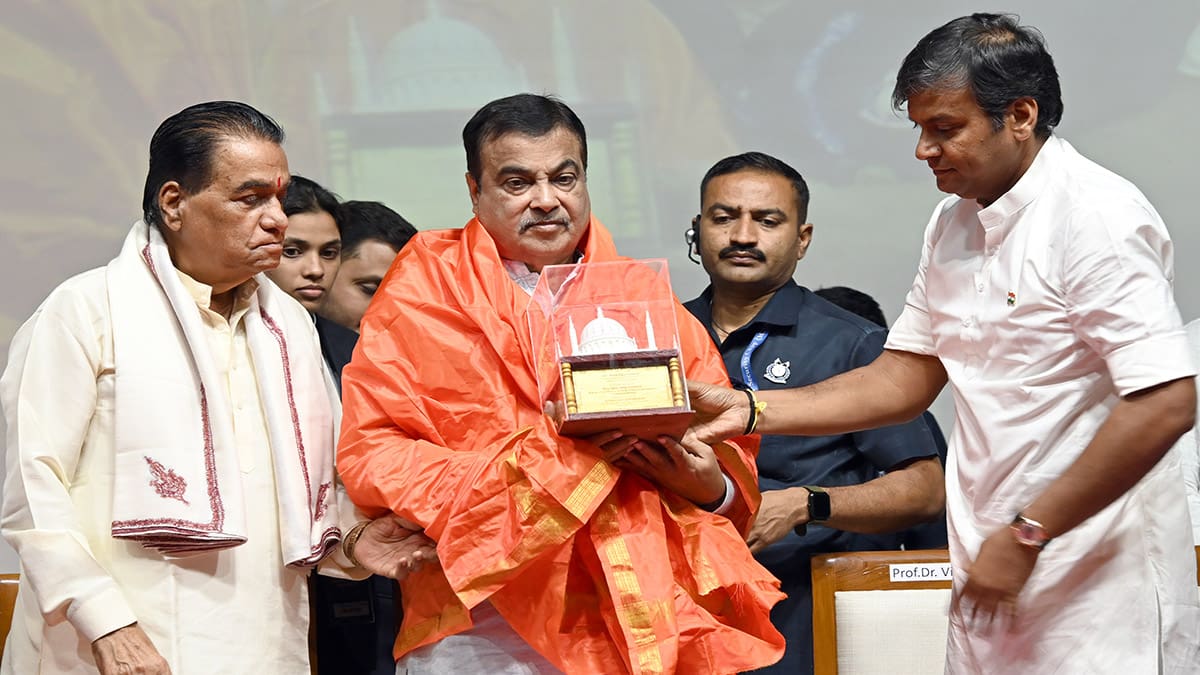

In a major push towards sustainable and climate-resilient infrastructure, Union Minister for Road Transport and Highways, Nitin Gadkari, announced plans to invest ₹2.5 to ₹3 lakh crore in tunnel projects over the next decade. The announcement was made during the inaugural session of the International Workshop on ‘Sustainable Tunnelling for Better Life’ held at MIT World Peace University (MIT-WPU), Pune. The two-day global event, hosted in collaboration with the International Tunnelling and Underground Space Association’s Committee on Education and Training (ITA-CET), has brought together experts from India, Europe, the UK, and the US to discuss innovations in tunnelling and underground construction.
A key highlight of the workshop was the launch of India’s first Centre of Excellence for Tunnelling and Underground Construction at MIT-WPU. The state-of-the-art facility features a Tunnel Monitoring Laboratory and a Drilling & Blasting Laboratory, and has been established in partnership with leading industry players Sandvik and Tata Projects Ltd. The centre aims to support cutting-edge research, innovation, and skill development in underground construction technologies.
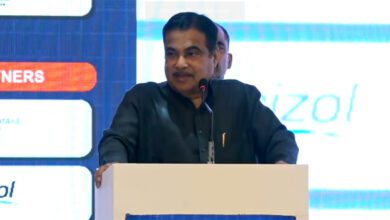
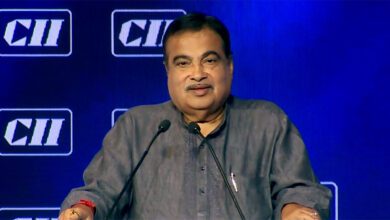
In his keynote address, Gadkari emphasised the strategic role of tunnel infrastructure in enhancing national connectivity, road safety, and environmental sustainability. He underscored the need to reduce construction costs through the adoption of sustainable fuels such as CNG, ethanol, hydrogen, and electricity, while also encouraging refurbishment and import of tunnelling machinery. “India’s varied geology demands continuous research and training. We must build our own tunnelling capacity by combining technology with talent. Industry veterans and engineers should mentor students, and my ministry is ready to provide support in the form of equipment and training. With collaboration and innovation, we can make India self-reliant in tunnelling technology,” said Gadkari. He also commended MIT-WPU for taking a pioneering step in promoting sustainable tunnelling technologies, calling it the “need of the hour” for India’s growth.
Arnold Dix, past President of the International Tunnelling Association, lauded the establishment of the Centre of Excellence and called it a globally significant milestone. Highlighting the risks posed by the gap between design expertise and practical training, he noted, “This Centre is not only essential but also reflects the challenges we must address. I see a strong bond between faculty and students here, and I am proud to witness graduates from MIT-WPU now contributing to nation-building. This initiative will save lives and enhance the global competence of India’s infrastructure sector.”
Dr Vishwanath Karad, Founder of MIT-WPU, reflected on the deeper mission of the university. He noted that while humanity has made remarkable progress in technology and communication from Facebook to artificial intelligence tools for peace and consciousness are still lacking. “Real progress lies in harmonising the body, brain, mind, and spirit. Only through this alignment can we truly understand consciousness and create a peaceful world,” he said.
Dr Rahul Karad, Executive President of MIT-WPU, highlighted the importance of academia-industry collaboration in advancing India’s infrastructure goals. He announced that Tata and Sandvik have contributed nearly ₹2 crore worth of equipment for the newly inaugurated labs. “This partnership marks a major step forward in creating an ecosystem where innovation meets national development. With support from government and industry, Indian institutions can become global leaders in specialised areas such as tunnel engineering,” he said.
Throughout the workshop, sessions focused on advanced tunnelling techniques, digital tools like Building Information Modelling (BIM) and laser scanning, and environmentally responsible construction strategies. The event stressed the growing urgency for climate-resilient infrastructure and energy-efficient technologies in India’s rapidly expanding urban and transport sectors.
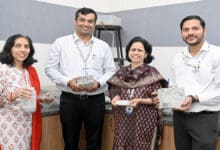
Adding to the event’s impact, MIT-WPU hosted the inaugural MIT-WPU Tunnelling Awards to honour excellence in tunnelling projects across the country. The awards recognised achievements in innovation, safety, quality, and sustainability. Distinguished technocrat SK Dharmadhikari was presented with the Lifetime Achievement Award for his longstanding contributions to the field and for mentoring future generations of tunnel engineers. Companies like TATA Projects, Larsen & Toubro, Nagpur Mumbai Super Communication Expressway (NMSCEL), and J Kumar Infra Projects received awards in various categories.
A paper competition was also held as part of the event, offering a platform for students, young professionals, and researchers to showcase emerging ideas in tunnel design and construction technologies. The competition and the overall event were widely praised for promoting meaningful engagement among key stakeholders and for fostering partnerships between academia, industry, and government aimed at addressing India’s infrastructure challenges through sustainable and responsible innovation.
The International Workshop on Sustainable Tunnelling at MIT-WPU marks a significant step toward a future where India not only builds cutting-edge infrastructure but does so with an eye toward sustainability, safety, and long-term resilience.