
The crude oil market has been thrust into turmoil over the past 10 days, with prices climbing at a pace rarely seen outside of full-blown supply crises. As of March 9, Brent crude, the global benchmark is trading around $105 to $110 per barrel, while West Texas Intermediate (WTI) sits near $103 to $105. That represents daily gains of 14-17% in some sessions and a staggering 50-60% jump over the past month alone.
The catalyst was unmistakable: the joint US-Israeli airstrikes on Iran that began on February 28. Before those strikes, Brent was holding steady in the low $70s and WTI around $67, reflecting a market already braced for geopolitical noise but not expecting direct hits on Iranian leadership and military infrastructure. Within hours of the first wave of nearly 900 strikes, prices leapt 8-13%. Brent briefly touched the high $70s to low $80s by March 1 as traders priced in the immediate risk to shipping lanes.
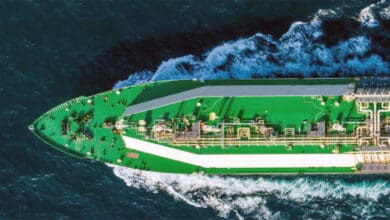
The real acceleration came in the days that followed. Iranian retaliation using drone and missile strikes on tankers and energy facilities, quickly disrupted flows through the Strait of Hormuz, the chokepoint carrying roughly one-fifth of the world’s seaborne oil and LNG. Reports of vessels anchoring en masse, a refinery outage in Saudi Arabia after a reported drone hit, and Iran’s own production of 3.1-3.5 million barrels per day coming under threat sent the market into overdrive. By the middle of last week, Brent had pushed past $90. Over the weekend and into this week, the rally turned vertical: intra-day spikes of 20% or more, with Brent flirting with $110 at one point before settling in triple digits.
What we are witnessing is classic supply-shock pricing layered on top of a risk premium that refuses to fade. Even though OPEC+ members have signalled willingness to increase output elsewhere, the uncertainty around prolonged closure of the Strait, potential damage to Iranian export terminals, and the possibility of wider regional involvement has kept buyers paying up for every barrel. Floating storage has been tapped, Asian buyers are scrambling for alternative cargoes, and freight rates for very large crude carriers have more than tripled in a matter of days. The result is the sharpest weekly gain in crude prices on record for some contracts.
Looking ahead over the next few weeks, the path points higher still, though the pace will depend on how quickly or slowly the conflict evolves. In the immediate 7-10 days, any fresh escalation, another tanker incident, or confirmation of sustained Iranian export curbs could easily drive Brent another 10-15% higher, testing $115 to $125. The market is already baking in a $14-20 risk premium per barrel; that number expands fast when headlines turn ugly.
By the end of March and into mid-April roughly two to four weeks from now prices are likely to consolidate in the $130-135 range if the fighting drags on without a decisive ceasefire. That assumes partial offsets from other producers and some rerouting of cargoes, but also persistent insurance and freight surcharges that keep marginal barrels expensive. Should the conflict stretch beyond a month with meaningful damage to infrastructure, we could see sustained trading above $140, with spikes toward $150 not out of the question in a worst-case scenario of extended Hormuz blockage.
The longer the disruption, the deeper the scars: refiners in Asia and Europe are already paying premiums for prompt cargoes, and strategic reserves in several importing nations are being drawn down faster than planned. For now, though, the market’s message is clear supply security has a new price and it is being set daily in the Persian Gulf.