
India’s urban transformation story in 2026–27 is being written in concrete, steel, transit corridors and housing blocks. The Union Budget documents reveal that urban development has evolved from a collection of welfare-linked schemes into one of the country’s largest infrastructure missions, combining transport megaprojects, mass housing, digital governance and city-level redevelopment. At the centre of this push is the Ministry of Housing and Urban Affairs (MoHUA), whose allocations position cities as engines of economic growth rather than mere administrative units.
For 2026–27, the ministry’s net allocation stands at ₹85,522 crore, of which ₹50,714 crore is revenue expenditure and a striking ₹34,808 crore is capital outlay. That capital share over 40% underscores the infrastructure-heavy nature of the urban budget. Unlike social sector spending that largely funds services, this portfolio is about asset creation: rail lines, housing stock, sanitation systems and public buildings that will shape India’s urban landscape for decades.
The single largest driver of this capital surge is urban mass transit. Metro and Mass Rapid Transit System (MRTS) projects absorb the lion’s share of funds through a combination of equity, subordinate debt and pass-through assistance. In 2026–27, ₹21,255 crore is earmarked as pass-through assistance, ₹3,371 crore as subordinate debt and ₹4,069 crore as equity investment for metro projects. An additional ₹2,200 crore goes to the National Capital Region Transport Corporation, which is building regional rapid transit corridors linking Delhi with neighbouring cities. These numbers make clear that metro rail is no longer a niche urban upgrade but a national infrastructure priority, aimed at decongesting megacities and supporting transit-oriented development.
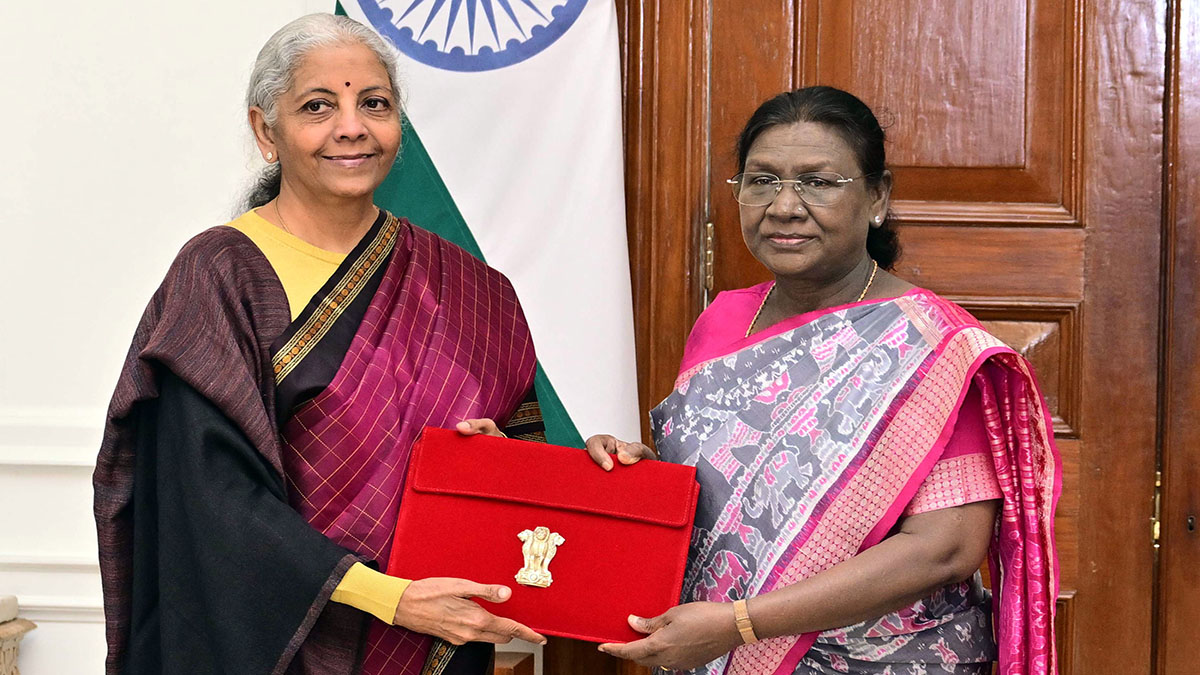
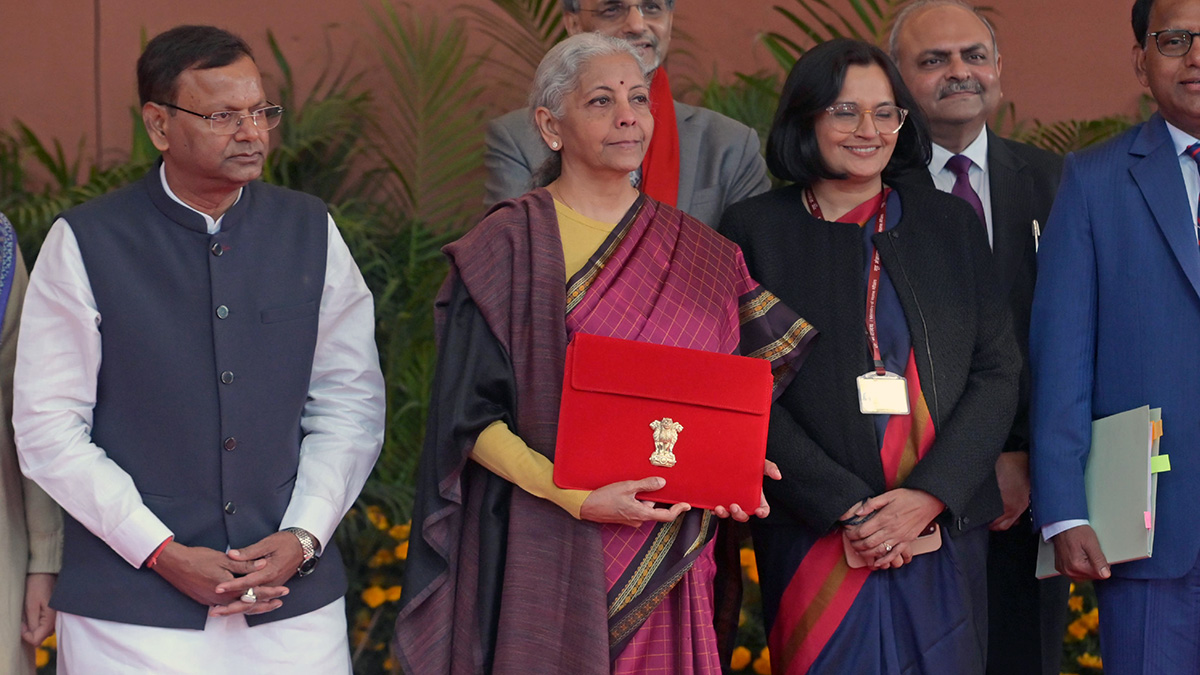
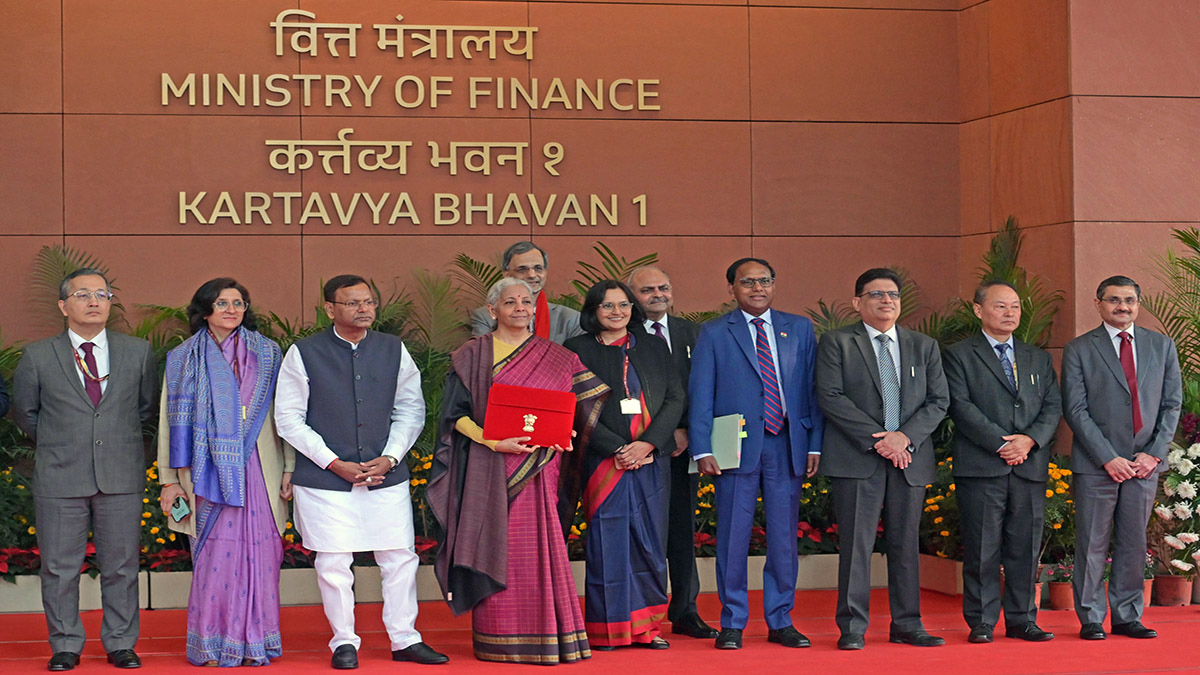
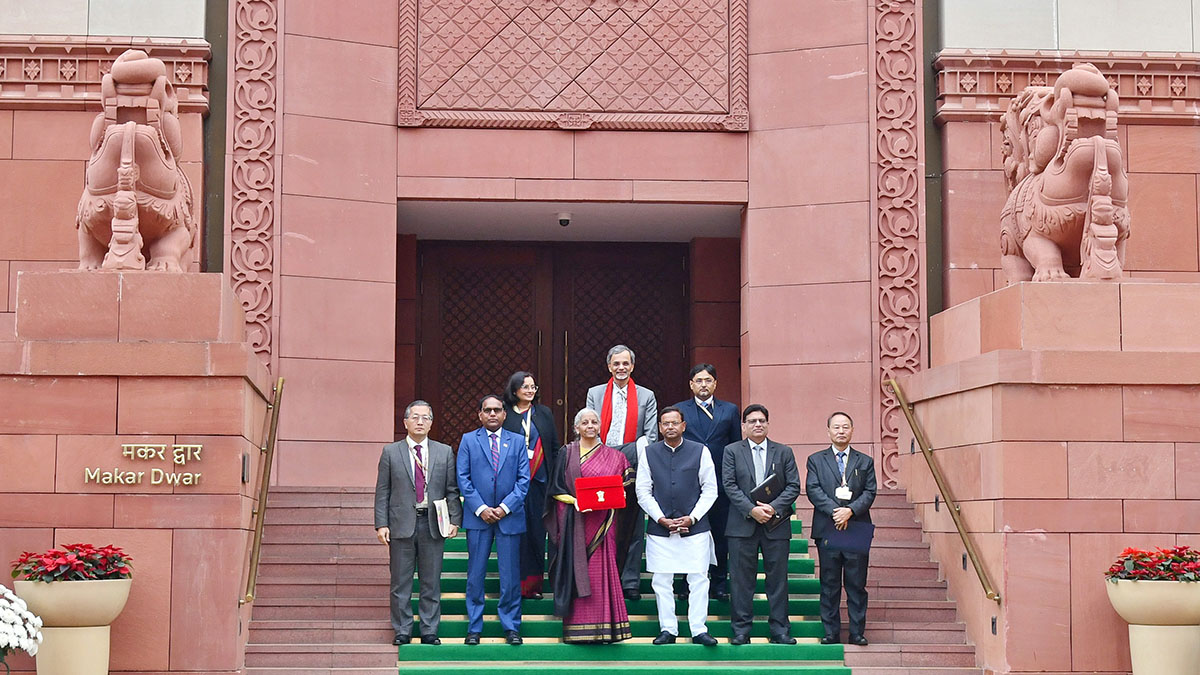
This transport push aligns with the broader economic vision articulated by Finance Minister Nirmala Sitharaman in her Budget speech, where she stressed the role of infrastructure in sustaining growth and job creation. She underlined the government’s commitment to large-scale capital expenditure as a driver of economic momentum, a framework within which urban transit and city infrastructure have become central pillars. Her emphasis that infrastructure investment remains a key engine of development sets the tone for the massive allocations to metros, urban roads and civic systems.
Housing forms the second major pillar of urban infrastructure strategy. Pradhan Mantri Awas Yojana – Urban (PMAY-U) and PMAY-U 2.0 together receive ₹18,625 crore in 2026–27. The bulk over ₹16,193 crore is channelled to states and Union Territories for on-ground housing construction. The scheme also includes ₹500 crore for the Credit Risk Guarantee Fund Trust to back housing loans without collateral, and ₹1,772 crore for interest payments on loans raised through extra-budgetary resources. In addition, the PMAY-U 2.0 Interest Subsidy Scheme allocates ₹2,000 crore for EWS/LIG beneficiaries and ₹1,000 crore for MIG households, signalling a clear policy shift toward credit-linked housing expansion rather than only grant-based construction. The strategy blends fiscal support with financial market instruments to scale urban homeownership.
Basic urban services are also being scaled up. The Atal Mission for Rejuvenation and Urban Transformation (AMRUT) is allocated ₹8,000 crore to strengthen urban water supply and sewerage systems, targeting water security and improved sanitation. Meanwhile, the Swachh Bharat Mission (Urban) receives ₹2,500 crore, focusing on waste management and sanitation infrastructure. Together, these allocations highlight that the government sees urban infrastructure not only in terms of transport and housing, but also in the foundational systems that sustain public health and environmental resilience.
A notable new instrument is the Urban Challenge Fund, which commands a substantial ₹10,000 crore allocation. Designed to support initiatives such as “Cities as Growth Hubs,” creative redevelopment and water and sanitation upgrades, this fund signals a shift toward competitive, project-based financing for urban innovation. Instead of uniform scheme guidelines, cities may increasingly compete for funding based on project quality and impact, potentially encouraging more strategic and integrated urban planning.
Urban mobility policy is expanding beyond rail. The PM-eBus Sewa Scheme, allocated ₹500 crore, supports electric bus deployment in cities, dovetailing with climate and air quality goals. At the same time, the Prime Minister’s Street Vendors’ Atmanirbhar Nidhi (PM SVANIDHI) scheme receives ₹900 crore to provide working capital loans to street vendors, linking infrastructure upgrades with livelihood protection for the informal urban workforce. This reflects a recognition that urban development must be socially inclusive, not merely infrastructural.
Digital infrastructure is emerging as a new frontier. The National Urban Digital Mission is allotted ₹300 crore to build shared digital platforms for municipal services, enabling integrated, citizen-centric governance. While small compared to metro budgets, such investments are critical for improving efficiency in service delivery, property taxation, building approvals and grievance redressal, the less visible but equally important backbone of modern urban management.
The ministry’s capital works also extend to government buildings and institutional infrastructure. ₹4,000 crore is provided for non-residential office buildings, including Central Vista–related works, and ₹1,150 crore for residential government housing. Though often controversial in public discourse, these projects are part of a broader programme to modernise public infrastructure and consolidate government facilities.
Taken together, the 2026–27 urban budget reveals a three-layered strategy. First is mobility-led urbanisation, where metro rail and electric buses aim to reshape commuting patterns and reduce congestion. Second is housing-led inclusion, using subsidies, credit guarantees and state transfers to expand affordable housing supply. Third is service-led resilience, through water, sanitation, digital governance and redevelopment funds that strengthen the everyday functioning of cities.
What stands out is the integration of financing models. Instead of relying solely on direct grants, the government is blending budgetary support with subordinate debt, equity investments, extra-budgetary borrowing and credit guarantees. This approach stretches public funds further and attempts to crowd in institutional and private finance, but it also increases the complexity of urban fiscal management. Cities and state governments will need stronger financial capacity to manage debt obligations and ensure projects deliver expected economic returns.
India’s urban infrastructure push thus reflects a broader economic thesis: cities are the primary arenas where growth, jobs and productivity gains will materialise in the coming decades. By funnelling tens of thousands of crores into transit, housing and civic systems, the government is betting that better urban form will unlock economic dynamism. Whether this investment wave translates into more liveable, equitable and sustainable cities will depend on execution at the state and municipal levels. But one conclusion is unmistakable, urban development is no longer a secondary policy domain. It has become a central pillar of India’s national development strategy.