
India’s climate action architecture in 2026–27 is being shaped less by a single headline scheme and more by a web of institutional funding, ecosystem restoration, pollution control and clean technology investments spread across ministries. The budgetary documents show that climate policy in India is not treated as a standalone silo but as a cross-cutting development priority embedded in forests, air quality, coastal resilience and energy transition. At the centre of this framework sits the Ministry of Environment, Forest and Climate Change (MoEFCC), whose allocations reveal how adaptation, mitigation and ecological protection are being financed in practice.
For 2026–27, the ministry’s net allocation stands at ₹3,759 crore, with ₹3,537 crore in revenue expenditure and ₹223 crore in capital outlay. This marks a continued rise over previous years and signals that environmental governance is being steadily mainstreamed into the Union’s expenditure framework. While modest compared to infrastructure or defence budgets, this outlay plays an outsized role in enabling India’s climate commitments through regulatory systems, scientific institutions and ecosystem-based mitigation.
The single largest climate-relevant spending head is Control of Pollution, which receives ₹1,091 crore under central sector schemes. This line supports Pollution Control Boards and the National Clean Air Programme (NCAP), reflecting the government’s recognition that air quality management is both a public health necessity and a climate co-benefit strategy. Under the output–outcome framework, thousands of monitoring stations for air, water and noise pollution are being expanded, with measurable targets such as increasing cities meeting national air quality standards. Though framed as pollution control, the scale of monitoring and regulatory strengthening forms a crucial backbone for emissions tracking and environmental compliance.
Forests remain India’s most powerful natural climate asset and the National Mission for a Green India receives ₹212.5 crore in 2026–27. This includes afforestation, ecosystem restoration and forest fire prevention, partly financed through transfers to and from the Sovereign Green Fund. These investments directly enhance carbon sinks while improving biodiversity and rural livelihoods. Forest fire prevention alone receives ₹40 crore, a sign of growing attention to climate-driven risks such as rising temperatures and extreme weather that make forests more vulnerable. In India’s climate calculus, trees are not just ecological heritage; they are living carbon infrastructure.
Biodiversity and ecosystem conservation add another layer to the climate strategy. Conservation of Natural Resources and Ecosystems receives over ₹34 crore, covering wetlands, lakes and biospheres that act as natural buffers against floods, droughts and heatwaves. Meanwhile, the Integrated Development of Wildlife Habitats programme commands ₹404.78 crore, including major funding for Project Tiger and Project Elephant. Healthy wildlife habitats are increasingly seen not only as conservation priorities but as climate adaptation landscapes that sustain water cycles and ecological resilience.
Climate adaptation along India’s vast coastline is addressed through the National Coastal Mission, with ₹10 crore allocated for 2026–27. Though small in absolute terms, this programme supports coastal zone management, protection of mangroves and climate-resilient planning for communities exposed to sea-level rise and cyclones. The integration of World Bank–assisted coastal projects underscores how climate finance and multilateral partnerships are supplementing domestic allocations.
Institutional capacity building forms another pillar of climate governance. The umbrella scheme for Environment Education, Awareness, Research and Skill Development receives ₹104 crore, helping train personnel, spread environmental literacy and strengthen decision-support systems. Complementing this are statutory and research bodies such as the Central Pollution Control Board (₹123 crore), the National Biodiversity Authority, and the Wildlife Institute of India. These institutions generate the data, enforcement and scientific inputs that turn climate policy from rhetoric into regulation.
The climate lens of the 2026–27 budget extends beyond MoEFCC. In the Outcome Monitoring Framework, renewable energy and green technology programmes carry explicit carbon-reduction outcomes. For example, legacy wind power support under the Generation Based Incentive scheme is linked to measurable emission reductions, while large transmission investments under the Green Energy Corridor enable integration of tens of gigawatts of renewable capacity. Though administered by the power ministry, these schemes directly influence India’s mitigation trajectory by lowering the carbon intensity of electricity.
Hydrogen and emerging clean technologies also appear as climate tools. The National Green Hydrogen Mission shows large-scale capacity targets for hydrogen production and electrolyser manufacturing, pointing toward industrial decarbonisation pathways. These allocations, while energy-sector driven, are fundamentally climate investments aimed at reducing emissions from hard-to-abate sectors like refining, fertilisers and heavy transport.
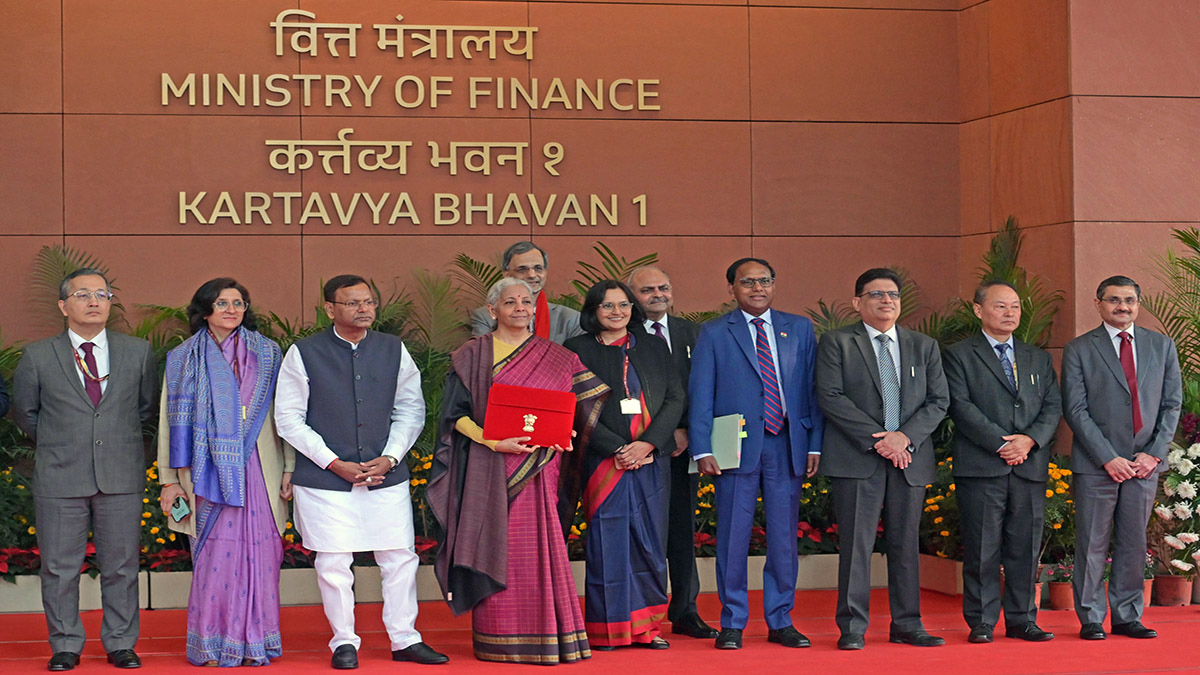
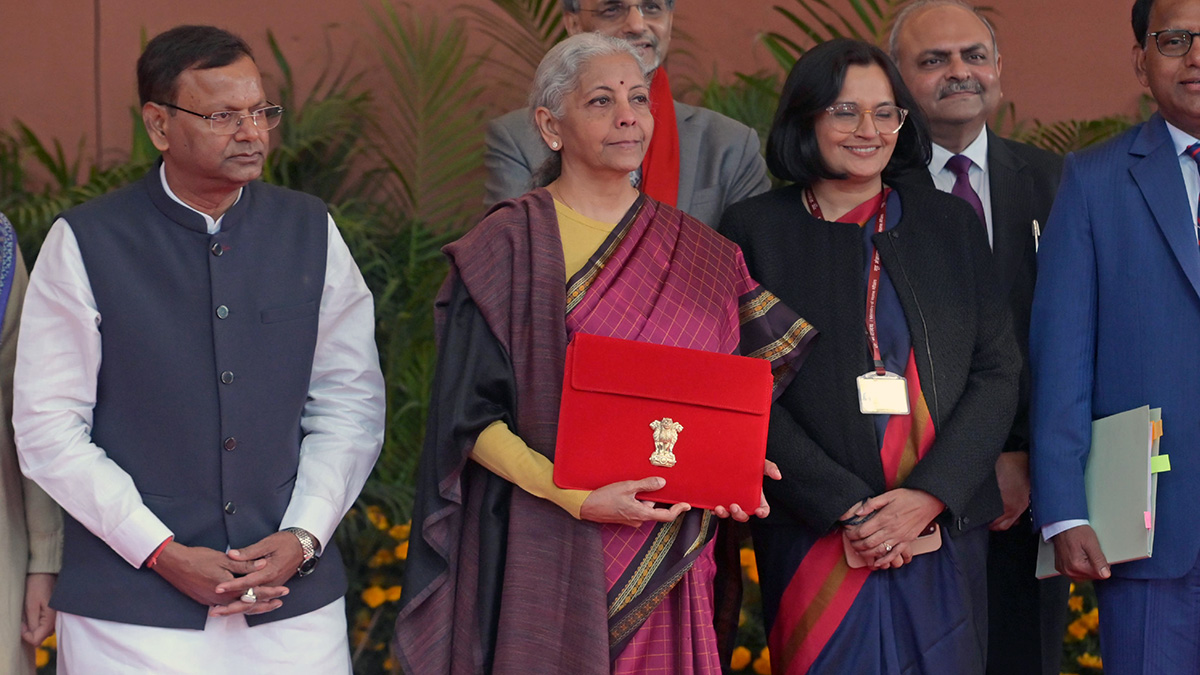
The political framing of this transition came through Finance Minister Nirmala Sitharaman’s Budget speech, where she highlighted next-generation mitigation technologies. Announcing support for carbon management, she stated that “CCUS technologies at scale will achieve higher readiness levels in end-use applications across five industrial sectors,” and proposed an outlay of ₹20,000 crore over five years for carbon capture, utilisation and storage. This marks one of the clearest acknowledgements that India’s climate pathway will require not only renewables and forests but also industrial decarbonisation technologies.
Taken together, the 2026–27 climate-related spending reveals a strategy built on four pillars. First, regulatory and monitoring strength, visible in pollution control funding and institutional support. Second, nature-based solutions, through afforestation, wildlife habitats and ecosystem conservation. Third, adaptation investments, particularly in coastal and climate-vulnerable landscapes. Fourth, technology-led mitigation, spanning renewables, hydrogen and carbon capture. None of these alone dominates the budget, but together they form a layered climate response suited to India’s development realities.
The scale of direct climate-labelled funding may appear limited, yet its influence is amplified by its catalytic role. Air quality monitoring shapes industrial behaviour; forest restoration enhances carbon sinks at low cost; research institutions drive innovation; and clean energy corridors unlock private renewable investment. India’s climate finance story is therefore not just about how much is spent, but how strategically those funds are positioned within the broader development framework.
In a world of intensifying climate shocks and tightening global carbon constraints, India’s 2026–27 allocations suggest a pragmatic approach: strengthen institutions, restore ecosystems, prepare vulnerable regions and invest in emerging technologies, all while keeping growth and poverty reduction in view. Climate action here is not an isolated environmental agenda, it is increasingly the scaffolding on which long-term economic resilience is being built.