
India’s mining and minerals sector is undergoing a structural shift in 2026–27, moving from a traditional focus on bulk commodities toward a strategic, technology-driven model centred on critical minerals, advanced exploration and supply chain security. Budget documents show that the Ministry of Mines is being repositioned as a key enabler of India’s clean energy transition, manufacturing ambitions and resource resilience in a volatile global environment.
The ministry’s net allocation for 2026–27 stands at ₹3,806 crore, up from the revised estimates of the previous year. Of this, ₹3,643 crore is revenue expenditure and ₹164 crore is capital outlay, highlighting that much of the current push is directed toward scientific work, exploration, institutional capacity and mission-mode programmes rather than large physical infrastructure. Mining policy today is being shaped as much in laboratories, survey aircraft and digital platforms as in open pits and underground shafts.
The most consequential development is the launch and scaling of the National Critical Mineral Mission (NCMM), which receives a direct budgetary allocation of ₹440 crore in 2026–27. The mission’s mandate spans domestic production, recycling of critical minerals, overseas acquisition of mineral assets, technology development and creation of a skilled workforce. It also envisions an extended producer responsibility framework and innovative financing mechanisms. This represents a decisive policy pivot: minerals such as lithium, cobalt, rare earths and other strategic elements are now being treated as national capability enablers, not just tradable commodities.
The financial backbone of this exploration surge is the National Mineral Exploration and Development Trust (NMEDT). In 2026–27, the government is transferring ₹1,500 crore to the NMEDT, which will fund regional and detailed exploration through notified government agencies. This mechanism allows sustained, ring-fenced funding for mineral discovery, accelerating geological assessments and reducing the risk profile of blocks that may later be auctioned to private players. By institutionalising exploration finance, India is attempting to correct a long-standing weakness: insufficient early-stage geological data.
At the operational level, the scientific arms of the ministry are seeing strengthened support. The Geological Survey of India (GSI) receives over ₹1,018 crore in establishment expenditure alone, apart from project allocations for mapping, airborne geophysics, remote sensing and offshore mineral assessment. GSI’s expanded role reflects the need for high-resolution geoscientific data in identifying deposits of battery minerals and other strategic resources. Exploration today is increasingly technology-intensive, relying on satellite imaging, geochemical analysis and advanced modelling rather than only ground surveys.
Similarly, the Indian Bureau of Mines (IBM) is allocated over ₹131 crore for establishment expenditure, with additional project funding for inspection, mine planning research and digitisation initiatives. IBM is developing online mining tenement systems and ore accounting software, signalling a push toward transparency, data-driven regulation and scientific mining practices. As India expands mineral production, regulatory sophistication will be as important as geological discovery.
Public sector enterprises continue to anchor India’s mineral production strategy, particularly in non-ferrous metals that are critical to infrastructure and energy systems. Investment plans for 2026–27 show that National Aluminium Company Limited (NALCO) has a planned capital outlay of ₹1,500 crore, Hindustan Copper Limited (HCL) is set to invest ₹350 crore, and Mineral Exploration Corporation Limited (MECL) around ₹22 crore. Aluminium and copper are foundational to power transmission, electric mobility and renewable energy systems, making these investments integral to the broader energy transition.
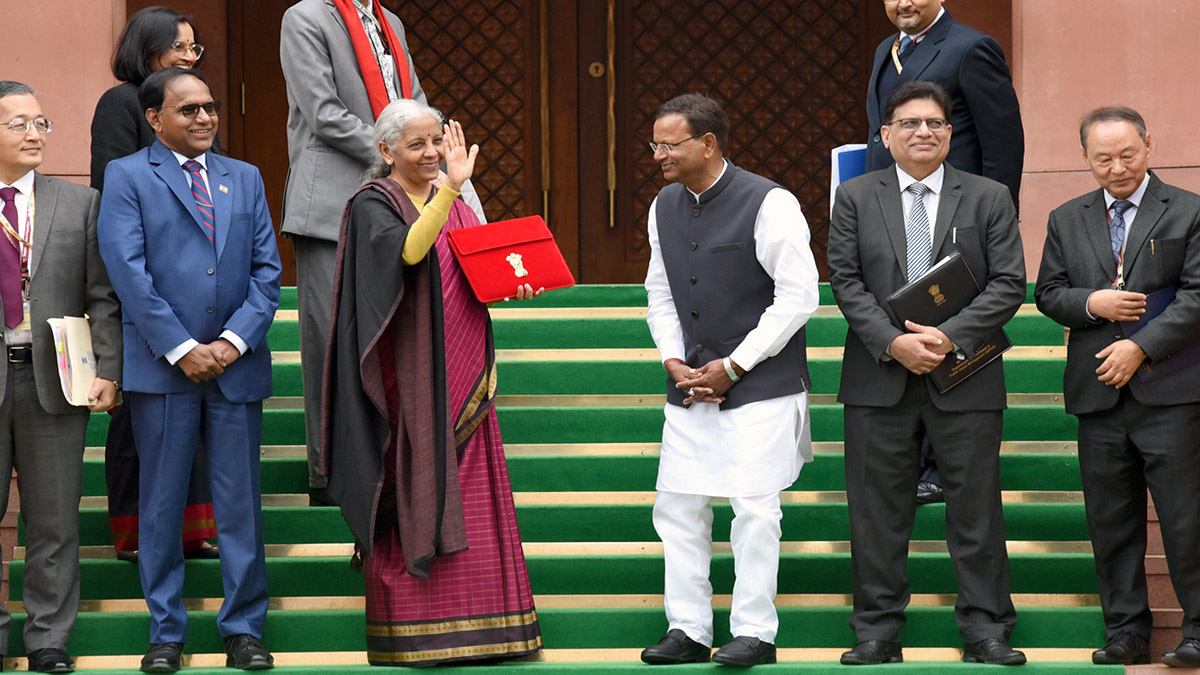
The policy direction is reinforced in the Union Budget speech by Finance Minister Nirmala Sitharaman, who highlighted the importance of building domestic capabilities in this domain. Announcing customs duty relief to support mineral processing, she stated: “It is proposed to provide basic customs duty exemption to the import of capital goods required for processing of critical minerals in India.” This measure lowers the cost of setting up processing facilities and signals that India’s strategy goes beyond mining to include value addition and refining within the country.
Beyond headline missions, the budget structure shows that the bulk of spending falls under the developmental head of Non-Ferrous Mining and Metallurgical Industries, which rises to nearly ₹3,489 crore in 2026–27. This classification captures the government’s recognition that future industrial competitiveness will depend heavily on secure supplies of metals used in electronics, clean energy systems and advanced manufacturing. Mining policy is thus being integrated with industrial and trade strategy.
Another notable feature is the increasing use of trust-based and extra-budgetary mechanisms to channel funds. By routing exploration financing through NMEDT and mission activities through NCMM-linked structures, the government is building a more flexible funding architecture. This approach allows multi-year planning and shields critical mineral initiatives from the volatility of annual budget cycles, which is essential for geological work that often spans several years before yielding commercially viable discoveries.
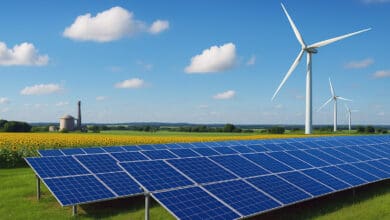
Strategically, these allocations reflect three converging imperatives. First is energy transition security: batteries, solar panels, wind turbines and electric vehicles all depend on minerals that India largely imports today. Second is manufacturing competitiveness: domestic processing capacity reduces vulnerability to supply chain disruptions and price shocks. Third is geopolitical resilience: in an era of resource nationalism and export controls, countries that secure upstream assets and downstream processing capacity gain strategic leverage.
Yet challenges loom large. Exploration success rates remain uncertain, environmental clearances can delay projects and global competition for overseas mineral assets is intense. Domestic refining and processing also require technological know-how and environmental safeguards to avoid simply shifting pollution from one country to another. The budget allocations signal intent, but execution will determine whether India can truly emerge as a significant player in critical mineral supply chains.
What is clear, however, is that mining is no longer a background sector in India’s economic planning. The 2026–27 budget shows it being repositioned at the intersection of climate policy, industrial strategy and national security. By combining mission-mode programmes, scientific capacity building and PSU investments with supportive trade measures, the government is laying the groundwork for a more self-reliant and strategically aware mineral economy, one that recognises that in the 21st century, geology is destiny as much as geography.