
India’s atomic energy programme in 2026–27 stands at a decisive moment, where long-term strategic science, energy security and industrial capability converge. The Union Budget documents, the detailed Demands for Grants of the Department of Atomic Energy (DAE), and the broader policy framing in the Finance Minister’s speech together show a sector that is neither stagnant nor symbolic. Instead, it is being methodically funded as a cornerstone of India’s low-carbon baseload power strategy and its pursuit of technological self-reliance in some of the most complex domains of modern science.
The numbers tell the first part of the story. For 2026–27, the DAE receives a net allocation of ₹24,124 crore. Of this, roughly ₹14,158 crore is revenue expenditure and ₹9,966 crore is capital outlay. The split underscores the character of the department: unlike many social ministries, atomic energy remains heavily infrastructure- and technology-driven, requiring sustained capital investment in reactors, fuel cycle facilities, research laboratories and specialised manufacturing units. Even after accounting for internal receipts and recoveries, the scale of spending signals that nuclear energy is not a peripheral bet but a long-term national project.
A large portion of this commitment flows into India’s premier nuclear research ecosystem. The cluster of Atomic Research Centres receives nearly ₹4,892 crore in 2026–27. This includes the Bhabha Atomic Research Centre (BARC), which alone accounts for over ₹3,086 crore net, continuing its role as the scientific backbone of India’s nuclear programme. Alongside it, the Indira Gandhi Centre for Atomic Research at Kalpakkam advances fast breeder technologies; the Raja Ramanna Centre for Advanced Technology in Indore develops accelerators and laser systems; the Variable Energy Cyclotron Centre in Kolkata pushes nuclear physics research; and the Atomic Minerals Directorate in Hyderabad surveys and evaluates uranium and other strategic minerals. Together, these institutions embody India’s three-stage nuclear vision, stretching from natural uranium reactors to breeder systems and eventually thorium utilisation.
Parallel to this scientific base is a renewed push in nuclear power generation. Budgetary support of ₹2,500 crore is earmarked for nuclear power projects in 2026–27, covering projects executed directly by DAE units or through public sector enterprises. While this figure does not capture the full capital cost of new reactors, it signals continued state backing for capacity expansion in a sector where private participation remains limited due to regulatory, technological and liability complexities. In a power system increasingly dominated by renewables, nuclear is being positioned as the firm, non-fossil complements capable of providing round-the-clock supply.
The industrial spine of this strategy lies in the nuclear fuel cycle. The Nuclear Fuel Complex (NFC) receives gross budgetary support of ₹3,678 crore, offset in part by substantial receipts from its operations. NFC manufactures fuel assemblies for India’s pressurised heavy water reactors, zirconium alloy cladding and other critical components. This domestic capability is essential: without assured fuel fabrication and materials engineering, reactor construction would be hostage to external supply chains. The emphasis on NFC reflects a consistent theme across the atomic energy budget, sovereignty over every stage of the fuel cycle.
Heavy water, the moderator that underpins India’s PHWR fleet, forms another pillar. Net support for heavy water facilities and associated feedstock management stands at about ₹714 crore. The Heavy Water Board operates multiple plants across the country and manages pool inventories to ensure uninterrupted supply. In geopolitical terms, this is more than a technical detail: India’s decision decades ago to pursue heavy water reactors as a route to energy independence continues to shape today’s budget lines, where maintaining indigenous production remains a strategic imperative.
Research and development funding further illustrates the long horizon of the programme. Total R&D allocations across DAE institutions amount to about ₹2,411 crore. Of this, ₹1,800 crore is directed to BARC’s projects, spanning reactor engineering, materials science, radiation technologies and advanced nuclear systems. IGCAR’s R&D receives ₹226 crore, reflecting its central role in fast breeder reactor development, while RRCAT and the Atomic Minerals Directorate pursue accelerator science and mineral exploration technologies. These investments do not yield immediate megawatts, but they seed the capabilities that define India’s technological depth decades down the line.
Beyond the departmental budget, public sector enterprises represent the largest financial engine of India’s nuclear expansion. The investment plans show that Nuclear Power Corporation of India Limited (NPCIL) alone accounts for total investment outlays exceeding ₹18,000 crore in 2026–27 when internal and extra-budgetary resources are included. Bharatiya Nabhikiya Vidyut Nigam Limited (BHAVINI), tasked with fast breeder reactor projects, and Indian Rare Earths Limited, which supports the strategic minerals supply chain, add to this industrial ecosystem. These figures highlight how nuclear development in India is driven less by annual budget grants and more by long-cycle capital programmes anchored in state-owned enterprises.
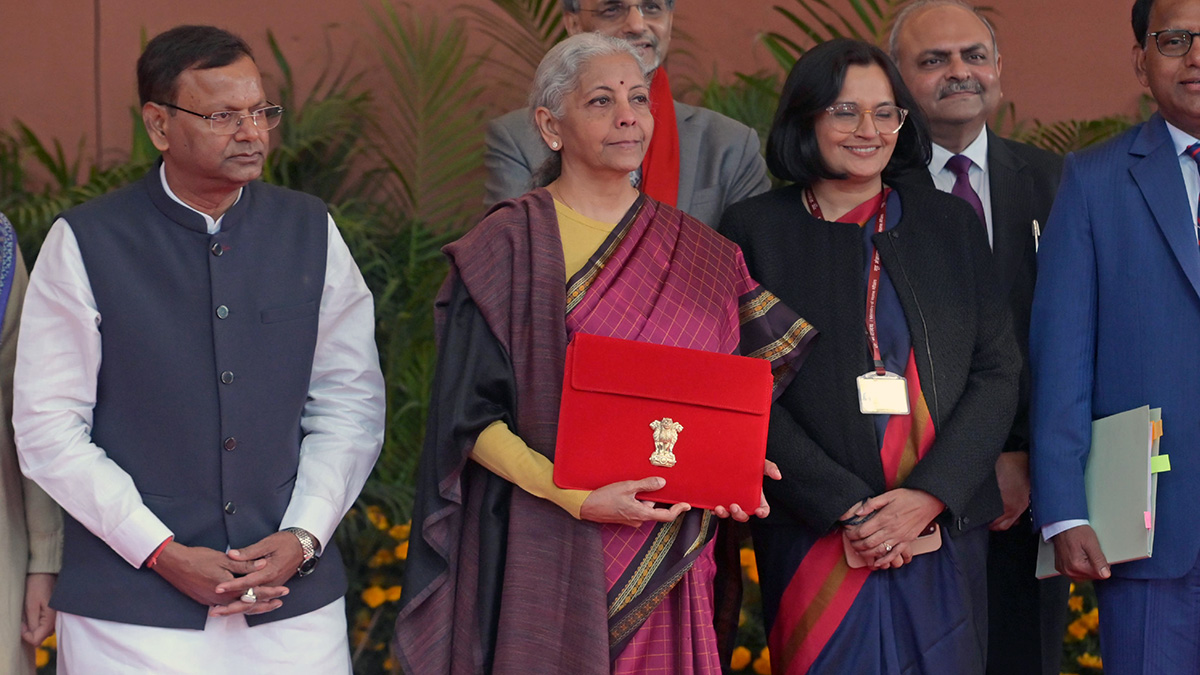
The political and policy framing of these allocations was captured in Finance Minister Nirmala Sitharaman’s Budget speech, where she emphasised the need to secure India’s energy future even as the country accelerates its clean energy transition. She noted that the government would continue “ensuring long-term energy security and stability,” a formulation that implicitly places nuclear power alongside renewables as part of a diversified, resilient energy mix. In that vision, atomic energy is not an alternative to solar and wind, but a stabilising backbone that allows higher renewable penetration without compromising grid reliability.
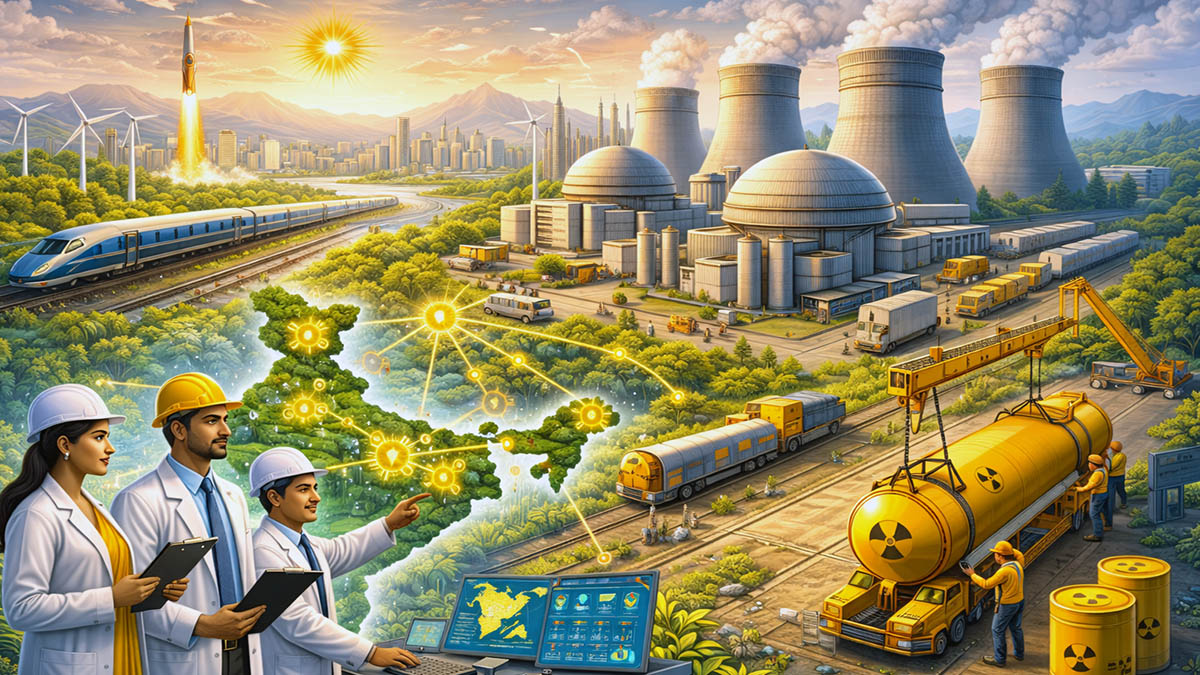
At a strategic level, the 2026–27 allocations reinforce three themes. First, nuclear power is being treated as a climate-aligned baseload source, essential for decarbonising a fast-growing electricity system. Second, India remains committed to full fuel cycle autonomy, from mineral exploration to reprocessing and heavy water production. Third, the programme is deeply entwined with advanced science and high-technology manufacturing, ensuring spillovers into materials, medicine, agriculture and industry through radiation applications and accelerator technologies.
Yet challenges remain. Nuclear projects are capital-intensive and often face long gestation periods, regulatory scrutiny and local opposition. Cost overruns and delays can strain public finances, and the economics of nuclear power must compete with rapidly falling renewable and storage costs. At the same time, the strategic and technological arguments for maintaining a strong nuclear base, energy security, grid stability and mastery of complex technologies continue to carry weight in policymaking circles.
Taken together, the budgetary and institutional signals from 2026–27 suggest that India is doubling down on a patient, state-led nuclear pathway. The country is not betting on a rapid nuclear renaissance, but neither is it allowing the sector to drift. Instead, it is funding research, sustaining industrial capacity and advancing projects steadily, ensuring that atomic energy remains a living, evolving pillar of national development. In an era of volatile fossil fuel markets and urgent climate goals, that steady commitment may prove to be one of the most consequential, if least headline-grabbing, elements of India’s energy strategy.