
India’s railways are entering 2026–27 in the middle of one of the most capital-intensive expansion phases in their history, with the Union Budget positioning the network not just as a transport utility but as a core engine of economic growth, logistics reform and low-carbon mobility. The detailed Demands for Grants for the Ministry of Railways show a system investing at a scale that rivals national highway programmes, while also grappling with high operating costs and the social mandate of affordable passenger travel.
The headline number captures the ambition. For 2026–27, Indian Railways has a gross expenditure of about ₹8.85 lakh crore, covering both revenue and capital heads. After accounting for recoveries and internal receipts, the net budgetary support works out to ₹2,81,377 crore, of which a striking ₹2,77,830 crore is capital outlay. That capital figure alone places railways among the largest public infrastructure investors in the country, underscoring the government’s belief that rail connectivity is central to growth, regional balance and supply-chain efficiency.
Network expansion remains a dominant theme. Allocations for new lines reach ₹36,721 crore, while doubling of existing tracks receives ₹37,750 crore. These projects are critical for decongesting saturated corridors, improving average speeds and enabling more freight to shift from roads to rail. Gauge conversion continues with ₹4,600 crore, completing the transition to a unified broad-gauge network that simplifies operations and enhances interoperability across regions. Together, these heads signal that capacity augmentation is still a core priority in a system where demand continues to outpace supply.
Modernisation and operational efficiency form the next layer of investment. Traffic facilities, including yard remodelling, receive ₹7,897 crore, aimed at improving train handling, reducing dwell times and boosting line capacity without necessarily laying new track. Signalling and telecom systems are allocated ₹7,500 crore, supporting modern train control, safety systems and digital communication networks. Such investments are less visible than new lines but are vital for increasing throughput and reliability on existing infrastructure.
Rolling stock procurement is one of the largest single capital heads, with ₹52,109 crore earmarked in 2026–27. This covers locomotives, coaches and freight wagons, enabling both passenger service upgrades and expansion of freight capacity. Alongside this, ₹39,650 crore is provided for leased asset payments, reflecting the growing role of financing arrangements in fleet modernisation. Large provisions under manufacturing suspense and workshop heads further indicate that Indian Railways is expanding domestic production capabilities in its own units, aligning with the broader Make in India agenda.
Safety continues to command a massive financial envelope. The budget provides ₹10,000 crore to the Rashtriya Rail Sanraksha Kosh (RRSK) and ₹45,000 crore to the Railway Safety Fund, together creating a safety pool of ₹55,000 crore. These funds support track renewals, bridge rehabilitation, signalling upgrades and elimination of level crossings. Additional safety-linked investments include ₹22,853 crore for track renewals and ₹8,225 crore for road over/under bridges. The scale of these allocations indicates that the government is treating safety not as a residual category but as a central pillar of railway investment.
Electrification and green transition efforts also continue. ₹5,000 crore is allocated for electrification projects, consolidating the shift away from diesel traction. Expenditure on diesel for traction has declined over time, while electricity for traction now accounts for over ₹25,000 crore in working expenses. Funding under the Sovereign Green Fund supports the production of energy-efficient electric locomotives and metro-related projects, positioning rail as a key contributor to India’s low-carbon transport strategy.
Urban and suburban rail systems receive targeted support through special purpose vehicles. Allocations include ₹15,000 crore for the National High Speed Rail Corporation Limited, which is executing India’s first high-speed rail corridor, ₹500 crore for the Dedicated Freight Corridor Corporation, and funds for metro-related entities such as Kolkata Metro Rail Corporation and Bengaluru Suburban Rail (K-RIDE). These SPV-based investments reflect a trend toward project-specific institutional models for complex corridors.
While capital spending surges, the operating side reveals structural pressures. Staff costs remain high at about ₹1.23 lakh crore and pension expenditure is budgeted at ₹74,500 crore, reflecting the legacy burden of a vast workforce. Energy costs are also significant, with electricity for traction exceeding ₹25,000 crore. These fixed costs constrain financial flexibility and underline why productivity gains from modernisation and capacity expansion are so important.
On the revenue side, freight continues to be the financial backbone. Goods earnings are projected at ₹1.88 lakh crore, compared with ₹87,300 crore from passenger services. The imbalance highlights the long-standing cross-subsidy model, where freight revenues support socially priced passenger fares. As the government pushes for higher freight modal share, investments in dedicated freight corridors, yard upgrades and new lines are intended to make rail freight more competitive and reliable.
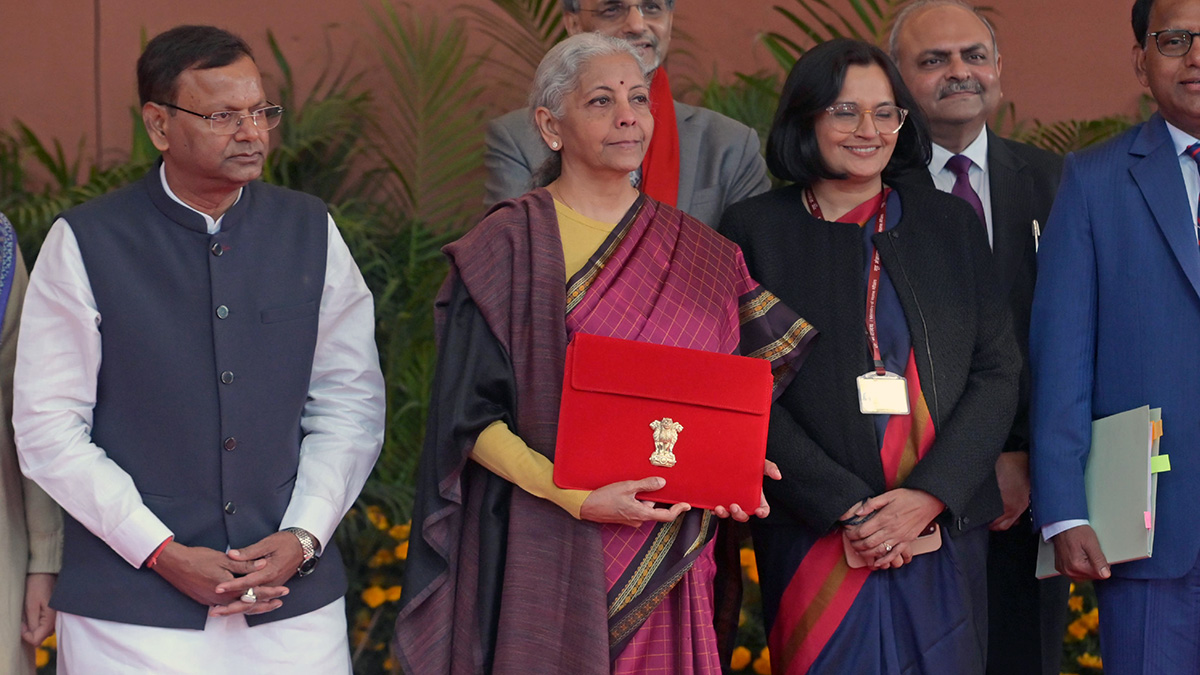
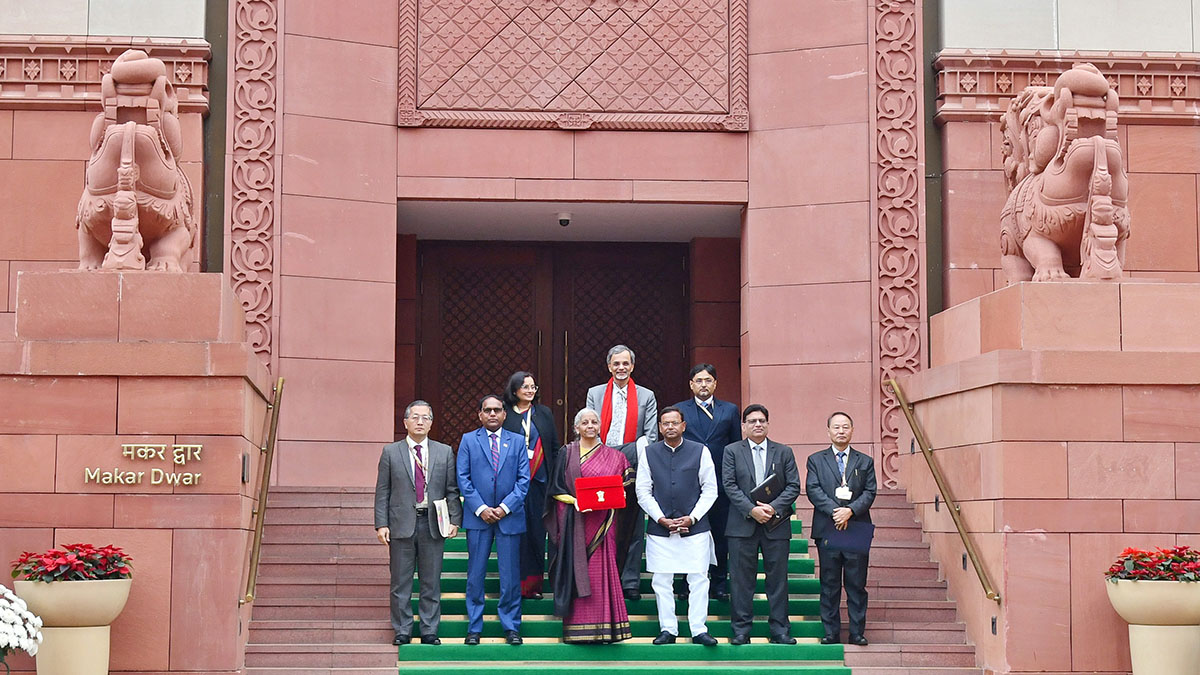
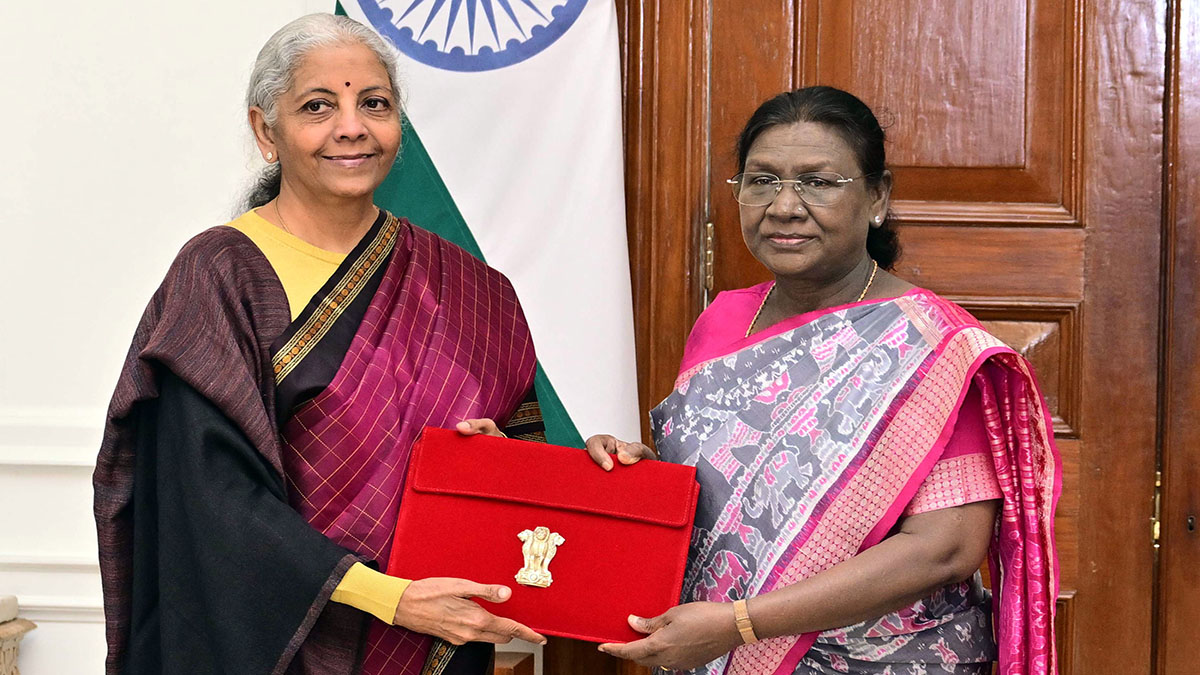
The broader policy framing comes from Finance Minister Nirmala Sitharaman, who emphasised in her Budget speech that public capital expenditure remains a key driver of growth and employment. Her assertion that infrastructure investment continues to be a cornerstone of the development strategy situates the railway outlay within a wider macroeconomic approach: large-scale public works to crowd in private investment and stimulate industrial activity. Railways, with its vast supply chains and labour intensity, sits squarely within that vision.
Taken together, the 2026–27 railway blueprint reflects a system pursuing three simultaneous goals. First is capacity expansion, through new lines, doubling and rolling stock. Second is safety and modernisation, with large dedicated funds and signalling upgrades. Third is green and high-speed transformation, via electrification, energy-efficient locomotives and high-speed rail corridors.
The challenge will be to translate this record capital outlay into measurable improvements in punctuality, freight share and passenger experience while keeping operating finances sustainable. Yet the direction is unmistakable: Indian Railways is being reshaped not just as a legacy transport utility but as a strategic infrastructure platform for a fast-growing, increasingly urban and industrial economy. If execution keeps pace with ambition, the investments of 2026–27 could define the network’s trajectory for decades to come.