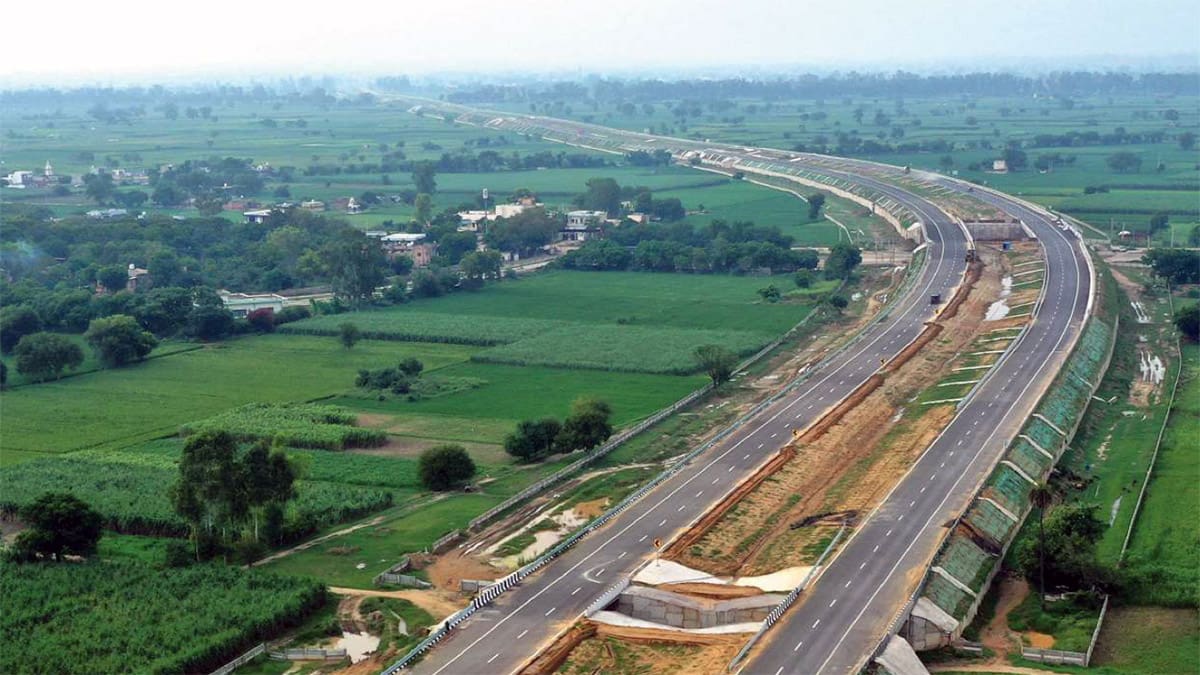

In a significant stride towards fostering environmentally sustainable infrastructure, the National Highways Authority of India (NHAI) has released its second consecutive ‘Sustainability Report’ for the fiscal year 2023-24. The extensive report offers a comprehensive account of NHAI’s efforts in aligning with Environmental, Social, and Governance (ESG) principles while accelerating the development of India’s road network. This report highlights how NHAI is integrating sustainability into its core operations, contributing to India’s national objectives and global commitments towards a greener future.
Released by Nitin Gadkari, Minister for Road Transport and Highways, the report underscores NHAI’s proactive approach in promoting environmental sustainability while maintaining the rapid pace of infrastructure development. The report highlights NHAI’s alignment with India’s international climate obligations and the ambitious vision of Prime Minister Narendra Modi under initiatives like ‘Mission LiFE’ (Lifestyle for Environment) and the push for a circular economy.
One of the most commendable achievements of NHAI, as highlighted in the report, is the reduction in Greenhouse Gas (GHG) emissions intensity. Despite witnessing a substantial 20% increase in highway construction during FY 2023-24, NHAI successfully brought down its GHG emissions intensity from 1.0 MTCO2e/km to 0.8 MTCO2e/km. This milestone achievement reflects a successful decoupling of infrastructure growth from carbon emissions, emphasizing NHAI’s capacity to scale up development without compromising environmental health.
The report extensively details NHAI’s remarkable efforts towards fostering a circular economy, one of the principal pillars of sustainability. In FY 2023-24, NHAI effectively utilized over 631 lakh metric tonnes of recycled and reused materials, including fly ash, plastic waste, and reclaimed asphalt, in highway construction. This approach not only minimizes the environmental burden by reducing the demand for virgin materials but also plays a crucial role in efficient waste management. Such practices align seamlessly with global sustainability standards and exemplify how infrastructural growth can be harmonized with ecological conservation.
A key feature of NHAI’s sustainability efforts has been its aggressive and expansive tree plantation programs. Since the rollout of the Green Highways (Plantation, Transplantation, Beautification, and Maintenance) Policy 2015, NHAI has been consistently working to create robust carbon sinks along national highways. The report documents that in FY 2023-24 alone, NHAI planted more than 56 lakh saplings, and in FY 2024-25, this number increased further to 67.47 lakh. Cumulatively, NHAI has planted over 4.69 crore trees to date, greatly enhancing the ecological footprint of national highways.
NHAI’s approach to water conservation has also been exemplary. Under the Amrit Sarovar Mission, NHAI has rejuvenated 467 water bodies across various regions. These water bodies not only serve the local communities by replenishing groundwater levels but also provide approximately 2.4 crore cubic meters of soil for highway construction, leading to a financial saving of nearly ₹16,690 crore. Additionally, NHAI’s focused efforts have led to a remarkable 74% reduction in water use intensity in water-stressed regions, highlighting its commitment to resource efficiency.
In its commitment to biodiversity preservation, NHAI has integrated the ‘Best Practice Guidance Document on Eco-friendly measures to mitigate impact of linear infrastructure on wildlife’. This framework serves as a proactive step to minimize man-animal conflicts and conserve local ecosystems while expanding the road network.
The social responsibility aspect of the report reveals NHAI’s dedication to inclusivity and employee welfare. The report declares that 100% of NHAI’s direct employees and contractual workforce are covered under the Occupational Health and Safety (OHS) Management Framework. In a significant accomplishment, there were zero reported cases of workplace discrimination during the reporting period, showcasing NHAI’s unwavering commitment to promoting diversity, equity, and inclusion within its workforce.
Another crucial focus of the report is NHAI’s emphasis on technological integration to improve operational efficiency and transparency. The introduction of the AI-powered ‘Data Lake 3.0’ platform is a game-changer in project management and dispute resolution. Through this system, NHAI successfully resolved 155 conciliation claims, resulting in an estimated savings of ₹25,680 crore. This digital transformation demonstrates NHAI’s innovative approach to infrastructure governance.
Moreover, the adoption of the FASTag system reached an impressive 98.5% penetration rate, considerably reducing congestion at toll plazas and curbing vehicular emissions. This move not only streamlines vehicular movement but also effectively contributes to reducing India’s overall carbon footprint.
The report further highlights NHAI’s initiatives in adopting renewable energy, implementing sustainable construction techniques, and promoting green highways. From reducing dependence on fossil fuels to encouraging waste management practices through the use of sustainable materials, NHAI is setting new benchmarks in sustainable infrastructure development.
Aligning with international best practices, NHAI’s sustainability report adheres to the Global Reporting Initiative (GRI) 2021 Standards, ensuring transparency, accountability, and comprehensive disclosure. The report also reflects NHAI’s significant contributions to multiple United Nations Sustainable Development Goals (SDGs), including SDG 9 (Industry, Innovation, and Infrastructure), SDG 13 (Climate Action), and SDG 11 (Sustainable Cities and Communities). This multi-pronged strategy not only supports India’s commitments under the Paris Agreement but also ensures resilient and sustainable highway development.
Furthermore, NHAI’s governance framework includes stringent anti-corruption measures and ethical practices. The organization has adopted robust mechanisms for identifying and mitigating risks associated with its operations. The third-party verification of key performance indicators enhances the report’s credibility and reflects NHAI’s focus on data-driven governance.
With these robust initiatives, NHAI’s Sustainability Report 2023-24 emerges as a testimony to how rapid infrastructural development can coexist with environmental stewardship and social responsibility. By setting an industry-leading example in sustainable development, NHAI is not only building roads but also laying the foundation for a greener, more inclusive, and sustainable India.
In essence, NHAI’s second Sustainability Report provides an inspiring account of its sustained journey towards balancing infrastructure growth with environmental preservation, making it a model institution driving India’s progress in the Amrit Kaal era.