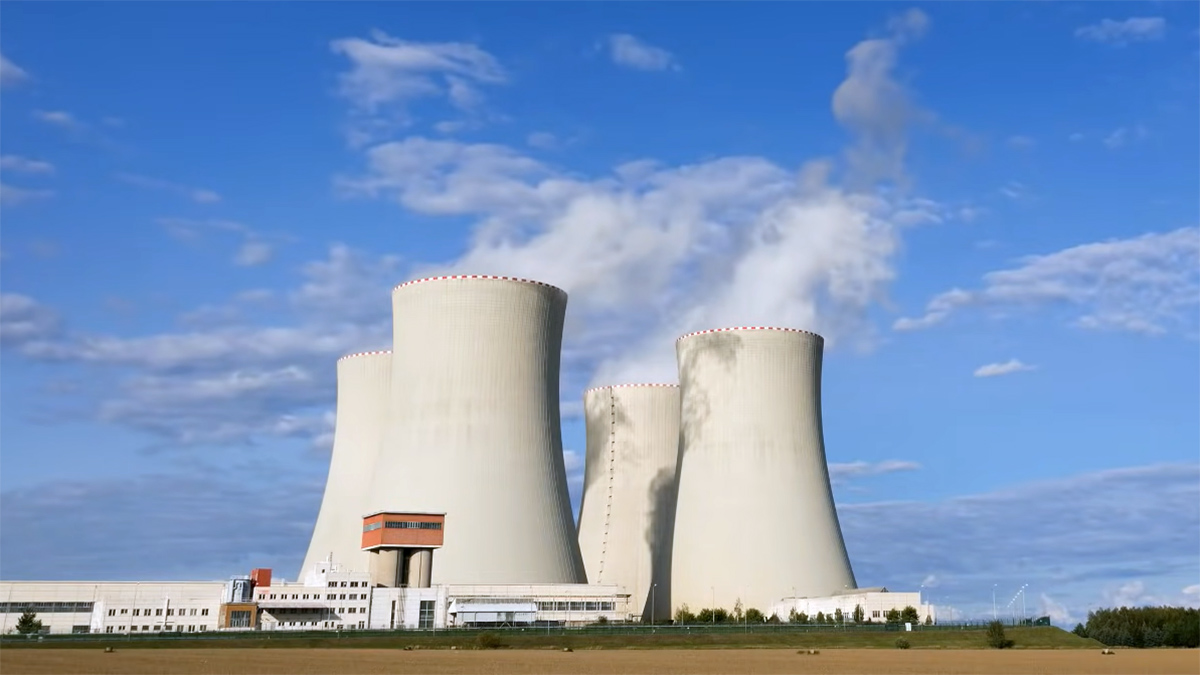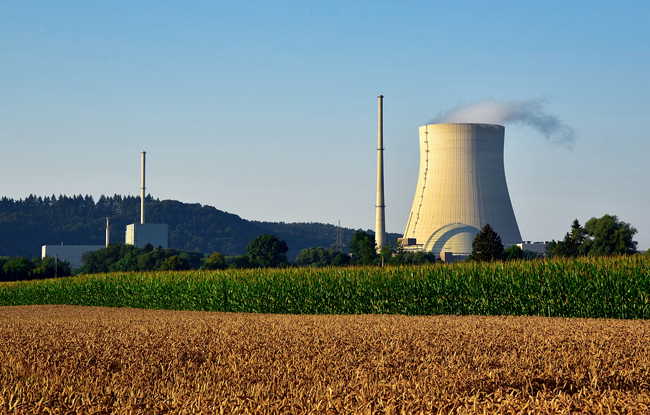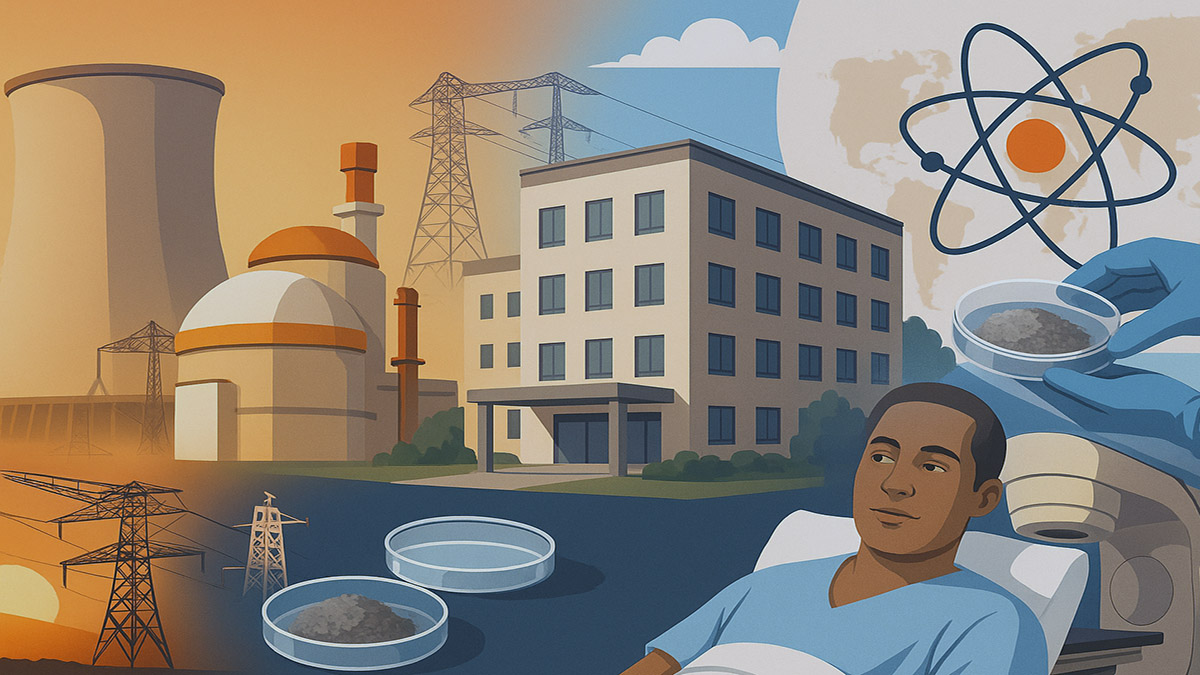

The Department of Atomic Energy’s Year End Review 2025 shows an institution operating at a historic peak of capability, output, and scientific ambition. In a year marked by record-setting nuclear power generation, major healthcare expansions, breakthroughs in materials research and growing global visibility for India’s scientific community, the DAE has underscored its role as both a technological vanguard and a strategic pillar of the nation.
India’s nuclear energy landscape saw one of its most significant inflection points this year, with Prime Minister Narendra Modi laying the foundation stone for the four-unit Mahi Banswara Nuclear Power Project in Rajasthan on 25 September. This 700 MW X 4 PHWR project, to be executed by the NPCIL–NTPC joint venture ASHVINI, signals not just the growth of India’s indigenous reactor fleet but also a widening collaboration between nuclear and conventional power sectors. The commissioning momentum continued with Rawatbhata Atomic Power Project Unit 7, India’s third indigenously developed 700 MWe PHWR, formally beginning commercial operation in April. In parallel, Kakrapar units 3 and 4 received regulatory approval for regular operation, marking the consolidation of a standardised PHWR design that will underpin India’s future reactor expansion.
This expansion is necessary because India’s nuclear power sector has quietly crossed an unprecedented milestone: 56,681 million units of electricity generated in FY 2024–25, the highest in NPCIL’s operational history. For the first time, NPCIL exceeded fifty billion units in a financial year, contributing to the avoidance of approximately forty-nine million tonnes of CO₂ emissions. Reactor reliability has also reached international benchmarks, with over fifty year-long continuous operation instances recorded to date. TAPS-3 surpassed its earlier run length record, while Kudankulam-2 joined the elite list of reactors operating uninterrupted for more than a year. These operational achievements underpin the Atomic Energy Commission’s recent decision to authorise preparatory work for ten additional 700 MWe PHWRs, expanding the planned nuclear capacity beyond the 22.5 GW target for 2032.
Health care remained one of the most visible facets of the DAE’s societal outreach. The inauguration of the 150-bed Homi Bhabha Cancer Hospital and Research Centre in Muzaffarpur by the Prime Minister expanded the Tata Memorial Centre’s rapidly growing national cancer care network. Over 1.3 lakh patients accessed TMC facilities in 2024–25, and nearly five lakh women underwent cancer screening across multiple regional centres. The 30 MeV medical cyclotron in Kolkata enhanced the availability of diagnostic radiopharmaceuticals, delivering 371 Ci-equivalent doses for PET-CT imaging. Clinical innovation continued with the introduction of 177Lu-DOTA-FAPI-2286 therapy and five new precision diagnostics, reflecting India’s push toward next-generation nuclear medicine. The successful indigenous enrichment of lutetium-176 further strengthens supply-chain autonomy in radio-therapeutic isotopes.
India’s leadership in radiation-based sterilisation expanded through electron beam and gamma irradiation platforms. The Indore e-beam sterilisation facility surpassed a cumulative 1.53 crore sterilised medical devices, supporting more than thirty-five export markets. The commissioning of ISOMED 2, currently the world’s only high-intensity land-based stationary gamma irradiator, further positions India as an international hub for radiation-based medical device sterilisation.
High-technology research and strategic manufacturing saw notable forward leaps. The release of India’s first Certified Reference Material for Rare Earth Elements, Ferrocarbonatite (BARC B1401), marks a turning point in rare-earth geochemistry and mining quality assurance. Only three such CRMs previously existed globally, placing India among a very small league of nations capable of producing them. Parallel advances in materials science came from the Nuclear Fuel Complex, which succeeded in developing high Residual Resistivity Ratio niobium, an essential ingredient for superconducting accelerators and frontier physics experiments. Breakthroughs in internal security systems included advanced CBRN protection architectures and the integration of launch control subsystems for Akash-Prime, Astra and Agni missile programmes.
ECIL’s contributions extended to export-oriented BrahMos systems with the integration of C4I modules for shore-based anti-ship applications. Strategic collaboration between DAE and the Department of Space also yielded results, with the commissioning of the Niobium Thermit Production Facility for producing critical niobium oxides for space missions.
Basic and directed research registered accomplishments with wide-ranging implications. The Heavy Water Board achieved more than 99.8 percent enrichment of Boron-11, a semiconductor-grade material essential for neutron detection and advanced microelectronics. Researchers at IMSc developed a predictive model based on the Gompertz growth formulation capable of estimating neonatal weight using only routine ultrasound data, an innovation that could transform prenatal risk assessment across India’s healthcare system. At the Jaduguda Underground Science Laboratory, the first run of InDEx, India’s dark matter search experiment, was launched, pushing the country further into the global race to uncover the most elusive constituents of the universe.
Applications of nuclear science to agriculture and food preservation continued at scale. New mutant crop varieties including the early-maturing banana TBM-9 and high-yield sorghum RTS-43 were formally notified, raising the total number of BARC-developed agricultural varieties to seventy-two. The extension of oilseed varieties to more states broadens the impact of mutation breeding on national food security. The private sector also showed growing confidence in radiation technologies, with seventeen MoUs signed for new gamma irradiation facilities and six new plants commissioned, bringing the national total to forty. BRIT’s continued support through cobalt-60 sourcing ensures the smooth functioning of this expanding ecosystem.
The year also strengthened India’s global scientific standing. Hosting the 18th International Olympiad on Astronomy and Astrophysics in August 2025 brought participants from sixty-four countries to Indian soil. Across five major international science Olympiads, Indian students mentored by TIFR achieved one of their best collective performances ever, amassing a rich tally of gold, silver and bronze medals. Institutional recognition followed as well: ECIL and IREL received the SCOPE Eminence Awards, while DAE secured the Rajbhasha Kirti Puraskar for the second consecutive year. In an affirmation of academic excellence, HBNI advanced in the NIRF 2025 rankings and secured a leading position in the Nature Index for physical sciences.
Amid these national achievements, personal excellence also found recognition, with Sonia Kapoor of AECS-2 Mumbai receiving the National Award for Teachers 2025, emblematic of the educational ecosystem that supports India’s nuclear and scientific missions.
The Year End Review paints a picture of a department deeply embedded in national development, balancing its dual obligations of energy security and strategic capability with equally strong commitments to healthcare, food protection, high-technology innovation, and global scientific engagement.