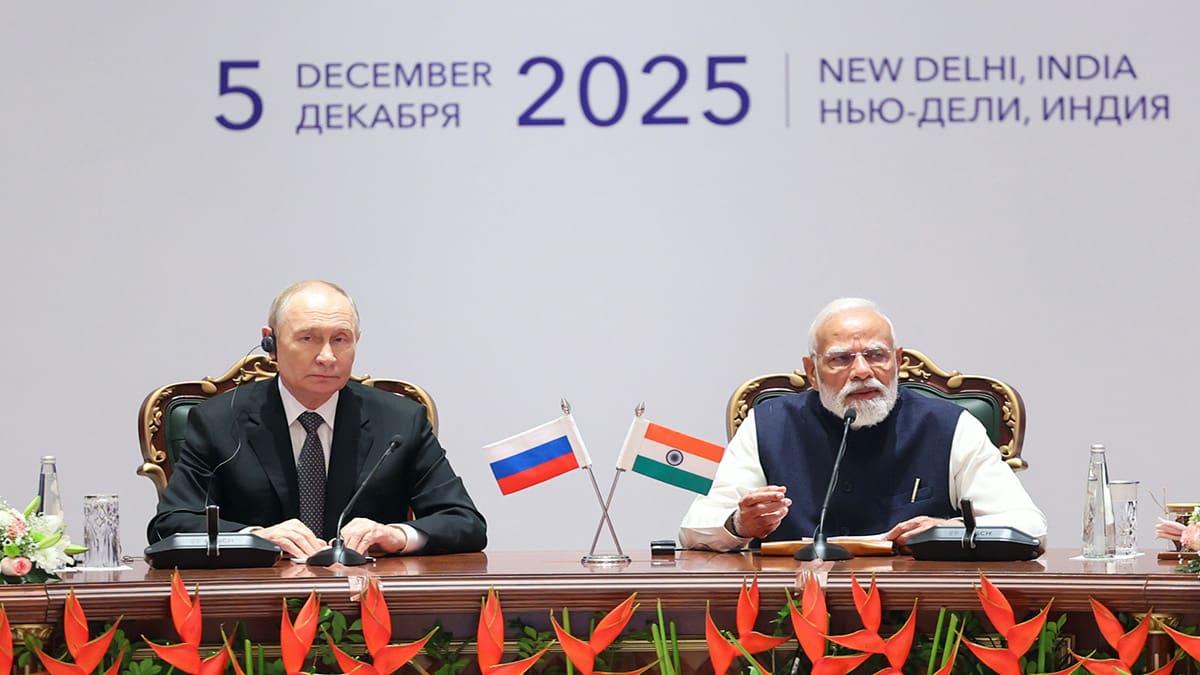

India and Russia have placed energy security, nuclear expansion and climate cooperation at the centre of their renewed strategic agenda, according to the Joint Statement issued after the 23rd India–Russia Annual Summit held in New Delhi on December 4–5, 2025. The meeting, which marked 25 years of the India–Russia Strategic Partnership, underscored that the bilateral relationship remains an anchor of stability despite global geopolitical uncertainty. This year’s summit produced a dense set of commitments across power, nuclear energy and climate action, signalling a clear intent to integrate long-term resource planning, low-carbon development and supply-chain resilience into the core of the partnership.
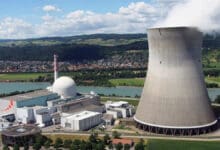
Civil nuclear cooperation stood out as a central pillar of the new roadmap. Both sides reaffirmed plans to expand nuclear collaboration beyond the existing Kudankulam Nuclear Power Plant to include fuel-cycle cooperation, life-cycle support, new reactor development and joint manufacturing of equipment and fuel assemblies. The statement placed particular emphasis on India’s ambition to raise nuclear capacity to 100 GW by 2047, a target that will require large-scale technology transfer, localisation and steady fuel supplies. The leaders agreed to accelerate talks on Russian VVER reactor designs and pushed for progress on a second nuclear power plant site in India. This shift from a supplier–client dynamic to joint development reflects India’s push for self-reliance while offering Russia a stable long-term role as a nuclear technology partner.
Beyond nuclear energy, the Summit’s energy section presented a wide-ranging agenda that spans hydrocarbons, LNG and LPG infrastructure, petrochemicals, underground coal gasification and the resolution of investor concerns in ongoing projects. Both sides reiterated that India–Russia energy ties remain a key pillar of the Strategic Partnership and committed to strengthening cooperation in upstream and downstream sectors while addressing logistics and payment bottlenecks. They also welcomed steps to ensure long-term fertiliser supplies for India and explored possibilities for joint ventures, especially important for India’s food-security chain. The agreement to enhance the use of national currencies and develop interoperable payment systems was framed as essential for uninterrupted bilateral energy trade.
Transport connectivity and Arctic cooperation formed another major component of the Summit’s energy-security strategy. India and Russia agreed to intensify work on the International North-South Transport Corridor, the Chennai–Vladivostok Maritime Corridor and the Northern Sea Route. These corridors are designed to reduce transit times, provide alternative sea routes and enhance access to Russian energy resources and critical minerals. The two sides also committed to regular consultations on Arctic issues, with India signalling readiness to play a larger role as an Observer in the Arctic Council. This is strategically linked to India’s search for critical minerals and rare earths and Russia’s intention to attract investment and expertise into the Far East and Arctic regions.
The joint statement devoted considerable attention to climate change, low-carbon development and the mechanisms of the Paris Agreement. Both governments welcomed the convening of the Joint Working Group on climate and agreed to intensify dialogue on implementing Article 6, which could enable carbon-market cooperation and mobilise climate finance. They stressed the importance of developing low-carbon technologies, sustainable finance and reforming global financial institutions to make climate funding more accessible to developing countries. Multilateral coordination featured prominently, with references to new BRICS platforms for climate research and trade, climate policy. India also encouraged Russia’s early entry into the International Solar Alliance and the Coalition for Disaster Resilient Infrastructure, both key pillars of India’s global climate diplomacy.
Taken together, the Summit outcomes reveal an integrated vision that links energy security with industrial capability, nuclear expansion with technological localisation, and climate action with multilateral collaboration. For India, these agreements promise greater stability in energy supplies, opportunities for industrial-scale localisation of nuclear technologies, and leverage in global climate governance. For Russia, the partnership reinforces its role as an energy and nuclear supplier while opening avenues for investment in its Far East and Arctic regions. As India prepares to chair BRICS in 2026 and the two countries move toward a $100 billion trade target by 2030, the durability of this strategy will depend on consistent implementation, building reactors on schedule, operationalising new transport corridors and advancing practical cooperation on climate and low-carbon technologies.