
The liquefied natural gas (LNG) industry has once again proven its resilience and adaptability in the face of an evolving global energy landscape. The International Gas Union’s (IGU) World LNG Report 2025 offers a comprehensive and deeply analytical review of the LNG sector’s performance in 2024, forecasting an ambitious future driven by technological innovation, emerging markets, and sustainable energy transitions.
In 2024, global LNG trade grew by 2.4%, reaching a record 411.24 million tonnes (MT), despite regional headwinds and market uncertainties. The U.S. led the charge as the world’s top exporter, contributing 88.4 MT, followed closely by Australia (81.0 MT) and Qatar (77.2 MT). Asia, particularly China, emerged as the primary demand engine. China’s imports surged by 7.45 MT year-on-year (YoY), totalling 78.6 MT making it the single largest LNG importer globally.
Conversely, European imports shrank by 21.2 MT amid high storage levels, strong pipeline supplies, and a surge in renewables, signalling a fundamental realignment in demand dynamics between East and West. The UK, France, and Spain were among the hardest-hit importers, collectively cutting over 13 MT of LNG purchases.
2024 also witnessed the debut of two new LNG exporters Mexico and Congo, thanks to the successful deployment of floating liquefied natural gas (FLNG) units. Global liquefaction capacity increased by 6.5 million tonnes per annum (MTPA), reaching 494.4 MTPA by year-end. The United States maintained its lead with a capacity of 97.5 MTPA, propelled by the startup of Plaquemines LNG trains T1–T8.
In tandem, global regasification capacity climbed to 1,064.7 MTPA, reflecting continued investments in energy security across 47 importing markets. China led the expansion with the addition of seven new or expanded terminals, contributing 25.1 MTPA. Germany and Brazil followed with significant contributions, while Egypt re-entered the LNG import market after reactivating its Ain Sokhna terminal.
A defining theme in the 2025 report is the LNG industry’s pursuit of decarbonisation. Electrification and carbon capture and storage (CCS) are becoming central to new project developments. Ruwais LNG in the UAE and Marsa LNG in Oman, both sanctioned in 2024, are among the first in their regions to be powered entirely by renewable electricity.
Electrification of liquefaction processes already in use at Norway’s Hammerfest LNG and the US’s Freeport LNG is set to expand. Notably, Canada’s Cedar LNG, majority-owned by the Haisla Nation, integrates hydropower in its operations, symbolising a future where LNG facilities align with indigenous and environmental priorities.
CCS projects are also gaining ground. Australia’s Ichthys Bonaparte and Bayu Undan projects, along with Malaysia’s Kasawari field and Indonesia’s Tangguh, are all part of a global pipeline aiming to deliver 35+ MTPA of CCS capacity by 2030.
Another innovation gaining traction is the integration of synthetic and renewable gases into the LNG value chain. Tokyo Gas and Mitsui demonstrated the commercial viability of bio-LNG in 2024 by shipping landfill-derived gas from the US to Japan via Cameron LNG. Meanwhile, Osaka Gas and partners are pushing forward with e-methane pilot projects in the US Midwest and Australia, aiming for commercial exports by 2030.
The global coalition “e-NG,” comprising heavyweights like Shell, TotalEnergies, and INPEX, is championing the role of e-methane in hard-to-abate sectors such as shipping, where LNG already serves as a transitional fuel.
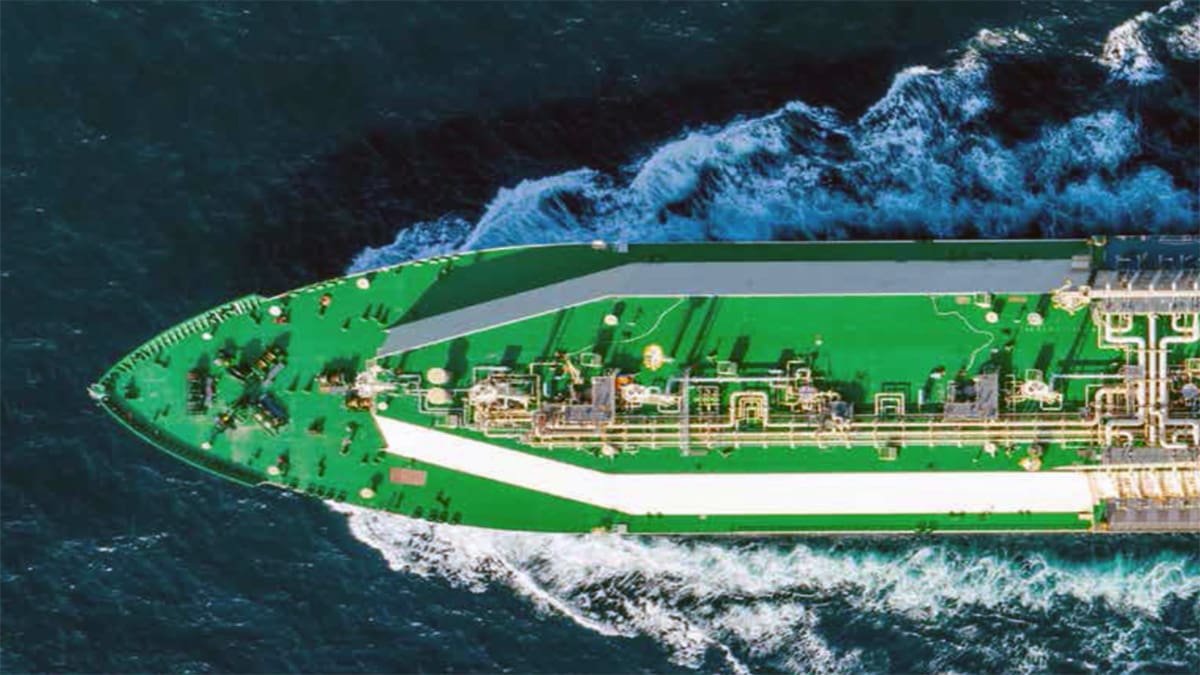
The global LNG fleet reached 742 vessels in 2024, up 7.5% YoY. Despite an increase in voyages to over 7,000, the shipping sector experienced a sharp decline in charter rates due to vessel oversupply. Two-stroke ships west of Suez commanded $94,000/day mid-year but dropped to just over $20,000/day by December.
The industry also faced logistical disruptions from geopolitical tensions in the Red Sea and climate-related issues like droughts affecting the Panama Canal. These disruptions prompted many carriers to reroute via the Cape of Good Hope, underscoring the fragility of global LNG transit corridors.
Meanwhile, floating storage and regasification units (FSRUs) continue to proliferate. With 56 bunkering vessels operational by year-end and 23 more on order, LNG’s role in marine fuel markets is expanding steadily, aided by regulatory shifts such as the IMO’s Arctic heavy fuel oil ban and the EU’s FuelEU Maritime regulation.
Looking forward, the LNG industry is eyeing a massive wave of liquefaction capacity over 170 MTPA between 2026 and 2028, with North America and the Middle East leading the charge. However, risks abound. Trade barriers, permitting delays, geopolitical conflicts, and shifting regulatory landscapes could slow progress or dampen demand.
One bright spot is the role of LNG in powering data centres. The growing demand for reliable, low-emission baseload power has made gas-fired generation particularly attractive to technology companies requiring 24/7 uptime. The US is leading this shift, but similar trends are expected to ripple across Asia and Europe.
Meanwhile, methane emission regulations especially from the EU and Asia are reshaping how LNG projects are developed and traded. The repeal of Biden-era methane rules in the US by the current administration may create misalignments with key import markets, posing challenges for exporters.
The 2025 IGU report underscores the LNG industry’s dual challenge: to meet surging global energy demand while aligning with the world’s decarbonisation goals. As new technologies, trade dynamics, and regulatory regimes continue to evolve, stakeholders must navigate a complex landscape with agility and foresight.
Yet, the industry’s ability to adapt, innovate, and collaborate has never been more evident. Whether through the deployment of FLNG units, the integration of renewable power, or the launch of e-methane supply chains, LNG remains a cornerstone of the global energy transition.
The next five years will determine whether this sector can truly decarbonise without compromising on affordability, accessibility, or reliability. The IGU’s 2025 report is a clarion call for action and a roadmap for what lies ahead.