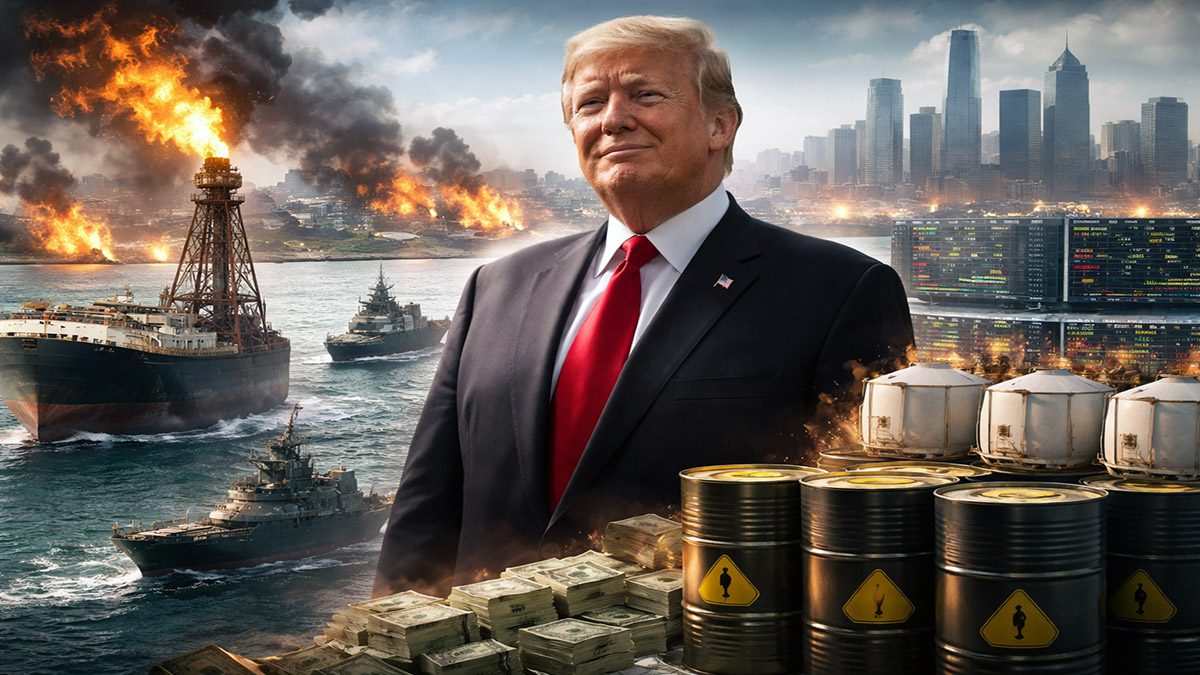

Three days into the most volatile phase of the United States–Israel–Iran confrontation, the world’s energy system is no longer merely tense, it is convulsing.
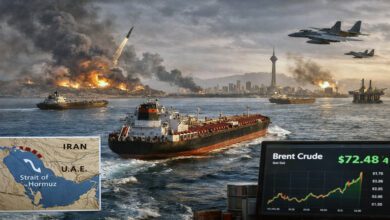
Missiles have crossed borders. Tankers have altered routes. Insurance premiums have surged. And the Strait of Hormuz, that narrow maritime artery through which roughly a fifth of the world’s oil and a comparable share of liquefied natural gas flows has once again become the most dangerous stretch of water on Earth.
Brent crude, which hovered in the low seventies only days ago, has sprinted into the high eighties in a matter of trading sessions. Traders openly whisper about $100 oil very soon. European gas benchmarks are up 45%. Asian spot LNG prices have spiked vertically, igniting panic among import-dependent economies.
Yet while energy importing capitals brace for inflation and fiscal stress, the mood in parts of Washington, Houston and Texas oil country is notably different. For the United States under President Donald Trump, the crisis is not simply a geopolitical confrontation. It is, in many respects, a validation of a long-articulated doctrine: American energy dominance as strategic leverage.
Arithmetic of Power
The United States today produces over 13 million barrels of crude oil per day, more than any other country. It is a net exporter not only of crude but of refined products and natural gas liquids, with exports exceeding five million barrels daily. Its LNG export capacity has more than doubled since Trump’s first term and continues to expand aggressively.
In previous decades, turmoil in the Gulf would have triggered fear in Washington about supply shortages and economic recession. Today, fractured global supply lines mean something very different: premium pricing for American barrels.
Every $10 increase in crude prices translates into tens of billions of dollars in additional annual revenues for US shale operators in the Permian Basin, Bakken and Eagle Ford. Within 48 hours of the first strikes in the region, energy stocks on Wall Street posted some of their strongest gains in years. ExxonMobil, Chevron and ConocoPhillips surged in double digits. Mid-cap shale firms saw their market valuations re-rated overnight.
Rigs that were idled when oil flirted with $60 last year are being mobilised again. Service companies are recalling laid-off workers. Royalty payments to states such as Texas, North Dakota and New Mexico will be rising sharply. For communities that form the backbone of Trump’s political base, the multiplier effect is immediate and tangible.
From a fiscal perspective, higher corporate tax receipts and increased economic activity provide breathing room to a federal budget under pressure.
Political Trifecta
For Trump personally, the crisis delivers three interconnected advantages.
First, it vindicates his ‘maximum pressure’ doctrine toward Iran. The military campaign now underway is framed domestically as the logical culmination of a strategy he first championed years ago: economic isolation backed by credible force.
Second, it re-energises his support base in energy-producing states at a moment when domestic economic headwinds had begun to bite.
Third, it positions the United States as the indispensable guarantor of global energy flows. European governments that once lectured Washington on climate targets are now negotiating long term LNG contracts with American suppliers. Asian buyers are scrambling for cargoes from US terminals.
In geopolitical terms, this is leverage of the highest order. Energy security translates into diplomatic gravity.
LNG: The Silent Windfall
While oil grabs headlines, the liquefied natural gas story may prove even more consequential.
Qatar’s Ras Laffan export complex has reportedly throttled back amid security concerns. Iranian threats have cast a shadow over loadings from parts of the Gulf. The result: a supply vacuum.
Into that vacuum step American LNG terminals along the Gulf Coast and increasingly the East Coast. Cargoes are being priced at levels that would have seemed implausible only months ago. European utilities, still traumatised by the Russian gas cutoff of previous years, are bidding aggressively. Japanese and South Korean buyers are locking in volumes to avoid winter shortages.
Each diverted LNG cargo is more than a commercial exchange; it is a structural shift in dependency. Nations that once balanced between Gulf producers and Russian supplies now find their energy security increasingly tethered to American production and American naval protection.
During Trump’s first term, the United States overtook Russia and Qatar to become the world’s top LNG exporter. His second term has accelerated permitting for new export terminals. The current disruption effectively guarantees a seller’s market for years.
Strategic Dividend
Beyond price spikes and quarterly earnings lies a deeper strategic gain.
Iranian oil exports, already constrained by sanctions, are now effectively paralysed. By degrading Iran’s military and nuclear infrastructure, the campaign removes a competitor from the global market for the foreseeable future. Lost Iranian supply does not simply vanish; it is replaced in part by American output.
The dollar benefits too. Oil remains priced in dollars, and higher prices mean increased petrodollar flows through the US financial system. Gulf states, buoyed by their own windfall revenues, are likely to channel funds into US Treasury securities, weapons purchases and infrastructure contracts.
The military campaign itself generates economic activity within the United States from shipyards in Virginia to aerospace facilities in California.
From Washington’s vantage point, the crisis is not merely contained; it is economically catalytic.
Domestic Risk Question
Yet no windfall is without risk. Higher global crude prices inevitably translate into upward pressure on gasoline prices in the United States, a perennial political vulnerability. American consumers are sensitive to pump prices and sustained spikes can erode public support.
However, the administration retains tools to manage short-term volatility. The Strategic Petroleum Reserve can be tapped selectively. More importantly, record domestic production acts as a structural buffer. Increased prices incentivise further drilling, creating a feedback loop that stabilises supply over time.
This ‘virtuous circle’ higher prices driving higher domestic production is a luxury few other major economies possess.
Global Consequences: India in the Crosshairs
For energy-importing nations such as India, the picture is more sobering. India imports over 80% of its crude oil needs. A sustained climb toward triple-digit oil would widen the current account deficit, pressure the rupee and potentially reignite inflation. LNG price spikes would strain fertiliser subsidies and industrial margins.
Europe’s dreams of complete energy independence appear distant. The continent remains reliant on transatlantic supplies. China faces rising import bills that could squeeze manufacturing competitiveness. Russia enjoys temporary price gains but risks long-term marginalisation as buyers prioritise perceived stability and reliability.
The global energy hierarchy is being reshaped in real time and it tilts unmistakably toward Washington.
Moral Hazard or Strategic Mastery?
Critics within policy circles argue that the economic upside was clear when the strikes were authorised. They question whether strategic calculation and economic incentive have become intertwined.
Supporters counter that energy dominance is precisely the point: a nation strong enough to profit from shocks is inherently more secure than one perpetually vulnerable to them.
Trump himself has consistently linked energy and power. At rallies in Texas weeks before the escalation, he declared that when the world needs energy, it comes to America. The market’s current response appears to affirm that claim.
Larger Lesson
Crisis underscores a brutal truth about 21st-century geopolitics: energy security is no longer solely about avoiding disruption. It is about structuring national capacity so that disruption enhances leverage rather than erodes it.
The United States has spent over a decade building that capacity through shale innovation, export infrastructure, and financial depth. The current confrontation reveals the strategic payoff of those investments.
For many in the Middle East, the fires burning in the Gulf are a source of tragedy and uncertainty. For energy-importing nations, they are a warning about vulnerability. But for the United States, they illuminate a pathway toward deeper economic influence and geopolitical weight.
As the conflict enters its fourth day and traders brace for further volatility, one conclusion seems unavoidable: in the global marketplace of power, energy remains the ultimate currency and today, that currency carries an American imprint.
For India and much of the world, the task now is not merely to watch events unfold but to recalibrate strategy accordingly. Because in this new energy order, resilience may matter more than rhetoric and dependence more than diplomacy.