
India’s renewed debate on nuclear energy, sharpened by the Economic Survey 2025–26, is often presented as a technical argument about megawatts, emissions and baseload power. In reality, it is a far deeper question about how the Indian state plans, finances and governs long-term transformation in an era of climate pressure and geopolitical uncertainty. Nuclear power has become a proxy for a larger conversation about risk, credibility and institutional maturity.
The Economic Survey makes a clear case that India’s future electricity demand will expand far faster than popular discourse admits. With per capita electricity consumption still a fraction of advanced economies and industrial activity expected to accelerate, the Survey argues that relying solely on intermittent renewables risks embedding instability into the power system. Nuclear energy, it notes, offers a rare combination of near-zero operational emissions and reliable baseload generation, qualities that become indispensable as India pursues its net zero 2070 commitment while sustaining growth above seven per cent.
This argument draws strength from international experience. France’s ability to decarbonise its power sector while maintaining industrial competitiveness is inseparable from its reliance on nuclear energy, while Europe’s recent energy shock exposed the costs of underestimating system stability. The Survey implicitly contrasts this with countries that sidelined nuclear power only to confront high electricity prices and renewed fossil fuel dependence. For proponents, the lesson is straightforward: decarbonisation without firm power is fragile.
Yet the counter-view, equally grounded in global evidence, urges caution. Nuclear energy’s clean profile does not erase its economic complexity. Across Europe and North America, nuclear projects have suffered chronic cost overruns and delays, even in jurisdictions with deep capital markets and strong regulatory institutions. Critics argue that for India, where fiscal space must accommodate health, education, climate adaptation and urban infrastructure, the opportunity cost of locking capital into decades-long nuclear projects is non-trivial. The Economic Survey acknowledges the capital-intensive nature of nuclear power, even as it emphasises long-term stability over short-term cost comparisons.
The Survey’s broader macroeconomic framing adds another layer to the debate. It repeatedly highlights that India’s high cost of capital, driven by persistent current account deficits, raises the price of all long-gestation infrastructure. From this perspective, nuclear power’s challenge is not unique but symptomatic of a deeper structural constraint. Proponents argue that precisely because nuclear plants operate for several decades with low marginal costs, they offer insulation against fuel price volatility and external shocks. Critics respond that in a rapidly evolving energy landscape, flexibility may be more valuable than durability, especially as storage technologies and grid management improve faster than nuclear construction timelines.
Public trust remains the most politically sensitive fault line. The Economic Survey is largely technocratic in tone, emphasising safety records, regulatory frameworks and technological advances. Opposing parties often counter that nuclear energy demands a level of institutional trust that cannot be legislated into existence. Protests at project sites have demonstrated that risk perception, not statistical probability, shapes public consent. In a democracy, energy transitions unfold through negotiation rather than decree, and nuclear power’s social licence remains uneven.
The question of liability sharpens this tension. India’s nuclear liability regime, despite clarifications, continues to deter private and foreign suppliers. The Survey hints at sovereign risk-sharing as a solution, reflecting its broader argument that state capacity is central to long-term transitions. Critics, however, warn that transferring risk to the public balance sheet creates contingent liabilities that may surface long after political accountability has shifted. In an era of fiscal consolidation, this raises uncomfortable questions about who ultimately bears the cost of strategic ambition.
The emergence of Small Modular Reactors adds intrigue to the debate. The Survey treats SMRs as a potential way to reduce costs, shorten timelines and expand deployment options. Supporters see them as a bridge between centralised nuclear power and a more distributed energy future. Skeptics caution that SMRs remain largely unproven at commercial scale and risk becoming a policy placeholder that delays investment in mature solutions such as transmission, storage and efficiency. The divergence here is less about technology than about policymaking discipline under uncertainty.
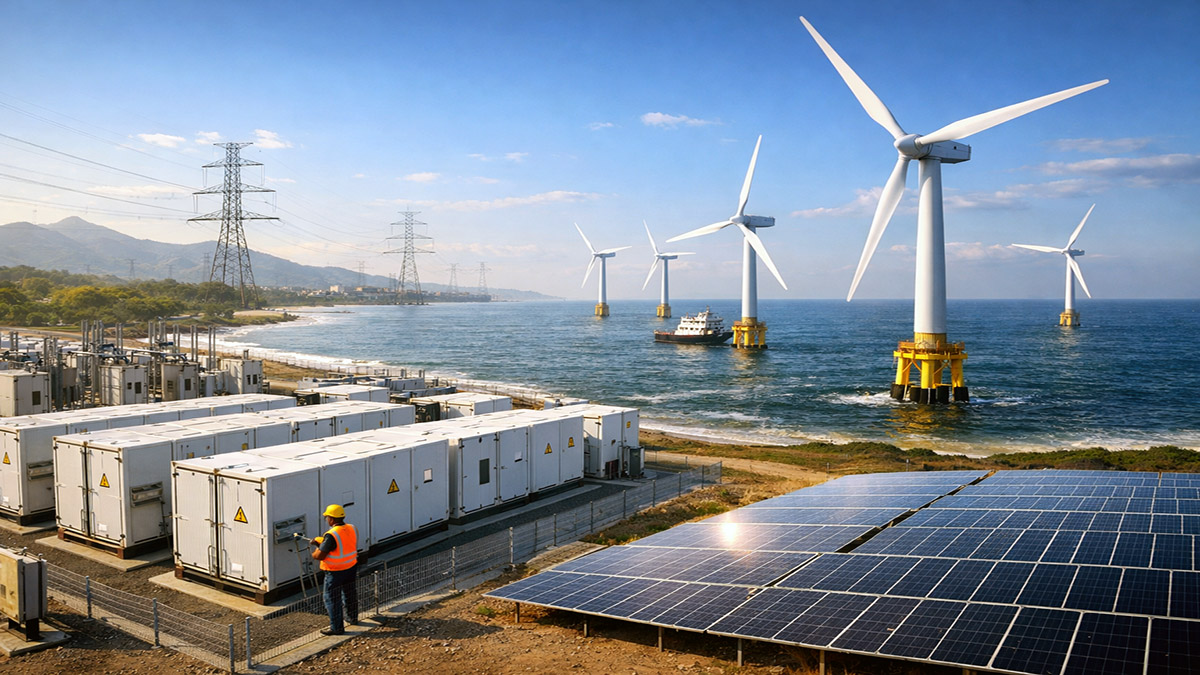
What both sides increasingly agree on is that nuclear energy cannot be evaluated in isolation. The Economic Survey repeatedly stresses that renewables, grid infrastructure, storage and regulatory reform are non-negotiable regardless of nuclear expansion. Even critics of nuclear power accept that a limited, incremental role may be defensible, provided it does not crowd out faster-return investments or erode democratic consent. The real disagreement is about centrality and pace, not relevance.
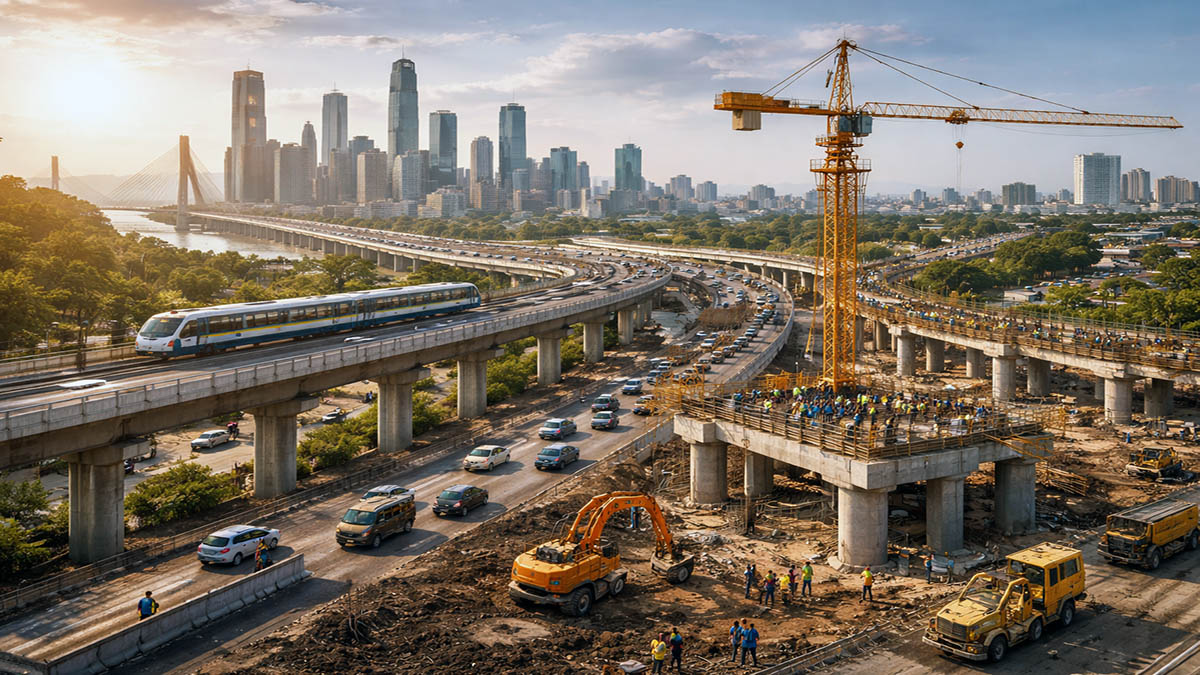
For industry leaders, the nuclear debate is ultimately about predictability. Large-scale manufacturing, data centres and industrial corridors require power systems that are stable over decades. For policymakers, it is about sequencing reforms and allocating risk between the state, investors and citizens. For political analysts, it is a test of whether India’s institutions can sustain long-horizon projects without eroding legitimacy.
The Economic Survey 2025–26 does not present nuclear energy as a silver bullet, nor does it call for a dramatic surge. Its argument is subtler and more revealing. It suggests that India’s development ambitions are now constrained less by ideas and more by execution, less by technology and more by governance. Nuclear energy, in this reading, is not just an energy choice but a referendum on state capacity itself.
If India can finance, regulate and communicate nuclear expansion credibly, it signals readiness for complex, long-term transitions in a fractured global order. If it cannot, nuclear power will remain contested, marginal and politically costly. The debate, therefore, is not about whether nuclear energy is clean or dangerous, cheap or expensive. It is about whether India can build institutions capable of carrying risk across generations.
That is why the nuclear question refuses to settle. It sits at the intersection of climate urgency, economic realism and democratic politics, demanding answers that go beyond power generation. In forcing this debate into the open, the Economic Survey has done something more important than endorsing a technology. It has compelled India to confront the kind of state it must become to transform itself.