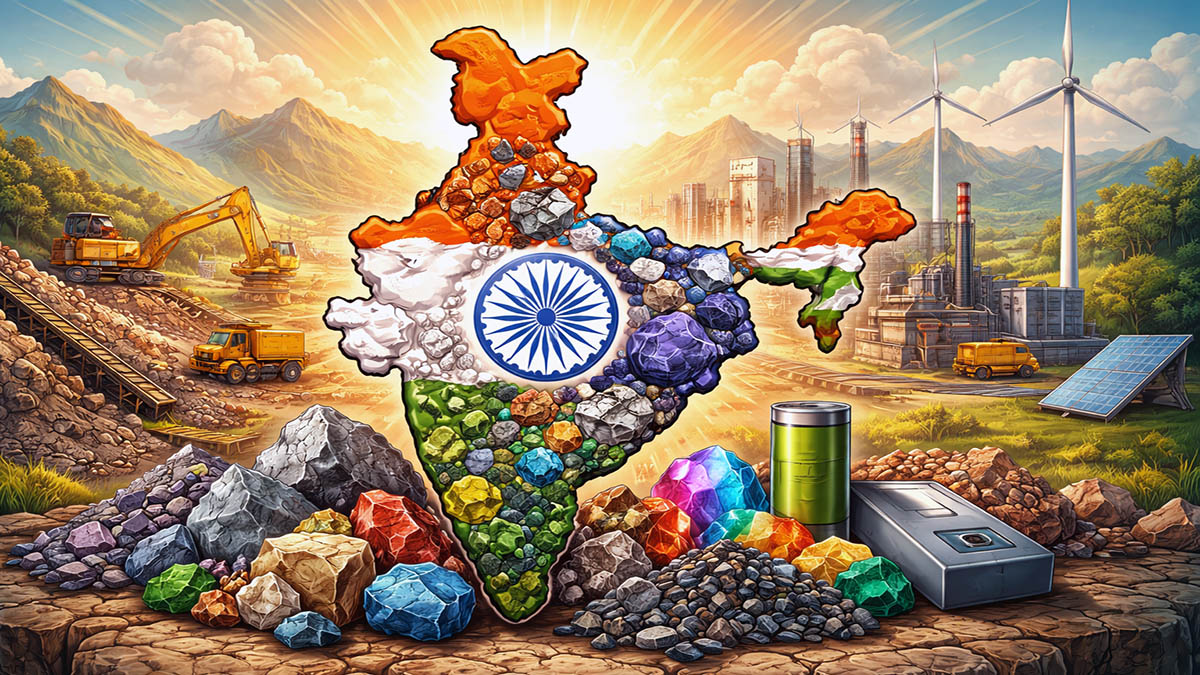

India’s journey toward a low-carbon economy is often framed as a climate pledge. In reality, it is unfolding as a far more consequential economic and strategic project. As the Economic Survey 2025–26 makes clear, India is not decarbonising to win applause at global summits, but to secure growth, energy security and competitiveness in an increasingly fragmented world economy.
Across the globe, poorly sequenced climate policies have produced unintended consequences, from Europe’s energy shock to rising industrial costs and political backlash against green transitions. India appears determined not to repeat those mistakes. Its approach prioritises affordable energy, manufacturing strength and institutional reform, recognising that climate ambition divorced from economic capacity can weaken, rather than strengthen, national resilience.
This pragmatic strategy places India on a distinct low-carbon path, one shaped less by ideology and more by hard economic constraints such as the cost of capital, export competitiveness and grid stability. The result is a transition that is slower than activist demands but arguably more durable, positioning climate action not as a trade-off against development, but as a tool to reinforce it.
Global experience explains why this realism matters. Europe’s post-Ukraine energy crisis exposed the risks of front-loading decarbonisation without securing energy buffers. Germany’s premature nuclear exit, combined with dependence on imported gas, forced a return to coal and triggered persistently high industrial power prices, undermining climate credibility and manufacturing competitiveness at the same time. In the United States, emissions reductions have been driven less by regulation and more by cheap shale gas and market-led innovation, while the Inflation Reduction Act relies heavily on fiscal subsidies made possible by America’s reserve currency status. China, often portrayed as a green champion, has followed the most candid strategy of all by dominating global renewable manufacturing while continuing to expand coal capacity to protect growth and grid stability.
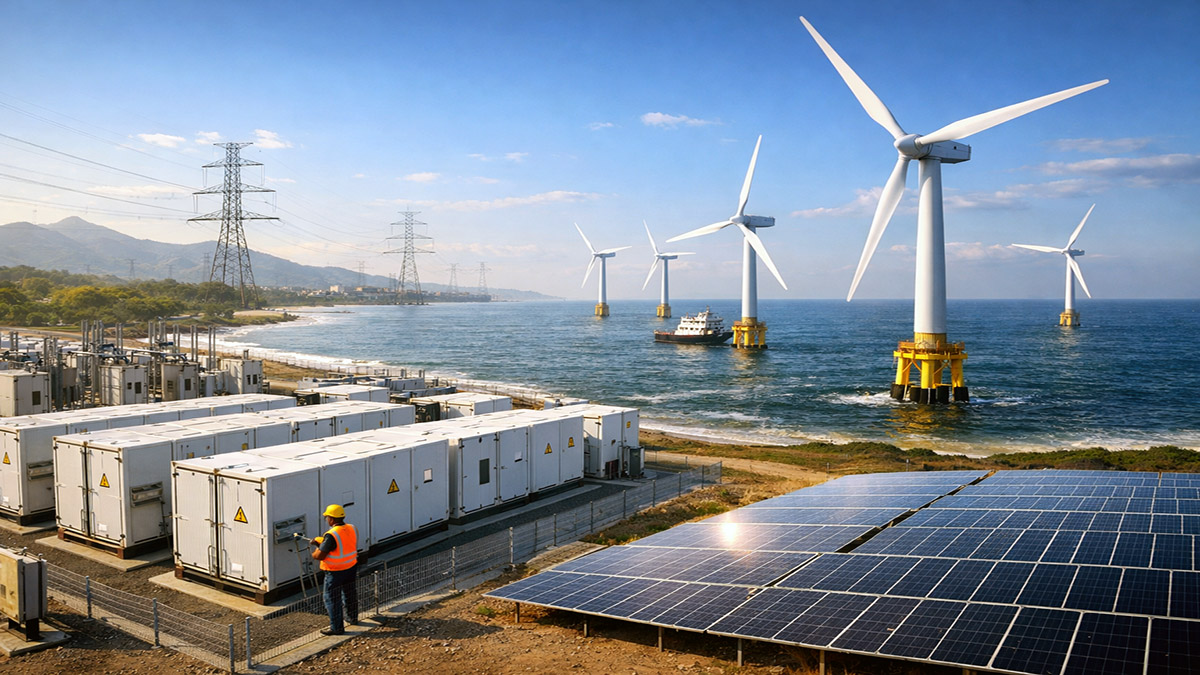
India has studied these experiences closely and avoided their extremes. Its low-carbon strategy rests on the recognition that energy security must precede decarbonisation. Renewable energy is being scaled at system level rather than showcased as symbolic capacity additions, with increasing policy focus on transmission expansion, grid integration, pumped storage and battery energy storage systems. This reflects a hard lesson learned globally: renewables without storage and grid stability generate volatility rather than sustainability.
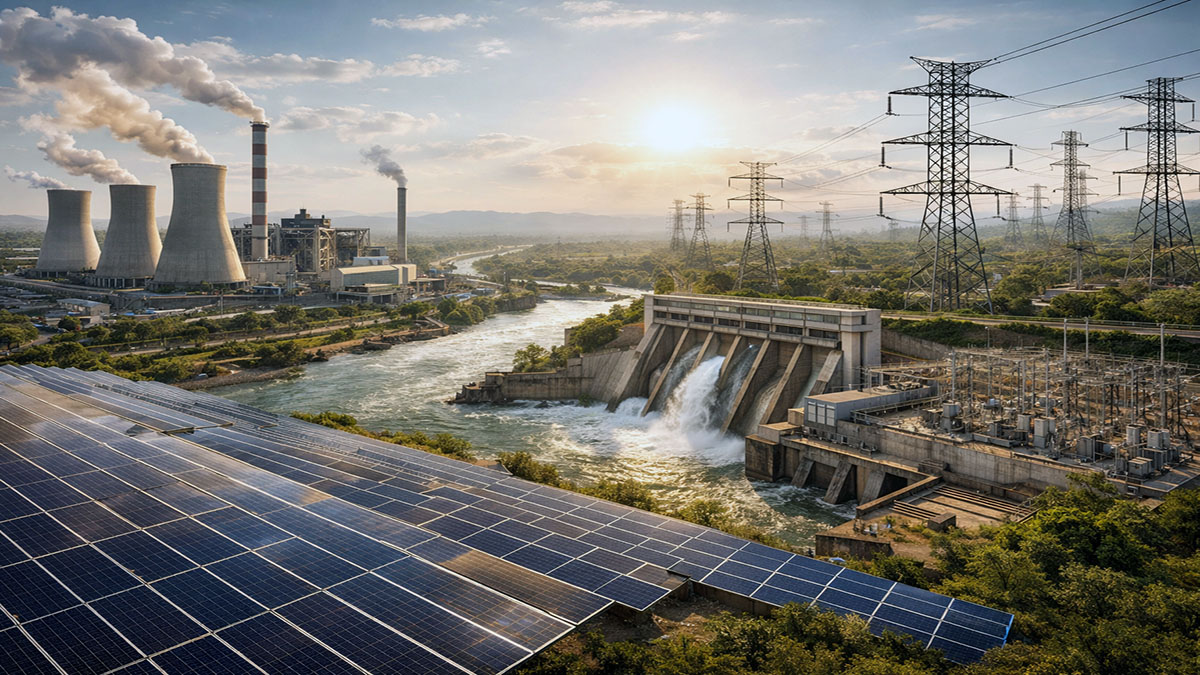
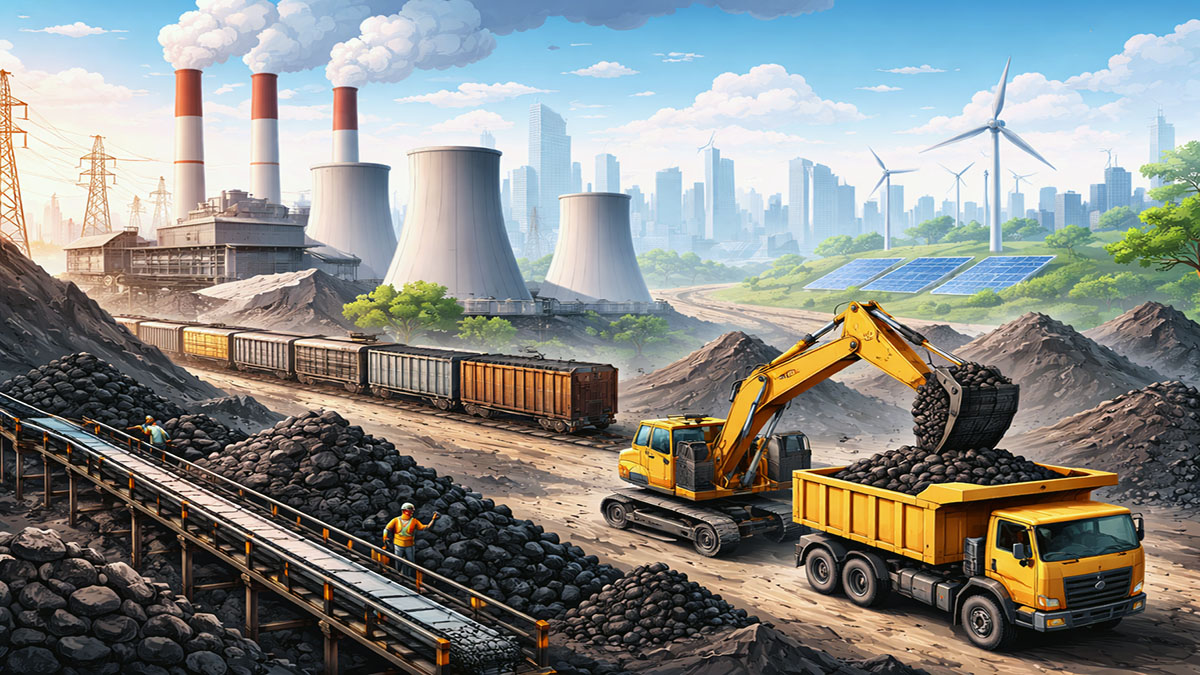
Coal therefore remains part of India’s energy mix, not as a denial of climate change but as a transitional necessity. With per capita electricity consumption still far below advanced economies, abrupt fossil exits would undermine growth, affordability and political support for climate policy itself. The emphasis instead is on efficiency improvements, logistics optimisation and cleaner technologies, ensuring that emissions intensity falls even as economic output rises.
The most decisive feature of India’s low-carbon transition is its anchoring in manufacturing competitiveness. The Economic Survey notes that over the past five years, services exports have grown at a compounded annual rate of 9.4%, while merchandise exports have grown at only 6.4%. Services exports have stabilised India’s balance of payments, but they cannot substitute for goods-based export ecosystems that underpin durable currency strength and external resilience. History shows that countries with strong, stable currencies, from Germany to Japan, achieved them through manufacturing excellence rather than services dominance.
This is why India’s climate strategy is closely tied to green hydrogen for hard-to-abate sectors such as steel, fertilisers and refining, domestic manufacturing of solar modules, batteries and electrolysers, and deeper integration into global value chains ahead of carbon-linked trade measures like the European Union’s Carbon Border Adjustment Mechanism. In this framework, decarbonisation is not an environmental concession but an industrial opportunity, provided it lowers costs and raises productivity rather than doing the opposite.
Finance, however, remains the binding constraint. The Economic Survey is explicit that India’s structurally high cost of capital raises the price of green investments. This challenge is linked directly to persistent current account deficits, which force economies dependent on foreign savings to pay a risk premium. Capital-intensive technologies such as renewables, storage and green hydrogen therefore face higher financing costs in India than in surplus economies. The Survey’s deeper argument is that climate transition, export competitiveness, currency stability and the cost of capital are inseparable parts of the same macroeconomic equation.
Emerging instruments such as municipal green bonds, blended finance structures and carbon markets offer promise, but global climate finance commitments remain inadequate relative to India’s scale and development needs. Without cheaper and more predictable capital, even the best-designed climate strategies will struggle to achieve scale.
Less visible but equally important is India’s reform of environmental governance. The Survey highlights a shift away from uniform, one-size-fits-all green mandates toward risk-based, performance-oriented regulation that differentiates industries by pollution intensity rather than arbitrary thresholds. Digital platforms and real-time monitoring are gradually replacing inspection-heavy systems, reducing delays, uncertainty and compliance costs. International experience suggests that overregulation often slows green investment more than it reduces emissions, making this regulatory reorientation one of India’s most consequential climate reforms.
India’s macroeconomic context strengthens the credibility of this approach. The Economic Survey records real GDP growth above seven per cent, revises India’s potential growth rate upward to seven per cent from 6.5% three years ago, and notes contained inflation and comfortable liquidity conditions. This growth cushion gives India the fiscal and political space to pursue a gradual but durable low-carbon transition, rather than a disruptive shock that could erode public support.
India’s low-carbon transition is therefore neither dramatic nor declaratory. It is cautious, contested and constrained, and it will disappoint climate absolutists who demand faster cuts as well as growth hawks who fear economic drag. Yet history suggests that successful energy transitions are those that survive economic stress, not those that shine only in declarations.
By prioritising competitiveness, sequencing reforms, lowering costs and strengthening institutions, India is choosing a climate path that is economically credible and politically sustainable. In a fractured global order where climate ideals increasingly collide with geopolitical and economic realities, India’s most valuable contribution may be demonstrating that development and decarbonisation can reinforce each other, when ambition is disciplined by economics.