
For decades, nuclear energy in India has occupied an uncomfortable space in public discourse, strategically indispensable, politically sensitive and often poorly understood. The Economic Survey 2025–26 attempts to reset this conversation. It treats nuclear power not as an ideological choice or prestige technology, but as a structural necessity in India’s long-term development, decarbonisation and energy security strategy.
At a time when climate imperatives collide with growth ambitions, and when global energy systems are becoming more fragmented and geopolitically contested, the Survey places nuclear energy firmly within the core of India’s sustainable transformation agenda.
Beyond Renewables: The Baseload Reality
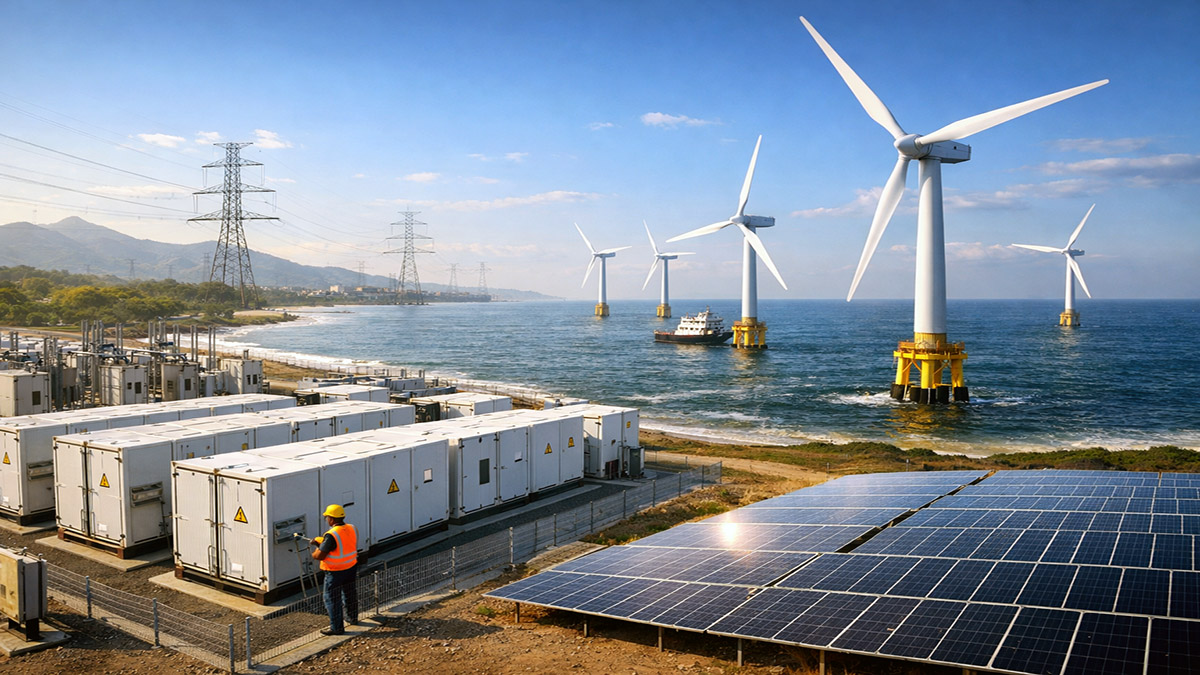
The Survey is unequivocal on one point that is often obscured in climate debates: renewable energy alone cannot sustain a rapidly growing, industrialising economy. Solar and wind, while essential, are intermittent by nature. Even with advances in battery storage and grid management, they cannot yet provide the scale of stable, round-the-clock power required by heavy industry, urban infrastructure, railways, data centres and defence installations.
India’s per capita electricity consumption remains well below global averages and demand is expected to rise sharply as manufacturing expands, urbanisation accelerates and digital infrastructure deepens. In this context, the Survey positions nuclear energy as a clean, reliable baseload source that complements renewables rather than competing with them.
This framing is significant. It moves nuclear energy out of the narrow climate-versus-safety debate and places it within the broader economics of system stability, grid reliability and industrial competitiveness.
Nuclear Power and India’s Net Zero Strategy
India’s commitment to achieving net zero emissions by 2070 is widely recognised as ambitious yet realistic. The Economic Survey argues that this trajectory will be unattainable without a meaningful expansion of nuclear power.
Unlike fossil fuels, nuclear power produces virtually zero operational emissions. Unlike renewables, it does not depend on weather conditions or seasonal cycles. This combination makes nuclear energy uniquely valuable in decarbonising sectors where electrification must be both clean and dependable.
The Survey highlights that advanced economies that have successfully decarbonised their power sectors such as France, have done so by relying heavily on nuclear energy. Conversely, countries that attempted rapid decarbonisation while marginalising nuclear power, particularly parts of Europe, have faced energy price volatility, supply disruptions and, in some cases, a return to coal.
India appears intent on learning from these international experiences rather than repeating their mistakes.
Strategic Autonomy and the Three-Stage Nuclear Programme
One of the most underappreciated aspects of India’s nuclear journey is its emphasis on strategic autonomy. The Survey reiterates the importance of India’s three-stage nuclear programme, which is designed to leverage the country’s abundant thorium reserves and reduce long-term dependence on imported uranium.
This matters not only for energy security but also for geopolitics. As global supply chains fragment and energy resources become instruments of strategic leverage, countries with indigenous nuclear fuel cycles will enjoy a significant advantage. The Survey implicitly recognises that nuclear energy is not just an electricity source but a pillar of national capability, spanning science, engineering, regulation and international diplomacy.
The advancement of fast breeder reactors and thorium-based technologies is therefore presented as a long-term investment in sovereignty, not merely power generation.
Small Modular Reactors and the Next Phase of Nuclear Deployment
A notable shift in the Survey is its attention to Small Modular Reactors (SMRs) and advanced reactor technologies. Traditional large nuclear plants, while efficient at scale, face challenges related to high upfront costs, long construction timelines and public perception.
SMRs offer a different proposition. They promise lower capital requirements, faster deployment, enhanced safety features and suitability for decentralised applications, including industrial clusters and remote regions. The Survey views SMRs as a potential catalyst for accelerating nuclear adoption while mitigating some of the political and financial risks associated with large-scale projects.
For India, this opens new possibilities: integrating nuclear power with industrial corridors, hydrogen production, desalination and even defence-related infrastructure. However, the Survey is careful not to oversell near-term outcomes, acknowledging that regulatory frameworks, financing models and domestic manufacturing capabilities must evolve in parallel.
Financing and Liability Challenge
If technology is one constraint, finance is another. Nuclear projects are capital-intensive, with long gestation periods and complex risk profiles. The Economic Survey identifies financing as a critical bottleneck, particularly in a country where the cost of capital remains high.
Equally important is the issue of liability. India’s nuclear liability regime has historically deterred private and foreign participation, despite reforms and clarifications over the years. The Survey adopts a pragmatic tone, suggesting that risk-sharing mechanisms, sovereign backstopping and clearer institutional arrangements will be essential if nuclear capacity is to expand meaningfully.
This reflects a broader theme of the Survey: state capacity matters. Nuclear energy cannot be scaled through market mechanisms alone; it requires a capable state that can plan, regulate, insure and coordinate across decades.
Safety, Public Trust and Political Economy
No discussion of nuclear energy can ignore safety concerns. The Survey does not dismiss these anxieties, but it contextualises them. India’s nuclear safety record compares favourably with global standards, and technological advancements have significantly reduced the risk of catastrophic failure.
The deeper challenge, the Survey implies, lies in public trust and political communication. Nuclear projects often face local resistance, not because of evidence-based risk assessments, but due to mistrust in institutions and information asymmetries. Addressing this requires transparency, credible regulation and long-term engagement rather than episodic reassurance.
For political analysts, this is a reminder that nuclear energy is as much a political economy issue as a technological one. Its success depends on governance, not just engineering.
Nuclear Energy as an Industrial and Knowledge Ecosystem
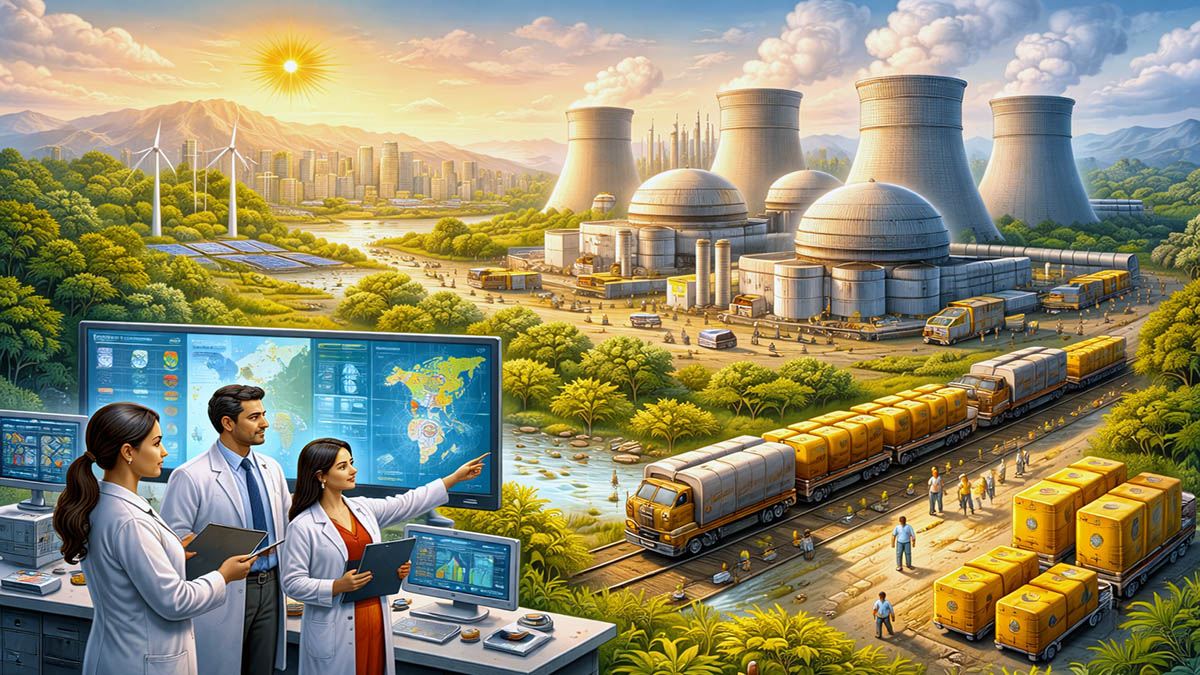
Perhaps the most forward-looking aspect of the Survey’s treatment of nuclear power is its recognition of the broader ecosystem it creates. Nuclear energy drives high-skill employment, advanced manufacturing, materials science, robotics and precision engineering. It strengthens linkages between academia, public sector enterprises and strategic industries.
In a world where technological depth increasingly defines national power, nuclear capability enhances India’s standing not only as an energy producer but as a knowledge economy.
A Measured but Necessary Expansion
The Economic Survey does not call for a dramatic nuclear surge. Instead, it argues for measured, sustained expansion, aligned with grid needs, fiscal realities and institutional capacity. This incrementalism is deliberate. Nuclear energy, by its nature, rewards patience and penalises haste.
Yet the message is clear: without nuclear power, India’s ambitions of sustained high growth, deep decarbonisation and strategic autonomy will rest on fragile foundations.
Reclaiming Nuclear Energy from the Margins
The Economic Survey 2025–26 represents a quiet but consequential shift in India’s energy narrative. Nuclear energy is no longer treated as a controversial add-on or legacy project. It is being reclaimed as a central pillar of India’s sustainable transformation.
For industry leaders, this signals long-term opportunities in engineering, manufacturing and finance. For policymakers, it underscores the need for regulatory clarity and institutional strength. For political analysts, it reveals how energy choices shape sovereignty, stability and state capacity.
In an era of climate urgency and geopolitical uncertainty, India’s challenge is not whether to pursue nuclear energy, but how effectively and credibly it can harness it. The Survey’s answer is cautious, strategic and grounded in realism, a reflection, perhaps, of a country that understands that energy transitions are marathons, not sprints.