
India’s steel sector is once again at the centre of the country’s industrial story, riding a wave of infrastructure expansion, manufacturing growth and policy-driven self-reliance. Long regarded as a barometer of economic momentum, steel has transitioned from a cyclical industry to a structural growth engine, reflecting the scale of India’s urbanisation, logistics build-out and capital goods expansion. The latest data show that steel demand is no longer merely recovering from past slowdowns, it is being propelled by deep, economy-wide shifts that are reshaping both domestic capacity and global positioning.
The headline numbers capture this transformation. Crude steel production rose from 103.54 million tonnes (MT) in 2020–21 to 152.18 MT in 2024–25, implying a compound annual growth rate (CAGR) of 10.1%. Finished steel production grew even faster, at an 11.1% CAGR, reaching 146.69 MT. Domestic steel consumption expanded at a still higher pace of 12.5% annually, touching 152.13 MT in 2024–25. This alignment of production and consumption growth suggests that the sector’s expansion is being driven less by speculative capacity additions and more by sustained end-use demand in construction, transport, machinery, and consumer durables.
Momentum has carried into the current fiscal year. During April–October 2025–26, crude steel production increased by 11.7% year-on-year, finished steel production by 10.8% and consumption by 7.8% compared to the same period last year. The slightly slower growth in consumption relative to production may reflect inventory adjustments or export-market fluctuations, but the broad picture remains one of robust domestic demand. Steel’s performance mirrors the resilience seen in construction and manufacturing indicators, both of which have remained above pre-pandemic trends.
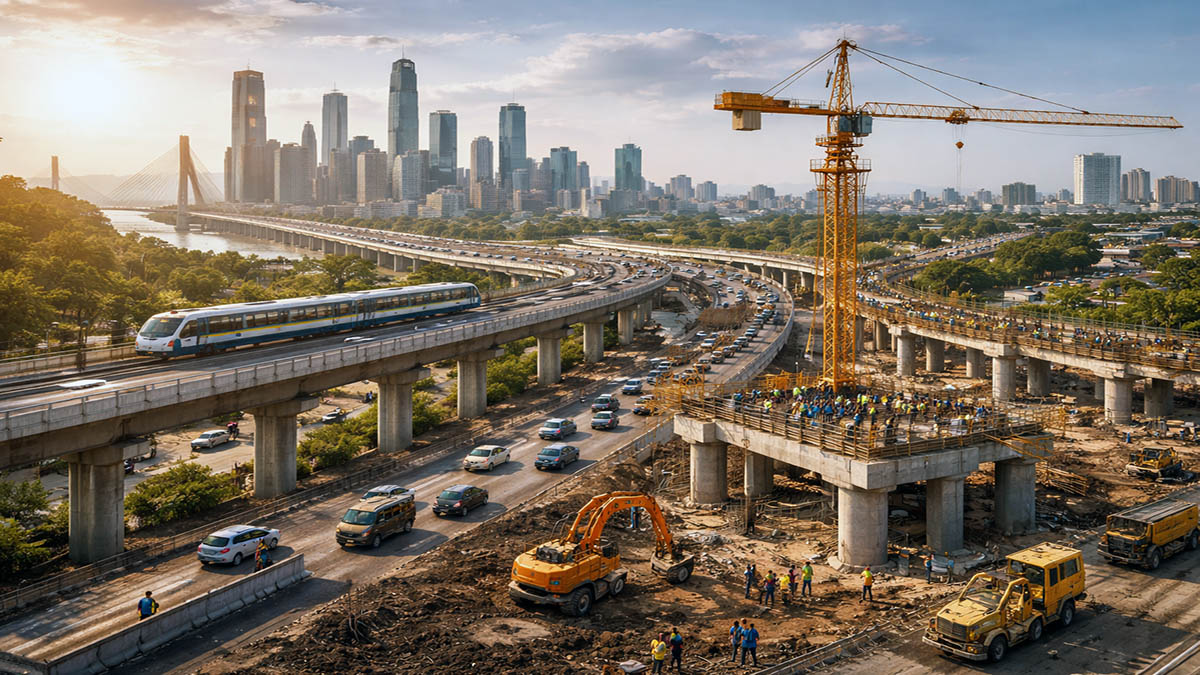
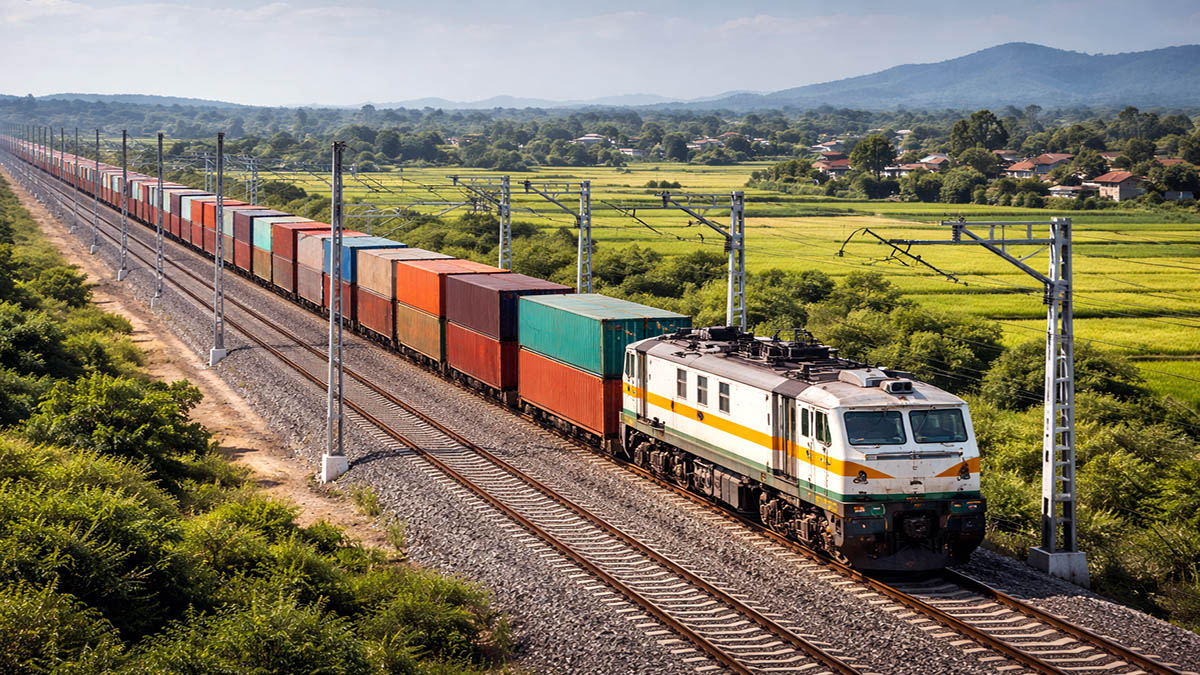
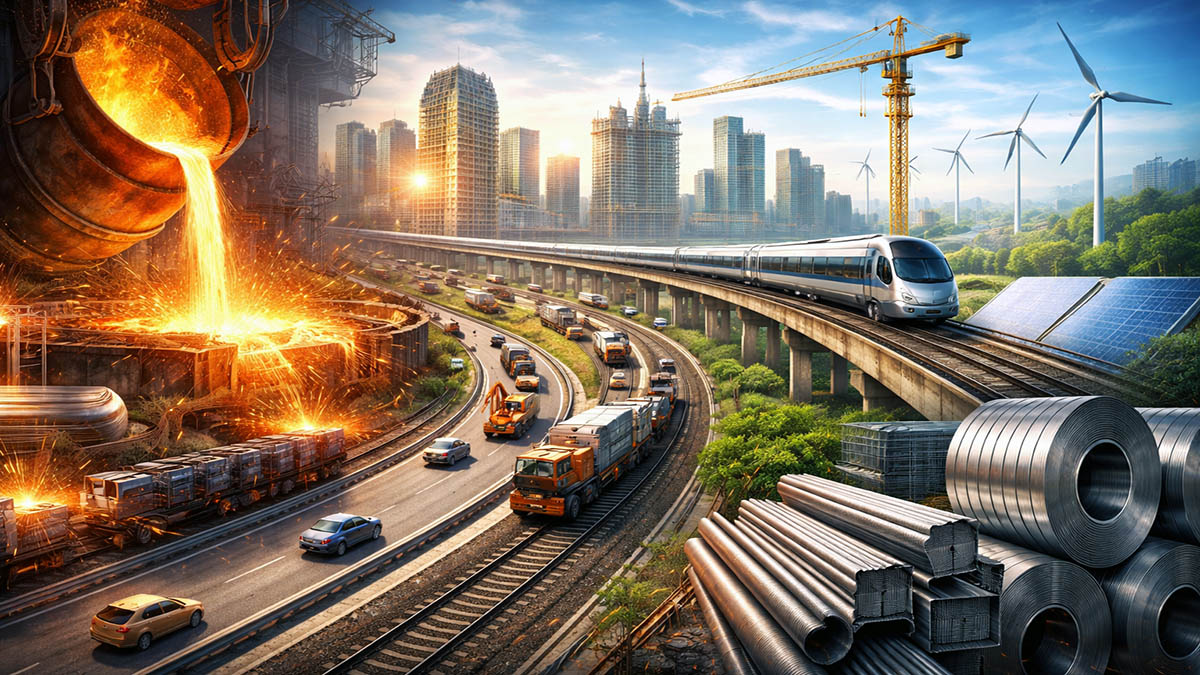
Infrastructure is the backbone of this demand cycle. Highways, railways, metro systems, ports, airports, and urban housing all feed into steel intensity. As public capital expenditure has remained elevated and private investment shows signs of revival, steel has become a primary transmission channel through which macroeconomic policy translates into real-economy activity. Rail freight data, for instance, show strong movement of iron ore, pig iron, and finished steel, underscoring how logistics and construction demand are closely tied to steel flows. This is not a narrow sectoral upswing but a broad-based industrial expansion with steel at its core.
Policy support has also shifted from quantity to quality. The Production-Linked Incentive (PLI) Scheme for Specialty Steel, launched with an outlay of ₹6,322 crore, aims to promote high-value, niche steel products that are currently imported. By October 2025, cumulative investment under the scheme had reached ₹23,022 crore, with 2.34 MT of specialty steel already produced. This indicates that India’s steel strategy is no longer confined to bulk commodity output; it is moving up the value chain into coated steels, electrical steels, alloy grades, and other advanced products critical for defence, automobiles, renewable energy, and capital goods.
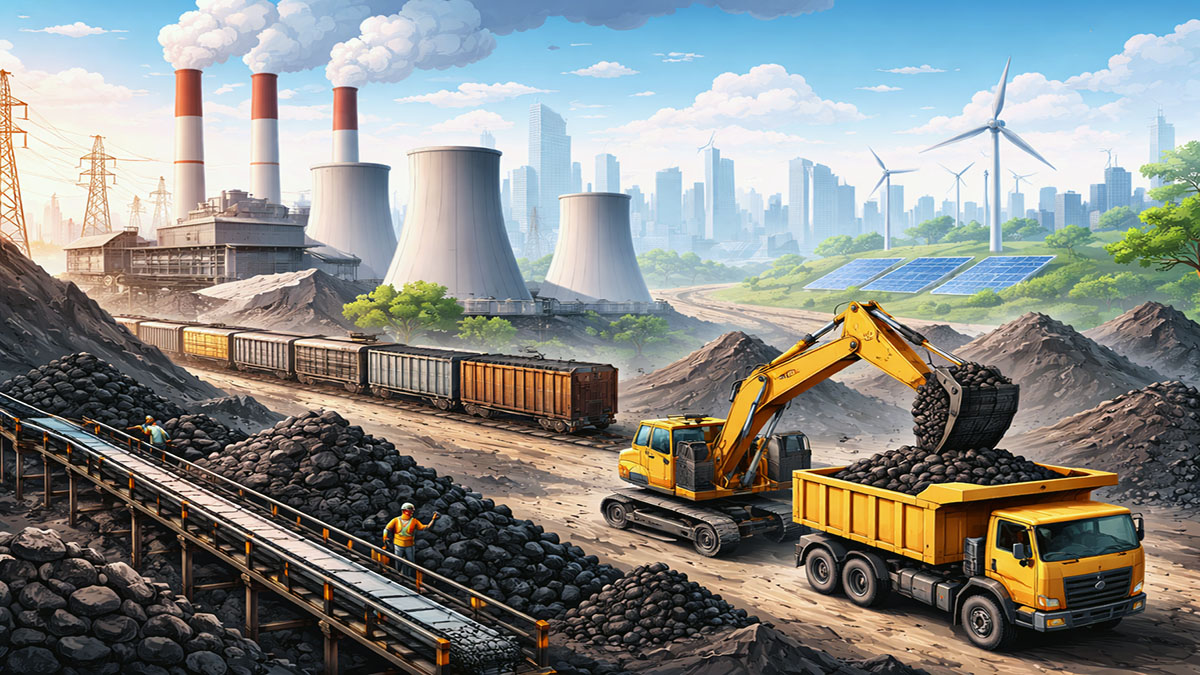
Yet, the sector’s rapid growth has exposed structural vulnerabilities, particularly in raw materials. While India is largely self-sufficient in iron ore, it remains heavily dependent on imported coking coal, a key input in blast furnace-based steelmaking. This dependence creates exposure to global price volatility and geopolitical supply disruptions. Recognising this risk, the government launched Mission Coking Coal with the goal of significantly increasing domestic raw coking coal production to 140 MT by 2030. The success of this mission will be crucial in determining whether India’s steel expansion can be both cost-competitive and strategically secure.
Trade dynamics present another layer of complexity. India became a net importer of steel during April–October FY26, largely because lower international prices made imports more attractive and squeezed export margins. This shift is less a sign of domestic weakness and more a reflection of global price cycles and overcapacity in some exporting nations. However, it underscores the need for Indian producers to enhance efficiency, move toward higher-value products, and build resilience against external price shocks. Competing purely on volume in a volatile global market is a precarious strategy; competitiveness must increasingly rest on technology, quality, and cost discipline.
The international climate policy environment is also beginning to reshape the steel landscape. Mechanisms such as the European Union’s Carbon Border Adjustment Mechanism (CBAM) are set to impose carbon-related tariffs on imports of emissions-intensive goods like steel. For Indian producers, this creates both a risk and an incentive. On one hand, exporters may face higher compliance costs; on the other, it accelerates the push toward energy efficiency, lower-emission production routes, and eventually green steel pathways. Steel is thus becoming a test case for how Indian industry navigates the intersection of trade policy and climate regulation.
Financing patterns in the broader industrial sector also have implications for steel. While bank credit growth to industry has moderated somewhat, overall financial flows to the commercial sector have remained resilient due to greater use of market-based instruments. Large steel producers, with their capital-intensive expansion plans, are increasingly tapping bonds and other non-bank sources. This diversification of funding reduces systemic risk and may support longer-term investment cycles, but it also demands stronger balance sheets and more disciplined project execution from firms.
Looking ahead, the steel sector sits at the intersection of India’s development ambitions and its structural challenges. Demand fundamentals remain strong, anchored in infrastructure, urbanisation, and manufacturing diversification. Policy frameworks are pushing the industry toward higher-value products and greater self-reliance. At the same time, dependence on imported coking coal, exposure to volatile global prices, and emerging carbon-related trade barriers present real headwinds. The future of Indian steel will depend on how effectively it can balance scale with sophistication, volume with value addition and growth with sustainability. In that balance lies not just the trajectory of one industry, but a significant part of India’s industrial transformation story.