
India’s natural gas sector delivered a performance in the year under review that reflected both steady structural progress and persistent constraints, as outlined in the Economic Survey 2025–26. Positioned as a transition fuel critical to India’s clean energy pathway, natural gas continued to gain policy attention, even as supply limitations and price volatility shaped outcomes across production, consumption and infrastructure development.
The Survey notes that natural gas consumption in India recorded moderate growth, supported by rising demand from city gas distribution (CGD) networks, fertiliser units, power generation, and industrial users. Gas demand was particularly resilient in urban centres, where the expansion of piped natural gas (PNG) connections and compressed natural gas (CNG) usage in transport continued to drive consumption. The CGD segment emerged as the most consistent growth engine, reflecting the success of successive bidding rounds that expanded network coverage to a large share of the country’s population and geographical area.
Despite demand-side momentum, domestic natural gas production remained constrained. The Survey highlights that output from domestic fields showed only limited improvement, as gains from new deepwater and offshore projects were partly offset by declining production from mature fields. This structural issue has kept India heavily dependent on imports to meet its gas requirements, with liquefied natural gas (LNG) accounting for a significant and growing share of total supply.
LNG imports rose during the year, underscoring India’s reliance on global gas markets. The Survey points out that India imported over half of its natural gas requirements, making the sector vulnerable to international price movements and geopolitical disruptions. While global gas prices moderated compared to the extreme volatility seen in earlier periods, they remained elevated and uncertain, affecting affordability for price-sensitive sectors such as power and fertilisers.
Pricing dynamics remained a central theme in the gas sector’s performance. The Survey underlines that administered pricing reforms for domestically produced gas, including revisions to pricing formulas for gas from legacy fields, helped moderate costs for priority sectors. At the same time, market-linked prices for difficult and deepwater fields remained higher, reflecting production economics. This dual pricing structure continued to shape consumption patterns, with cheaper domestic gas largely allocated to fertilisers and CGD, while power and industrial users depended more on imported LNG.
The fertiliser sector continued to be the single largest consumer of natural gas in India. The Survey notes that stable gas supplies were essential to sustaining urea production and limiting fertiliser imports. Government support, including subsidy mechanisms and priority allocation of domestic gas, ensured uninterrupted operations, but also reinforced the fiscal sensitivity of gas pricing decisions. Any sustained rise in LNG prices directly translates into higher subsidy burdens, linking gas market dynamics closely with public finances.
In the power sector, natural gas-based generation remained underutilised for much of the year. The Survey highlights that high LNG prices rendered gas-fired power plants uncompetitive compared to coal and renewables, leading to low plant load factors. While gas plants continue to play an important role in grid balancing and peak demand management, their contribution to baseload generation remains limited. This underperformance underscores the challenge of integrating gas into India’s power mix without affordable and predictable supply.
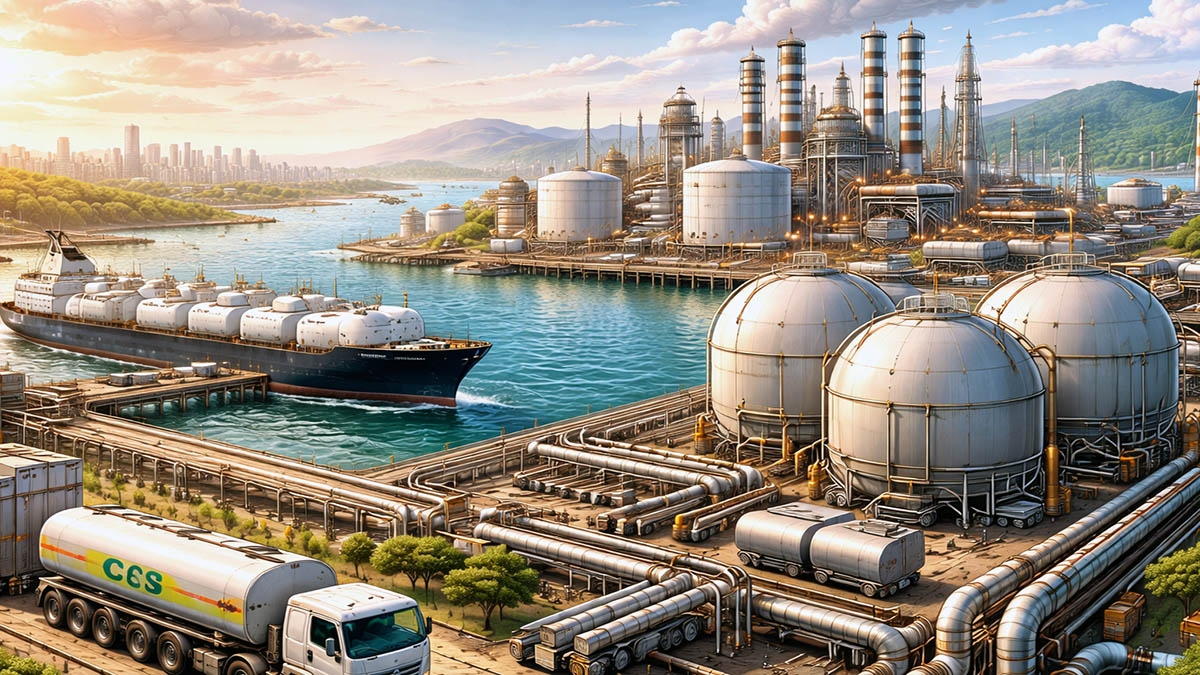
Infrastructure development remained a bright spot in the natural gas sector’s performance. The Survey records steady progress in pipeline expansion, with the national gas grid continuing to extend into eastern and northeastern regions. Projects such as the Urja Ganga pipeline have improved regional access to gas, enabling industrial development and cleaner fuel adoption in previously underserved areas. Increased pipeline connectivity also enhances market integration, allowing gas to flow more efficiently across regions.
LNG regasification capacity expanded further during the year. The Survey notes that India’s total regasification capacity now exceeds current LNG import volumes, providing headroom for future demand growth. New terminals and capacity expansions at existing facilities have strengthened supply resilience and improved geographic spread, particularly along the eastern coast. However, the Survey cautions that infrastructure availability alone is insufficient without competitive pricing to stimulate demand.
City gas distribution emerged as a structurally strong segment. The Survey highlights that the number of households connected to PNG and vehicles running on CNG continued to rise, supported by policy emphasis on cleaner urban fuels. CGD demand proved relatively insulated from short-term price volatility due to regulated pricing mechanisms and priority access to domestic gas. This stability reinforces gas’s role in improving urban air quality and reducing dependence on liquid fuels.
From a policy perspective, the Economic Survey reiterates the government’s long-term vision of raising the share of natural gas in India’s primary energy mix to around 15%, from the current single-digit level. While progress toward this target has been gradual, the Survey notes that reforms in pricing, marketing freedom and infrastructure development are laying the groundwork for sustained expansion. However, achieving this ambition will require significant increases in affordable supply, both domestic and imported.
The Survey also places natural gas within the broader context of India’s energy transition. Compared to coal and oil, gas offers lower carbon intensity and local pollution benefits, making it a pragmatic bridge fuel as renewable capacity scales up. Gas is also seen as complementary to intermittent renewables, providing flexibility and grid stability. Nevertheless, the Survey acknowledges that long-term decarbonisation pathways, including green hydrogen and electrification, could eventually moderate gas demand growth beyond the medium term.
Geopolitical and global market risks remained a key concern. The Survey notes that India’s exposure to international LNG markets necessitates diversification of supply sources and contract structures. Long-term LNG contracts provide price stability but may reduce flexibility, while spot market purchases offer adaptability at the cost of volatility. Balancing these approaches remains central to India’s gas procurement strategy.
The Economic Survey presents a cautiously optimistic outlook for the natural gas sector. Demand is expected to grow steadily, driven by CGD expansion, industrial usage, and fertiliser requirements. Infrastructure capacity is no longer the primary constraint; instead, affordability and supply security will determine the pace of expansion. Enhancing domestic production through faster development of discovered fields, incentivising exploration, and improving recovery from existing assets will be critical to reducing import dependence.
Performance of India’s natural gas sector during the year reflects incremental progress rather than a breakthrough. Demand growth, infrastructure expansion, and policy support underscore gas’s strategic importance in India’s energy landscape. At the same time, constrained domestic production and exposure to global price volatility continue to limit its full potential. The Economic Survey 2025–26 makes clear that natural gas will remain a vital, if complex, component of India’s energy transition, bridging current needs and future ambitions while requiring careful policy calibration to balance growth, affordability and energy security.