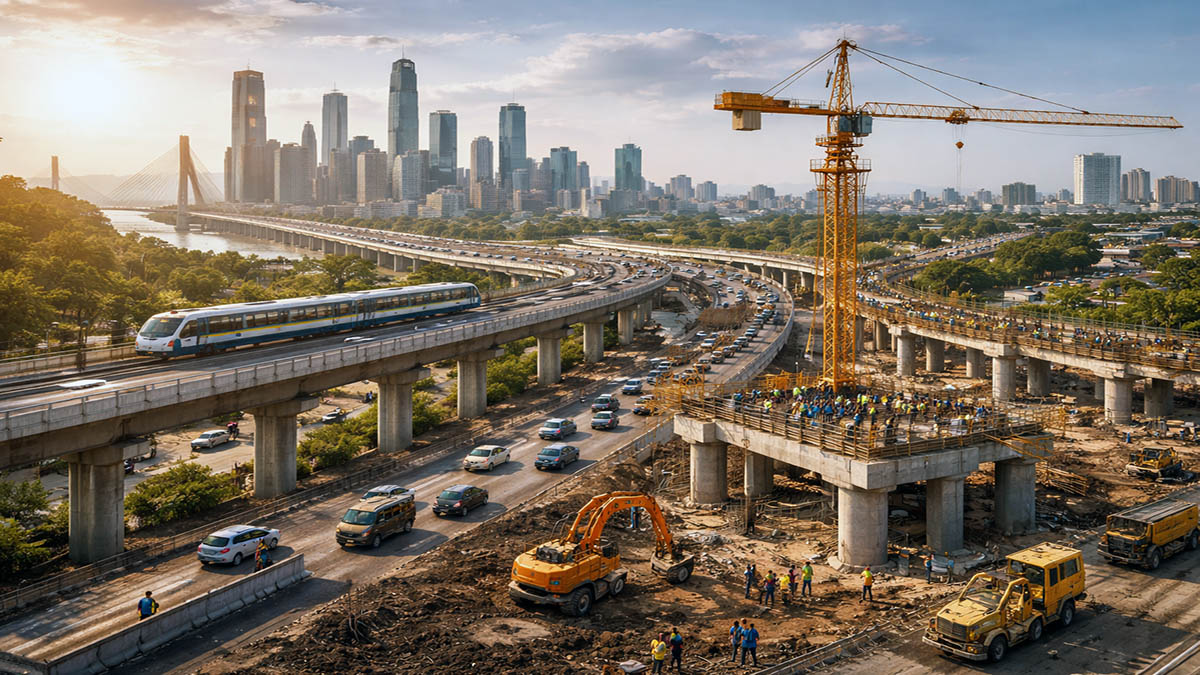

If the last decade of the Indian economy was defined by the sheer scale of construction pouring concrete, laying tracks and erecting towers, the Economic Survey 2025-26 signals that the next phase has begun. The narrative has shifted from merely adding capacity to creating a hyper-connected, efficient, and competitive ecosystem. With a budgeted capital outlay of ₹11.21 lakh crore for FY26, marking an 89% jump since FY22, infrastructure remains the undisputed engine of India’s growth strategy, estimated to deliver a GDP multiplier effect of 2.5 to 3.5 times.
However, the Survey makes it clear: money alone isn’t the story. The defining feature of this era is the institutionalisation of multimodal planning via PM GatiShakti, reducing the friction that has historically plagued Indian projects.
Financing the dream: Beyond the banks
A quiet revolution is underway in how India pays for its growth. The Survey highlights a decisive shift away from the traditional over-reliance on bank credit. While bank credit to infrastructure grew at a modest 4.6% in October 2025, the slack is being picked up by a diversified ecosystem.
Non-Banking Financial Companies (NBFCs) have emerged as the heavy lifters, with credit flows growing at a robust compound annual growth rate (CAGR) of 43.3% between FY20 and FY25. Simultaneously, capital market instruments are maturing. Real Estate Investment Trusts (REITs) and Infrastructure Investment Trusts (InvITs) raised ₹13,893 crore in the first eight months of FY26 alone, enabling long-term institutional capital to hold infrastructure assets.
Regulatory clarity has bolstered this shift. The Survey points to the RBI’s Project Finance Directions 2025, effective October 1, 2025, as a milestone. By unifying the framework for project lending and refining the treatment of project delays (DCCO), regulators are curbing the risk of asset-liability mismatches that previously haunted the banking sector.
Physical backbone: Speed and scale
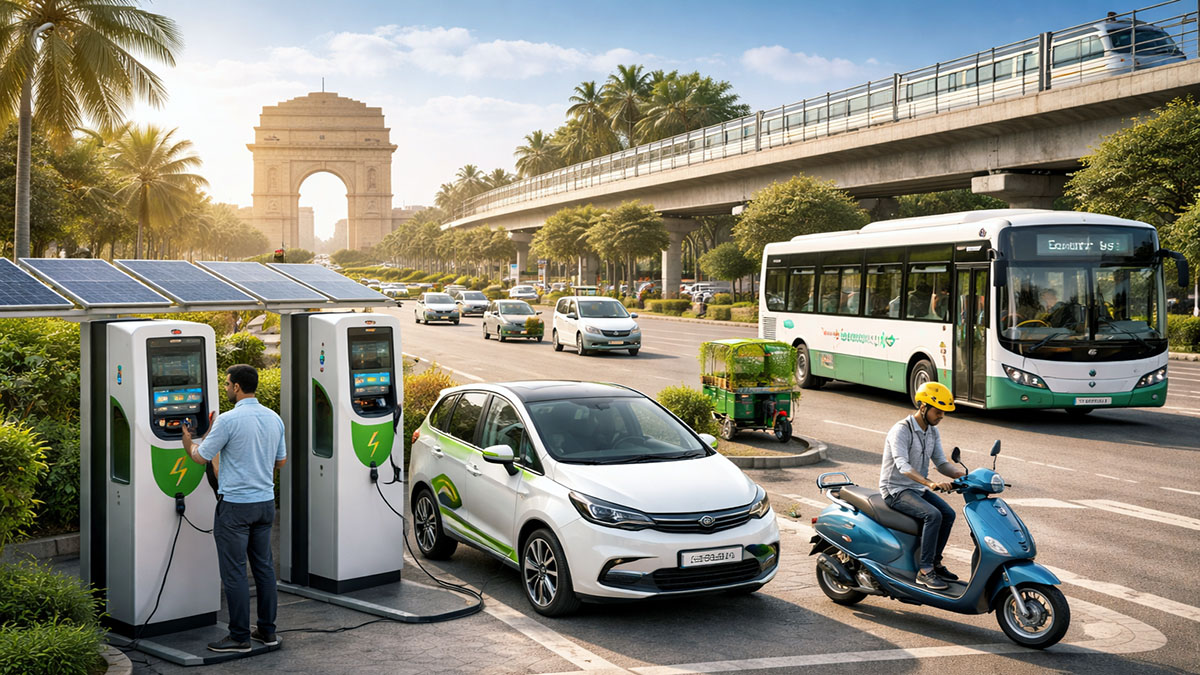
Roads & Highways: The highway sector is transitioning from “rapid capacity expansion to logistic efficiency”. The National Highway network has expanded to 1,46,572 km, a 60% increase since FY14. The focus is now on speed; operational High-Speed Corridors have jumped ten-fold from 550 km in 2014 to 5,364 km today. For FY26, the target is to construct another 10,000 km, nearly half of which was already completed by December 2025.
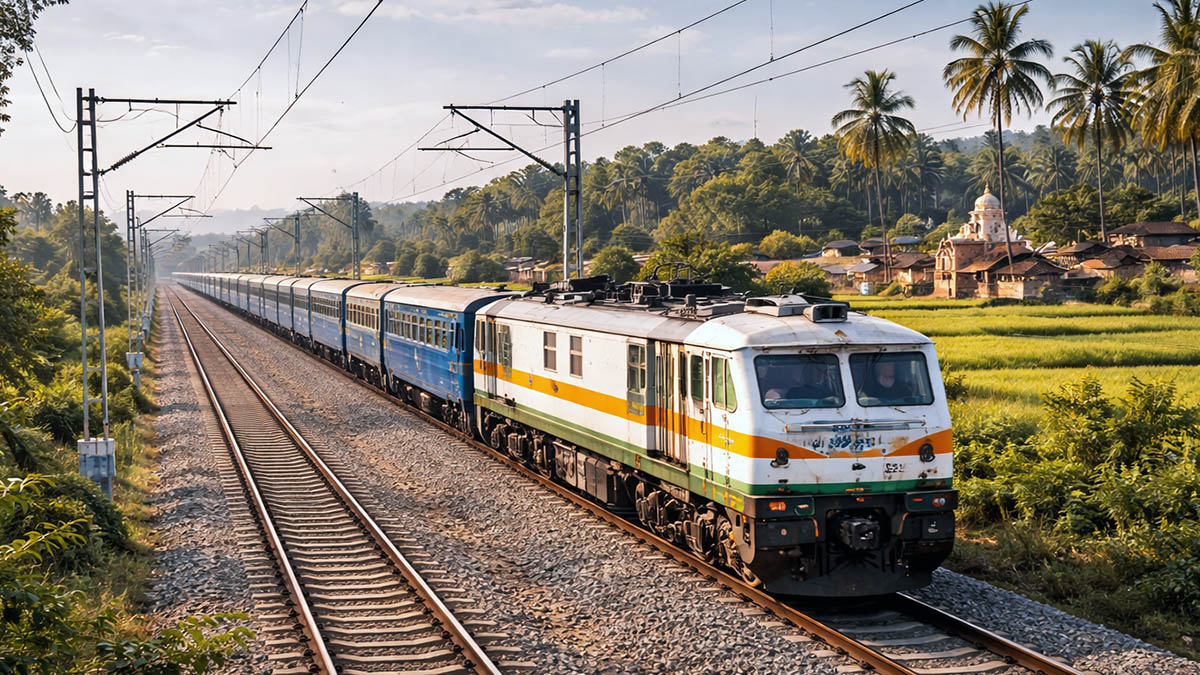
Railways: The national transporter is witnessing a historic overhaul. With capital outlay maintained at record highs, the railways are expanding capacity at double the speed of the previous decade. Electrification has reached near-saturation at 99.1%, effectively decarbonizing the rail network. This infrastructure push is yielding results in freight; loading grew by 3.3% to 1,215 million tonnes in the first nine months of FY26, supported by the commissioning of 96.4% of the Dedicated Freight Corridors (DFCs).
Aviation & Maritime: India is now the world’s third-largest domestic aviation market, with the airport count more than doubling to 164 since 2014. Passenger traffic hit 411.8 million in FY25, though growth moderated slightly in the current fiscal. On the seas, port efficiency has reached global standards. The average turnaround time for container vessels has dropped significantly, and major ports saw cargo traffic rise by 8.2% this fiscal year.
Energy transition: Green and reliable
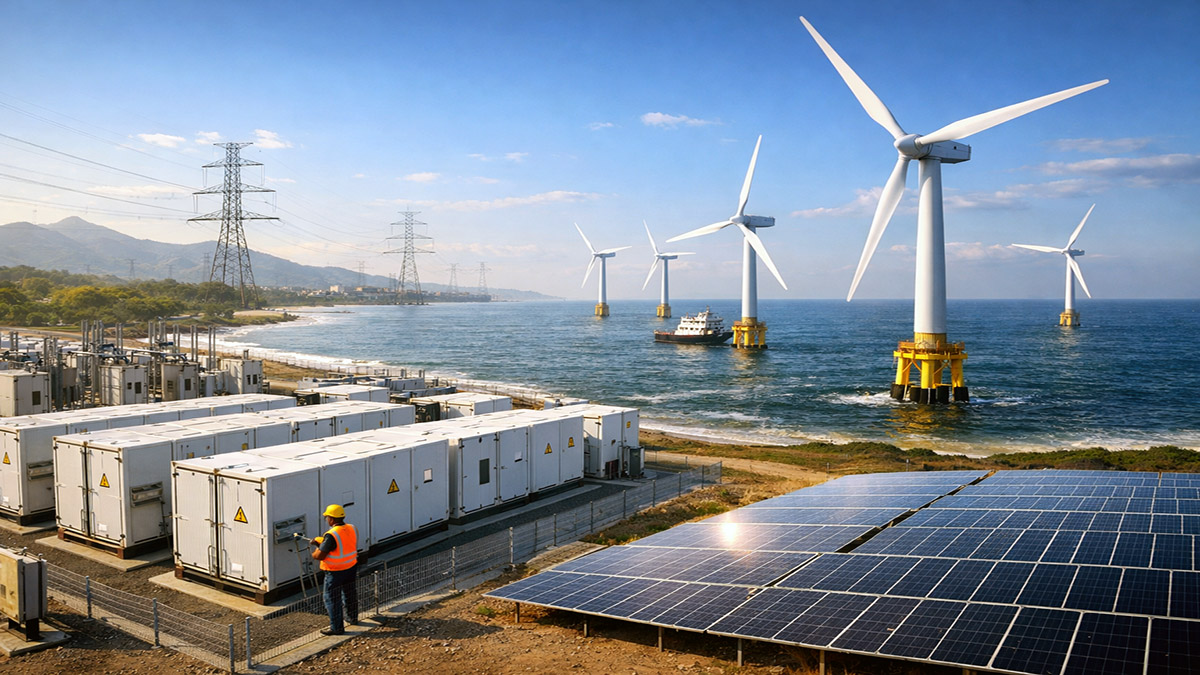
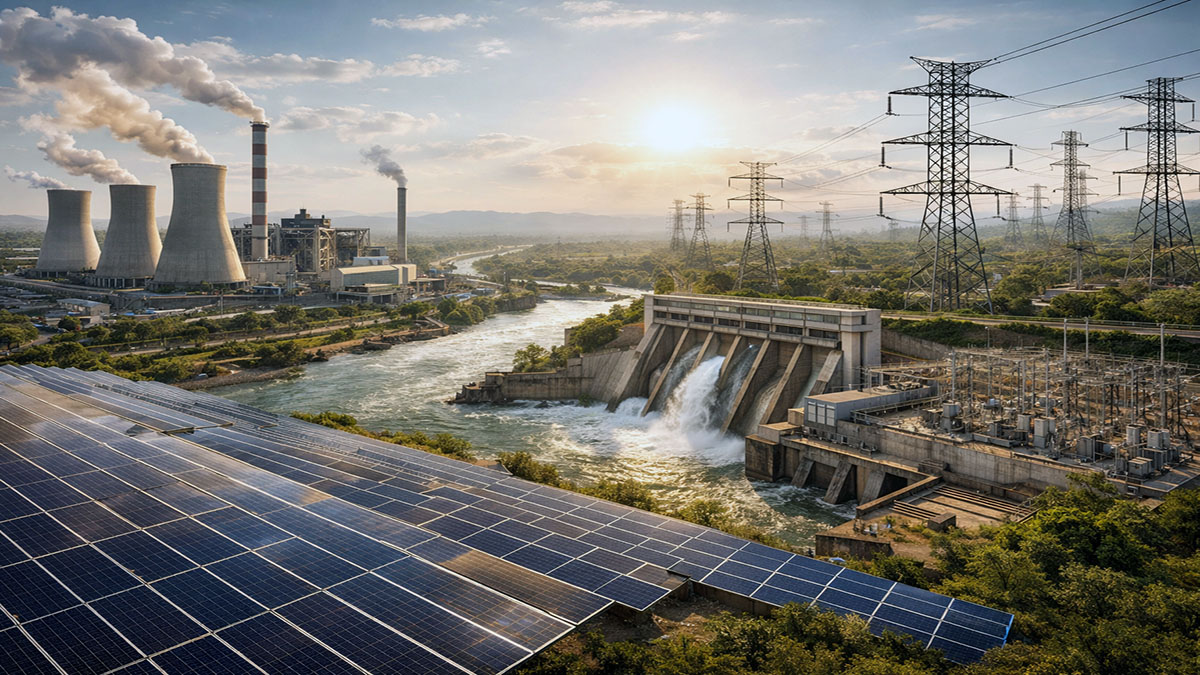
The Survey paints a picture of a power sector that has successfully navigated the trilemma of energy security, sustainability, and financial viability. India’s total installed capacity stands at 509.74 GW, with the deficit between demand and supply completely erased.
The green pivot is aggressive. India has achieved its target of 50% non-fossil fuel capacity ahead of schedule, reaching nearly 52% by December 2025. The current fiscal year saw a record addition of 34.56 GW of non-fossil capacity in just eight months.
Crucially, the financial health of Distribution Companies (DISCOMs) along the sector’s Achilles’ heel is turning a corner. The Survey reports a historic aggregate profit (PAT) of ₹2,701 crore for DISCOMs in FY25, driven by the Late Payment Surcharge (LPS) rules which slashed outstanding dues from ₹1.4 lakh crore in 2022 to under ₹5,000 crore by early 2026.
Digital nervous system
Infrastructure is no longer just concrete; it is code. The Survey emphasizes “Future-ready Digital Infrastructure” as a force multiplier. India’s internet user base has crossed 101.8 crore, supported by a massive proliferation of optical fibre under BharatNet and the rapid rollout of 5G.
Data consumption has exploded from 62 MB per month in 2014 to 25 GB in 2025 driven by a drastic fall in data costs. To support this digital economy, data centre capacity is scaling up, currently standing at 1,280 MW with a trajectory to reach 4 GW by 2030. The government’s MeghRaj cloud initiative is further digitizing governance, ensuring that the physical infrastructure build-out is matched by digital agility.
Beyond the metros: Social and emerging infrastructure
The definition of infrastructure has broadened to include social resilience. The Jal Jeevan Mission has achieved a staggering 81% coverage of rural households with tap water, a leap from just 17% in 2019. This is not just a utility upgrade; it is a public health intervention, estimated to save 4 lakh lives annually from diarrhoeal deaths.
Finally, the Survey highlights the Emerging Sectors, specifically Space. With 100% FDI now allowed and a dedicated venture capital fund approved, the sector is opening up. Private players are launching satellites and suborbital vehicles, marking a shift from a state-monopoly to a vibrant commercial ecosystem.
The Economic Survey 2025-26 documents a mature infrastructure landscape. The focus has moved beyond the simple arithmetic of how much to the complex calculus of how efficient. By integrating digital planning with physical assets, diversifying financing pools, and creating a unified national market through logistics reforms, India is laying a foundation that is robust, green, and competitively connected. As the Survey notes, these efforts are not just about building roads or power plants; they are the central pillar of India’s journey toward Viksit Bharat.