
India’s transition to electric mobility has moved from a policy ambition to a tangible economic force, emerging as a bright spot in the nation’s industrial landscape. The Economic Survey 2025-26, sketches a picture of a sector characterized by explosive growth in adoption, underpinned by aggressive government intervention, yet grappling with the critical strategic vulnerability of import dependence.
As the automobile sector recorded a nearly 33% growth in production over the last decade (FY15 to FY25), electric vehicles (EVs) have become the tip of the spear for this expansion. The Survey highlights that India’s push for ‘Zero Emission Vehicles’ is no longer just about climate goals but has morphed into a central pillar of industrial policy, creating a new manufacturing ecosystem that is attracting billions in investment.
The scale of consumer adoption signals a structural shift in Indian mobility. In calendar year 2025, total EV sales crossed the 2.3 million unit mark, capturing an 8% market share of all new vehicle registrations. This is a decisive move away from the early adopter phase into the mass market, particularly in the two-wheeler and three-wheeler segments which continue to do the heavy lifting.
The composition of this growth tells a story of economic pragmatism. Electric two-wheelers accounted for 57% of total EV sales (approx. 1.28 million units), driven by the compelling Total Cost of Ownership (TCO) argument for daily commuters. The electric three-wheeler segment, a lifeline for last-mile connectivity, followed closely with a 35% share (0.8 million units).
While electric passenger vehicles (e-4W) trail in volume at roughly 1.75 lakh units, the segment is witnessing rising traction in commercial logistics, where fleets are converting to electric to arbitrage lower running costs against higher fuel prices. Regionally, Uttar Pradesh has emerged as the surprising frontrunner, accounting for 18% of national EV sales, outpacing industrial heavyweights like Maharashtra (12%) and Karnataka (9%).
The government’s ‘supply-side push’ is the engine room of this growth. The Survey details a suite of high-value schemes designed to localize value chains and subsidize consumption.
At the forefront is the Production Linked Incentive (PLI) Scheme for Automobile & Auto Components, with a budgetary outlay of ₹25,938 crore. The scheme has been remarkably successful in catalysing capital formation, attracting a cumulative investment of ₹35,657 crore as of September 2025, exceeding its initial targets. This influx is reshaping India’s auto-manufacturing map, moving it from assembly to value-added production of ‘Advanced Automotive Technology’ (AAT) products.
Complementing this is the PM Electric Drive Revolution in Innovative Vehicle Enhancement (PM E-DRIVE) scheme. Launched with a budget of ₹10,900 crore to run until March 2026, it replaces the FAME-II initiative. The scheme is structurally diverse, allocating ₹3,679 crore for demand incentives (e-vouchers) and significantly, ₹2,000 crore specifically for charging infrastructure, a long-standing bottleneck. It aims to support the deployment of 14,028 electric buses and install 72,300 public charging stations, directly addressing the ‘range anxiety’ that deters prospective buyers.
Furthermore, the Scheme to Promote Manufacturing of Electric Passenger Cars in India (SMEC), notified in March 2024, is aggressively courting global majors. By offering concessional import duties on high-end EVs in exchange for a minimum investment commitment of ₹4,150 crore ($500 million), India is signalling its intent to become a global hub for electric car manufacturing, not just a market for them.
Despite these successes, the Economic Survey sounds a note of caution regarding India’s ‘strategic resilience’. The document explicitly flags the ‘very high import intensity’ of EV production, particularly for battery cells and upstream components.
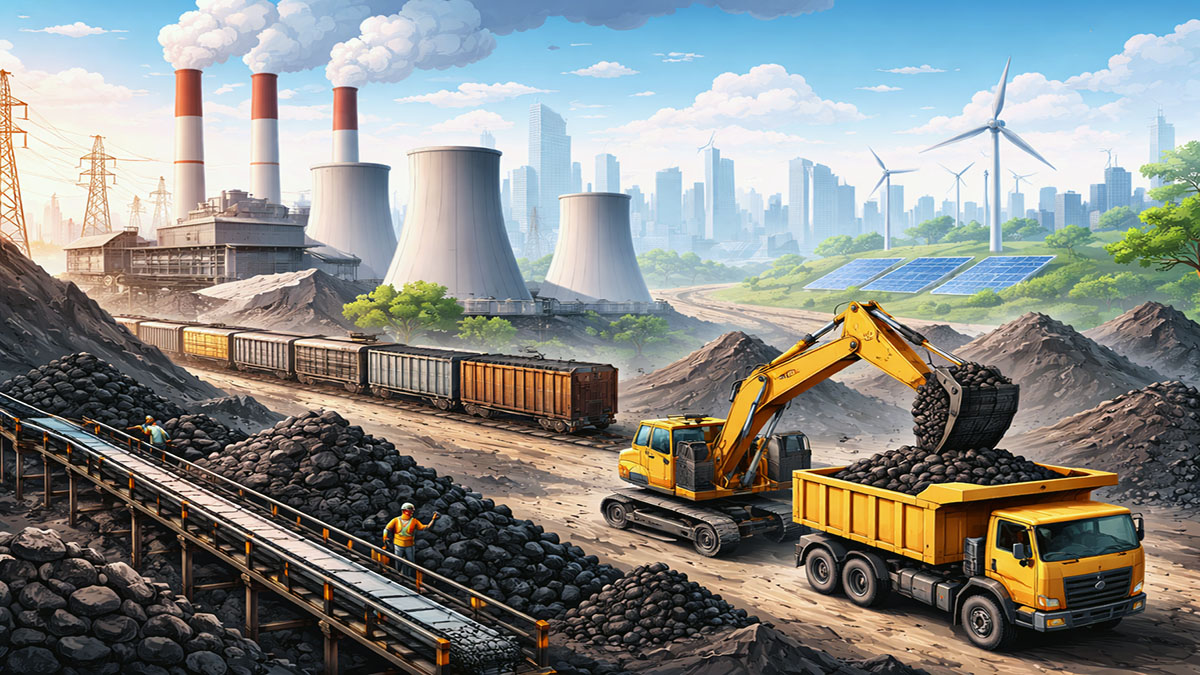
While India is assembling EVs domestically, the heart of the vehicle, the battery remains heavily dependent on imports from countries with whom India runs large trade deficits. The Survey warns that incentivizing electric mobility in the short run must be balanced against the risk of trading oil dependence for battery dependence.
To counter this, the government is banking on the PLI for Advanced Chemistry Cell (ACC) Battery Storage, which has an outlay of ₹18,100 crore. The target is to build 50 GWh of domestic battery manufacturing capacity. As of the Survey’s reporting, 40 GWh of this capacity has already been awarded, a critical step toward indigenizing the supply chain. True sovereignty in the sector, the Survey argues, will only come when India master’s battery chemistry, electric motor design, and power electronics domestically.
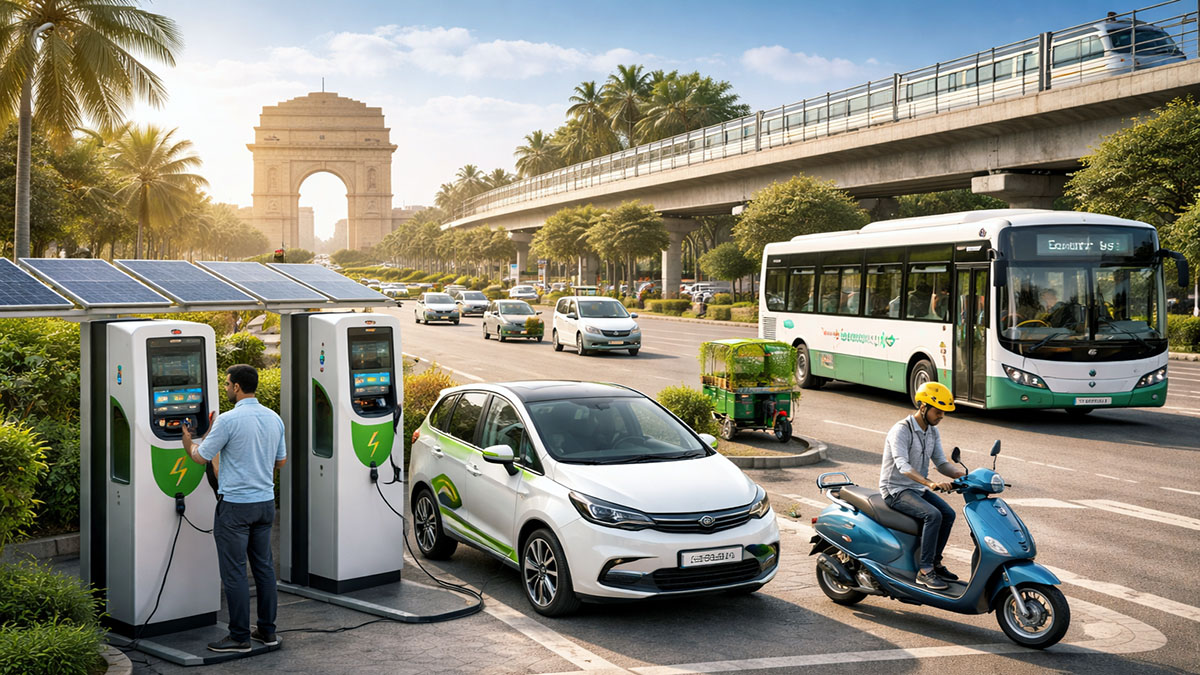
The ecosystem approach is visible in the infrastructure push. The growth in EVs is being matched by an evolving charging network. The government has released updated guidelines for charging infrastructure to ensure interoperability and accessibility.
Public transport is also getting a green makeover. The PM e-Bus Sewa scheme, fortified by a Payment Security Mechanism (PSM), is designed to deploy e-buses in cities that have historically lacked robust public transport. Allocations include 2,800 e-buses for Delhi and 1,500 for Mumbai, aiming to clean up the air in India’s most polluted urban centres.
The Economic Survey 2025-26 presents a nuanced view of the electric mobility sector. It is a story of roaring consumer demand met by aggressive industrial policy. The shift is palpable from the bustling streets of Uttar Pradesh to the boardrooms of auto giants committing billions to Indian manufacturing.
However, the ‘long game’ described in the Survey hinges on depth, not just breadth. The next phase of growth will not be defined merely by sales charts, but by how quickly India can internalize the technology stack, moving from importing cells to manufacturing them. As the country navigates this transition, the EV sector stands as a test case for India’s broader ambition: to integrate into global value chains while securing its own strategic autonomy.