
In the grand narrative of India’s infrastructure boom, few chapters are as compelling or capital-intensive as the transformation of Indian Railways. The Economic Survey 2025-26 documents a sector that has effectively broken free from decades of incrementalism. Through a strategy defined by record-breaking capital expenditure (CAPEX) and a relentless push towards 100% electrification, the national transporter is rapidly evolving from a legacy carrier into a modern, green logistics backbone.
The defining characteristic of the railway sector in FY25-26 is the sheer magnitude of financial commitment. The Survey highlights a ‘sustained upward trajectory’ in public capital expenditure, with railways emerging as a primary beneficiary alongside roads and highways.
Historically, railway investments were often constrained, leading to network congestion and capacity bottlenecks. However, the data reveals a structural break from the past. The Survey notes that capital outlay has been maintained at historically high levels in FY26 (Budget Estimates) to accelerate capacity creation. This is not just spending for maintenance; it is spending for expansion. The capital expenditure is strategically directed towards new lines, doubling and multi-tracking, rolling stock augmentation, signalling, and safety-related works.
The impact of this financial muscle is visible in execution speeds. The Survey points out that sustained investments have enabled faster network expansion, with commissioning rates more than doubling in the post-2014 period compared to the previous decade. This acceleration is crucial for an economy growing at India’s pace, where logistics efficiency is directly correlated with industrial competitiveness.
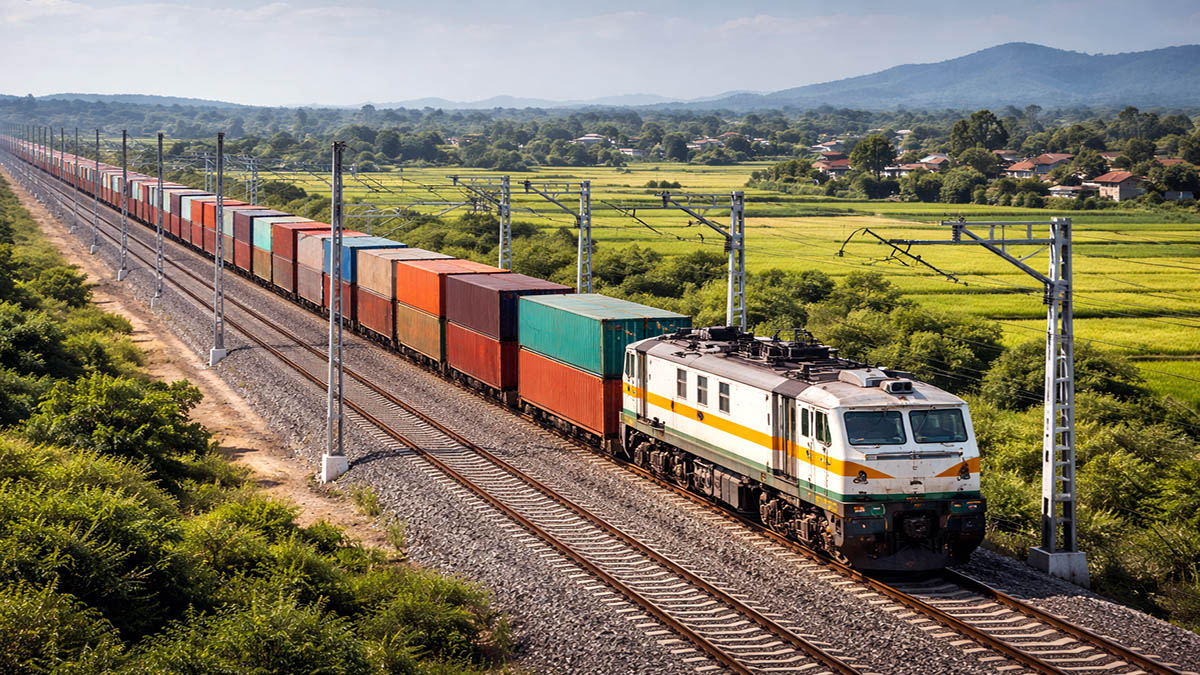
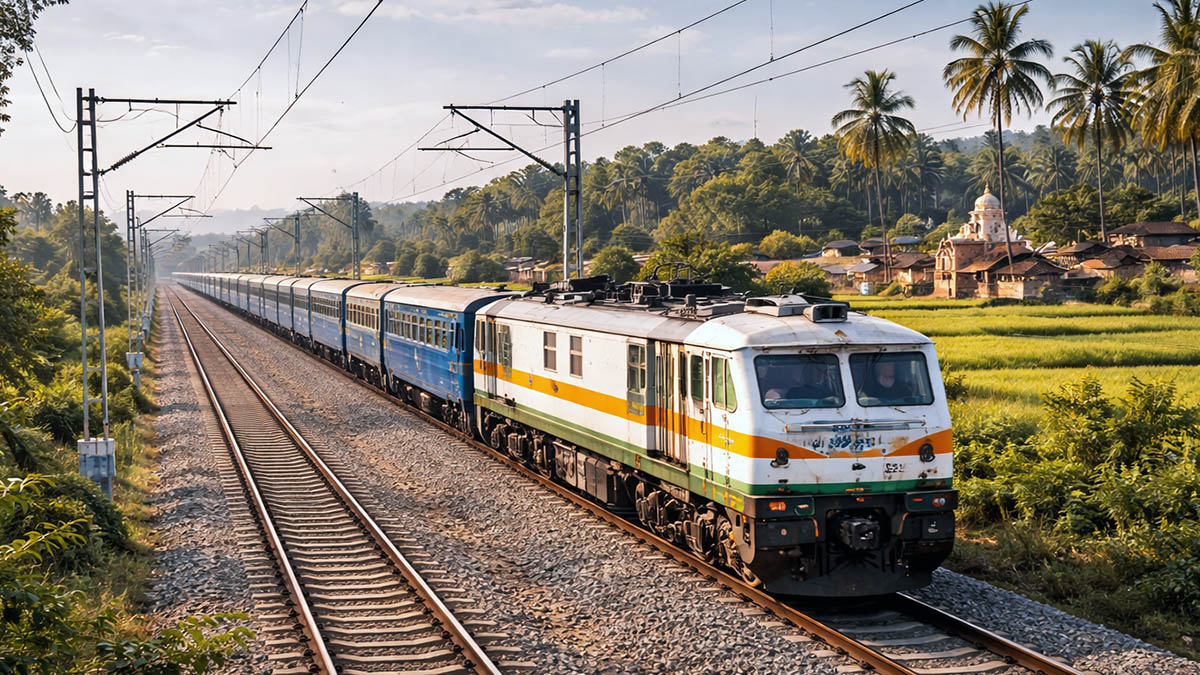
Perhaps the most striking achievement recorded in the Survey is the near-total decarbonization of rail traction. As of October 2025, railway electrification has reached 99.1% of the network.
This statistic is significant for three reasons. First, it represents a massive leap in energy security, drastically reducing the railways’ dependence on imported diesel. Second, it alters the operating economics of the railways, as electric traction is significantly more cost-efficient than diesel. Third, it aligns the massive logistics operations of the railways with India’s broader net-zero climate commitments.
The push for electrification is complemented by a broader modernization of the network assets. As of March 2025, the total rail network has expanded to 69,439 Route Kilometres (Rkm), with a further target to add 3,500 km in FY26. This simultaneous expansion of the physical network and the electrification of existing tracks create a multiplier effect on the system’s overall throughput capacity.
While passenger convenience often grabs headlines, the economic vitality of the railways lies in freight. The Survey positions Indian Railways as the ‘backbone of India’s freight and energy logistics’, critical for the movement of coal, raw materials for steel plants, and foodgrains.
The performance numbers are robust. In FY25, freight loading exceeded 1.6 billion tonnes, a figure that is 12.5% higher than the average of the FY21-FY24 period. This momentum has carried into the current fiscal year; during the April-December period of FY26, freight loading grew by 3.3% to reach approximately 1,215 million tonnes.
A critical enabler of this freight performance is the operationalization of the Dedicated Freight Corridors (DFCs). These high-speed, high-capacity corridors are designed to segregate freight traffic from passenger traffic, thereby decongesting the network. The Survey reports remarkable progress: as of October 2025, 2,741 km (96.4%) of the 2,843 km DFC network has been commissioned. This includes the fully completed Eastern DFC (1,337 km) and 1,404 km of the Western DFC. These corridors are already ‘significantly reducing freight transit times and contributing to lowering logistics costs’, a vital factor for the ‘Make in India’ initiative.
Beyond tracks and trains, the capex push includes a significant technological upgrade aimed at safety and efficiency. The Survey highlights the large-scale deployment of Kavach, an indigenous Automatic Train Protection (ATP) system. Alongside electronic interlocking and automatic block signalling, these technologies are enhancing the safety margins of a network that runs thousands of trains daily.
Furthermore, over 78% of railway tracks have now been upgraded to support sectional speeds of 110 kmph and above, enabling faster movement of both passengers and goods.
The modernization drive also extends to the passenger interface. Under the Amrit Bharat Station Scheme, 1,337 stations have been identified for phased redevelopment to improve capacity and multimodal integration. Additionally, the ambitious Mumbai–Ahmedabad High Speed Rail (MAHSR) project is progressing steadily, with over 55% physical progress achieved as of October 2025, including the completion of land acquisition and the awarding of most civil packages.
The Economic Survey 2025-26 paints a picture of a railway sector in the midst of a profound structural transformation. Driven by record capital expenditure, the railways are successfully overcoming historical infrastructure deficits. The near-completion of electrification and the DFCs mark the end of one phase of modernization and the beginning of another, one focused on speed, efficiency and logistical integration.
By evolving into a green, high-capacity engine of growth, Indian Railways is not just moving people and goods; it is effectively shrinking the economic distances within India, thereby enhancing the productivity of the entire nation.