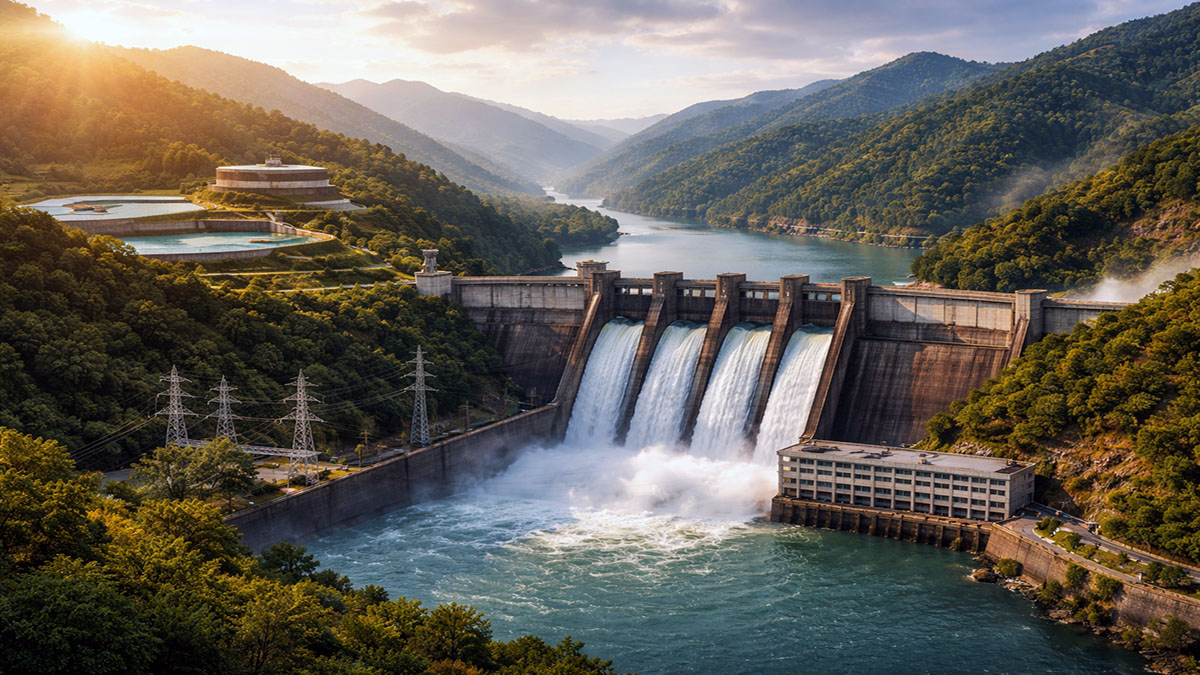

Hydropower, long treated as the quiet workhorse of India’s electricity system, is re-emerging at the centre of the country’s energy transition strategy. While solar parks and wind corridors often dominate headlines, the latest assessment of India’s power sector shows that hydroelectricity—both conventional and pumped storage is becoming indispensable to balancing growth, reliability and decarbonisation in a rapidly changing grid. The numbers alone signal its continued relevance: as of 31 December 2025, India had 51 GW of installed hydropower capacity, including pumped storage projects, forming a crucial slice of the non-fossil power base.
This capacity sits within a broader structural shift. Renewable energy now accounts for nearly half of India’s installed electricity capacity, and within that portfolio, large hydro contributes about one-fifth of total renewable capacity, with small hydro adding another 2%. In absolute terms, this places hydropower alongside wind as one of the most significant non-solar renewable pillars in the country’s mix. Unlike variable renewables, however, hydro brings dispatchability, storage potential and grid stability attributes that are becoming more valuable as intermittent sources expand.
Recent capacity additions underscore that hydro is not merely legacy infrastructure. In the first eight months of FY26 alone, 2.68 GW of hydro capacity was added, contributing to the largest-ever annual increase in non-fossil capacity. Over the full April–December 2025 period, 3.24 GW of new hydro capacity came online as part of a record 38.61 GW renewable expansion. This pace, while modest compared to solar, reflects the longer gestation and higher engineering complexity of hydro projects rather than a decline in strategic importance.
The renewed policy emphasis on hydropower is rooted in a hard lesson emerging from global energy transitions: rapid scaling of wind and solar without sufficient firm, flexible generation can strain grids and push up system costs. Indian policymakers increasingly frame hydro alongside nuclear, as a ‘long-horizon anchor’ for low-carbon development, capable of providing stable output while complementing variable renewables. This positioning marks a conceptual shift from seeing hydro simply as renewable capacity to recognising it as critical system infrastructure.
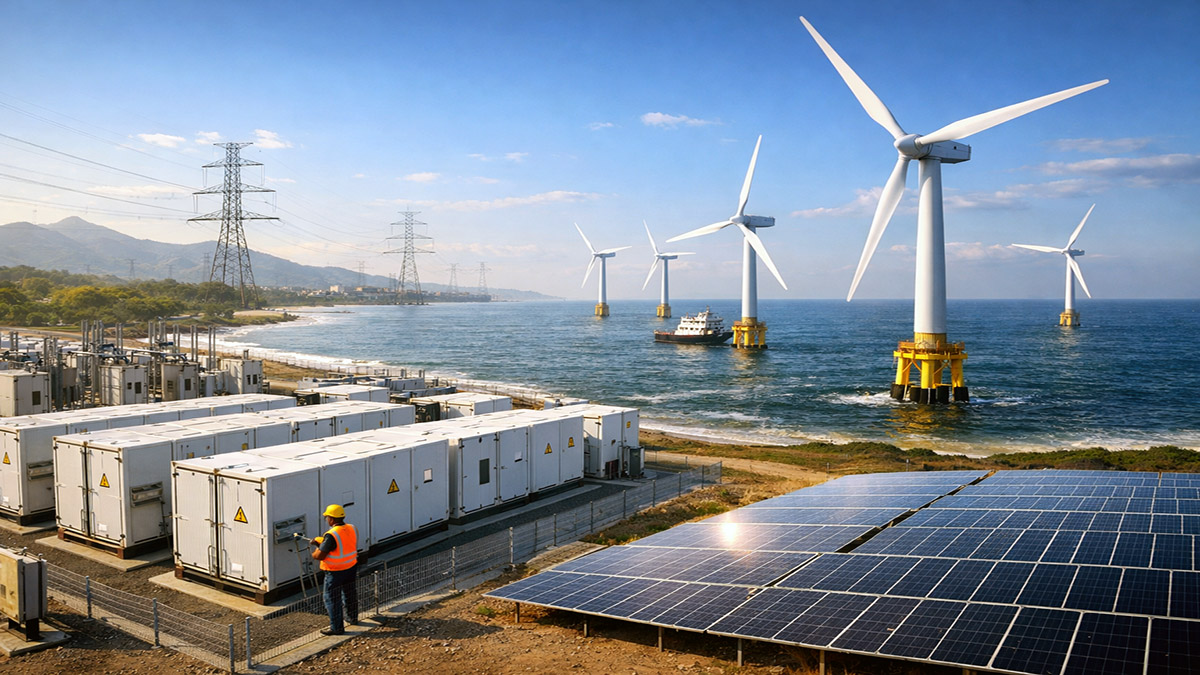
Pumped Storage Projects (PSPs) are central to this evolution. Unlike traditional hydro, PSPs act as giant batteries, storing surplus electricity during low-demand or high-renewable periods and releasing it when demand peaks. As India’s solar generation surges during daytime hours, the ability to shift energy into evening peaks becomes vital. Official outlooks now explicitly identify large-scale integration of BESS and pumped storage hydropower as essential to managing renewable variability, stabilising frequency and ensuring peak-load reliability.
Recognising this, the policy and regulatory architecture around hydro especially pumped storage has been steadily strengthened. Co-located pumped storage projects are eligible for waivers on inter-state transmission charges until June 2028, improving project viability. They can participate in ancillary services markets and high-price day-ahead segments, creating new revenue streams beyond simple energy sales. In parallel, grant-based budgetary support for enabling infrastructure in hydroelectric projects has been modified to ease upfront cost burdens, while regulatory clearances for closed-loop pumped storage have been streamlined. These changes signal a move from ad hoc project support to a system-level strategy for storage-backed hydro expansion.
Hydropower’s value also extends beyond electricity balancing. In a country where energy demand is still rising and regional disparities in supply persist, hydro plants often located in mountainous and riverine states, anchor regional development and grid resilience. They reduce dependence on imported fuels, help manage seasonal demand swings, and offer black-start capabilities in case of major grid disturbances. As climate risks intensify, large reservoirs can also play a dual role in water management, flood control and drought mitigation, embedding hydro within broader resilience planning.
Yet the path ahead is not without friction. Large hydro projects involve complex land acquisition, environmental clearances and interstate water-sharing considerations. Capital costs are high, construction timelines long, and geological risks significant. These factors partly explain why annual hydro additions lag behind solar and wind. Financing remains another challenge: while hydropower assets offer long lifespans and stable output, their upfront risk profile often deters private investors without sovereign backing or blended finance mechanisms.
There are also ecological and social trade-offs. Reservoir-based projects can alter river ecosystems, affect downstream flows and require rehabilitation of displaced communities. Balancing energy security with environmental stewardship demands more rigorous basin-level planning, cumulative impact assessments and community engagement than in earlier phases of hydro development. The emerging focus on closed-loop pumped storage, which minimises river diversion, reflects an effort to reconcile storage expansion with reduced ecological disruption.
From a macroeconomic perspective, hydro’s importance is tied to India’s broader goal of building a resilient, self-reliant energy system. As global supply chains for critical minerals tighten and battery costs remain sensitive to international markets, pumped storage offers a domestically anchored storage option using established civil engineering capabilities. This reduces exposure to imported lithium and cobalt while still delivering large-scale storage capacity.
Ultimately, hydropower’s role in India’s energy future is less about headline gigawatts and more about system architecture. Solar and wind may dominate incremental capacity, but hydro especially in its pumped storage form will shape how reliably that capacity can be used. The grid of the future will depend not just on how much clean energy is generated, but on how effectively it is stored, shifted and stabilised. In that equation, India’s rivers and reservoirs remain as strategically important as its sun and wind.
As the country navigates the next decade of energy expansion, hydropower stands at the intersection of engineering, ecology and economics. Its expansion will test India’s ability to align infrastructure development with environmental safeguards and community interests. But if managed with foresight, hydro could be the quiet force that makes a high-renewable, high-growth power system not just possible, but dependable.