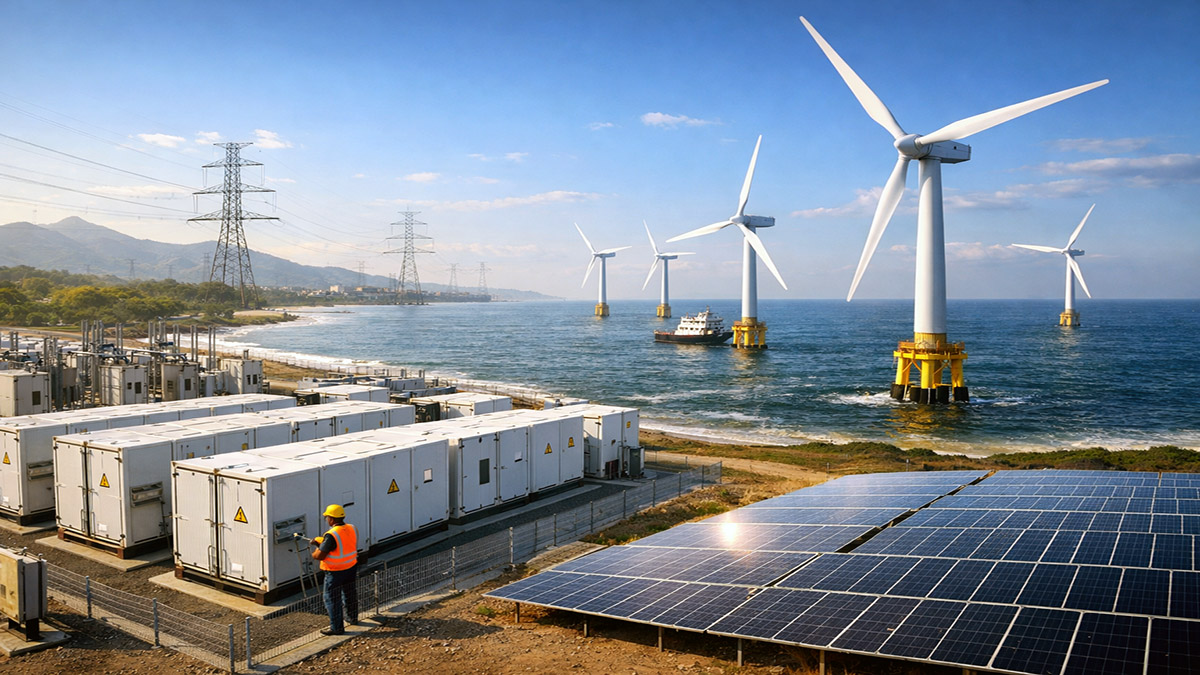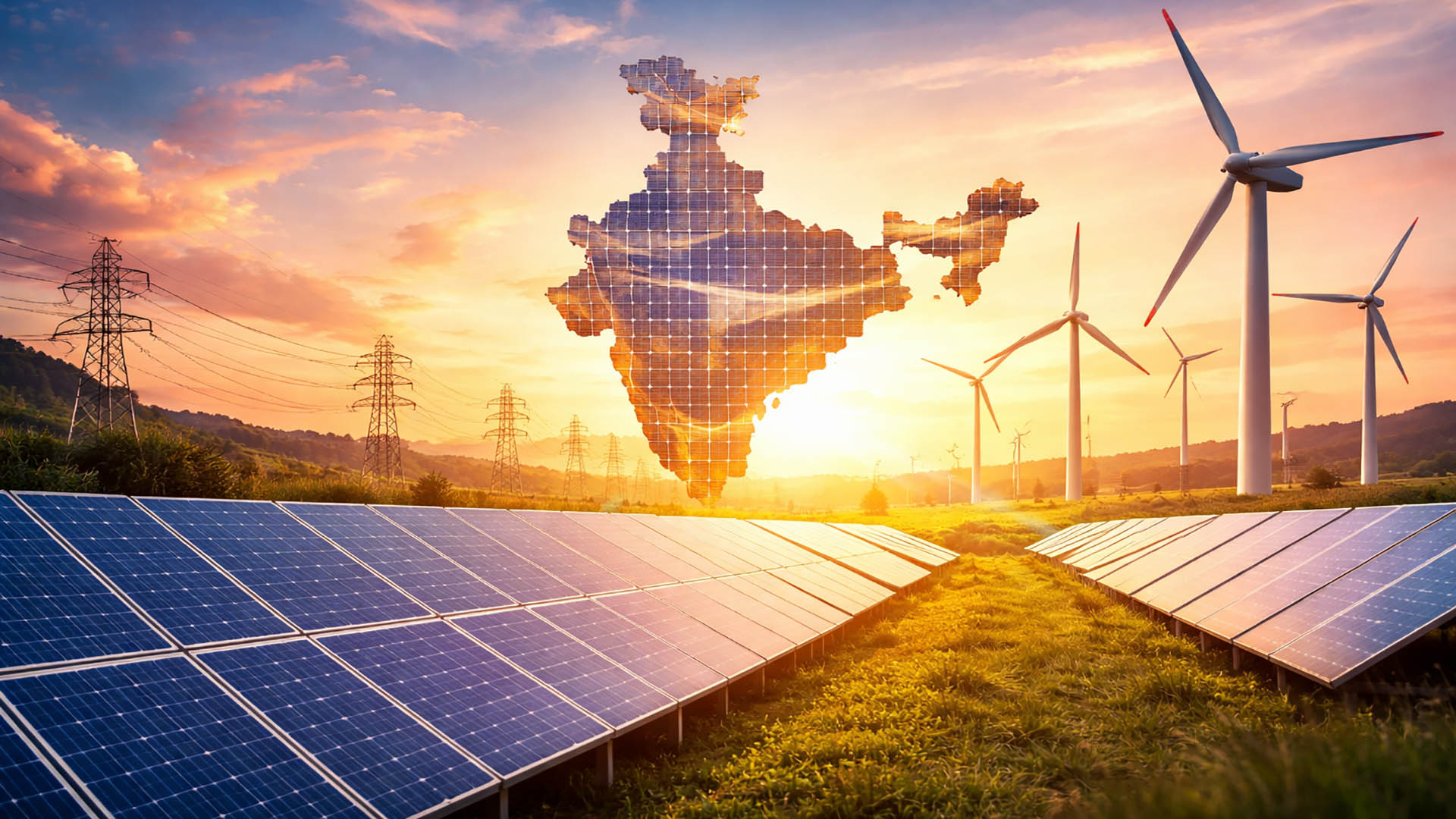

India’s energy transition has moved from aspiration to acceleration, and nowhere is that more visible than in the explosive growth of solar and wind power. The latest official data show that renewable energy is no longer a marginal contributor but a central pillar of the country’s power system. As of late 2025, renewable sources account for roughly half of India’s installed electricity capacity, with solar and wind forming the dominant share. This shift is not just environmental policy in motion; it is industrial strategy, energy security planning, and infrastructure transformation rolled into one.
Solar energy has emerged as the undisputed engine of this transformation. Installed solar capacity has surged from just 3 GW in 2014 to nearly 136 GW by December 2025, a roughly forty-five-fold increase in just over a decade. In the current financial year alone (up to December 2025), more than 30 GW of new solar capacity has been added, making it the single largest contributor to new non-fossil power installations. Solar now represents the biggest share within India’s renewable portfolio, accounting for over half of total renewable capacity. This scale of deployment places India among the world’s top solar markets, reflecting both falling technology costs and sustained policy backing.
The solar push has been broad-based rather than concentrated in a few mega projects. Large solar parks remain important, 55 parks with nearly 40 GW of sanctioned capacity have been approved, of which over 16 GW is already installed, but distributed solar is expanding rapidly too. Under the PM Surya Ghar initiative, rooftop solar installations have already reached about 8 GW, signalling a decisive shift toward decentralised generation. Meanwhile, schemes such as PM-KUSUM are linking solar energy with agriculture, with thousands of grid-connected solar pumps installed and well over a million feeder-level solarisation pumps completed. Solar, in other words, is no longer just feeding the grid; it is reshaping how farmers irrigate, how households generate power, and how local economies engage with the energy system.
Wind energy, though less headline-grabbing than solar, remains a critical pillar of India’s renewable mix. Total installed wind capacity reached about 54.5 GW by December 2025, placing India fourth globally in wind installations. During the first nine months of FY26 alone, nearly 4.7 GW of new wind capacity was added. Beyond what is already operational, another 30 GW of wind and wind-hybrid projects are under implementation, indicating a robust pipeline. Wind power also continues to be a major contributor in energy terms, generating over 83 billion units of electricity during 2024–25. While solar dominates capacity additions, wind still provides valuable diversity to the renewable fleet, often producing power at times when solar output dips.
The combined expansion of solar and wind has helped India cross a symbolic and strategic milestone: more than 50 per cent of its installed power capacity now comes from non-fossil sources. In 2025–26 (up to December), a record 38.6 GW of renewable capacity was installed, of which solar and wind together accounted for nearly 35 GW. This pace of build-out underscores how central variable renewables have become to India’s growth story. However, it also brings into sharp focus the next stage of the transition: integration. As the share of intermittent power rises, the technical and financial demands on the grid are intensifying.
Grid integration is emerging as the defining challenge of the solar-wind era. Unlike coal or gas plants, solar and wind output fluctuates with weather and time of day. The official assessment now estimates that India will require around 336 gigawatt-hours of energy storage capacity by 2029–30, rising further thereafter, to reliably absorb rising renewable output. Policy responses are already underway, including viability gap funding for battery storage, incentives for pumped storage hydropower, and advisory norms encouraging co-location of storage with solar projects. Without such balancing infrastructure, the rapid addition of variable renewables could strain system stability and push up costs elsewhere in the network.
Material intensity is another less discussed but strategically vital dimension of the solar and wind boom. Building renewable capacity at this scale demands vast quantities of metals and minerals. A single gigawatt of solar panels requires thousands of tonnes of polysilicon and aluminium and significant amounts of silver. Wind turbines, meanwhile, are heavy users of copper and rare earth materials. These supply chains are globally concentrated and increasingly geopoliticised. As India scales up solar and wind, it is also stepping into a new arena of resource security, where access to critical minerals could shape the pace and cost of the energy transition. The renewable revolution, therefore, is not dematerialised; it is deeply rooted in global commodity markets.
Policy design is gradually adapting to these structural realities. In wind energy, for instance, viability gap funding is being extended to offshore wind projects, signalling an intent to diversify beyond traditional onshore sites and tap stronger, more consistent coastal wind resources. In solar, domestic manufacturing is being supported through production-linked incentives for high-efficiency PV modules, aiming to reduce import dependence and build an integrated supply chain at home. These measures reflect a shift from pure capacity targets to a more holistic strategy that links renewable deployment with industrial development and resilience.
Yet, the data also carry a note of caution. International experience shows that rapid renewable expansion without parallel investment in grids, storage, and system flexibility can lead to congestion, curtailment, and rising system costs. Indian policy discourse increasingly acknowledges these risks. The emphasis is moving toward sequencing, ensuring that transmission networks, balancing capacity, and market mechanisms evolve alongside solar and wind growth. This more measured approach does not slow the transition; it aims to make it durable.
Taken together, the solar and wind story in India is one of scale, speed, and strategic complexity. Capacity has grown at rates few would have predicted a decade ago, fundamentally altering the country’s energy mix. But the transition is now entering a more demanding phase, where engineering constraints, mineral supply chains, and financial architecture matter as much as megawatt targets. Solar and wind have moved from the periphery to the core of India’s power system. The challenge ahead is to build the supporting ecosystem, grids, storage, manufacturing and markets that allows this clean energy surge to remain both reliable and economically sustainable.