
India has achieved a significant milestone in its energy sector with coal production crossing the 1 billion tonnes (BT) mark in the financial year 2024-25. This accomplishment marks a key step towards the country’s energy self-reliance and aligns with the government’s target of achieving 1 BT of coal production from Coal India Limited (CIL) alone by 2026-27.
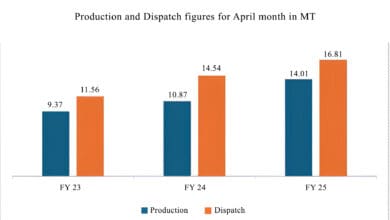
In 2024-25, the provisional coal production by CIL stood at 781.07 million tonnes (MT), reflecting a modest growth of 0.94% over the previous year’s 773.81 MT. The all-India coal production during this period reached 1047.67 MT, registering a year-on-year growth of 4.99% compared to 997.83 MT in 2023-24. The government’s production roadmap indicates that CIL is expected to produce 875 MT in 2025-26, with a steady rise to 1004 MT in 2026-27 and further to 1131 MT by 2029-30. Overall, domestic coal output is projected to grow at an annual rate of 6–7% to meet the country’s increasing demand, potentially touching 1.5 billion tonnes by 2029-30.
India continues to rely predominantly on indigenous coal production, with imports restricted mainly to essential types such as coking coal and higher-grade non-coking coal, due to limited domestic reserves. To reduce dependence on imported coal and to meet future demand through domestic sources, the government has launched a range of strategic initiatives and reforms. These include the amendment of the Mines and Minerals (Development and Regulation) Act, 1957, which now allows captive mines to sell up to 50% of their production after meeting the needs of their end-use plants. The use of the Mine Developer and Operator (MDO) model, increased adoption of mass production technologies, auctioning of coal blocks to private players and PSUs for commercial mining, and approval of 100% Foreign Direct Investment (FDI) in commercial coal mining are also part of this effort.
One of the major government strategies to substitute coal imports involves increasing the Annual Contracted Quantity (ACQ) to 100% of the normative requirement for power plants. Earlier, non-coastal plants had an ACQ capped at 90% and coastal ones at 70%. The increase in ACQ is expected to boost domestic supplies significantly. Further, in 2020, the tenure of coking coal linkages under the Non-Regulated Sector (NRS) linkage auction was extended up to 30 years, thereby enhancing long-term security for industrial users and contributing to import substitution.
The government has also mandated that coal companies must fulfill the full Power Purchase Agreement (PPA) requirements of all linkage holders in the power sector, regardless of the trigger levels and ACQ limits. This is expected to significantly reduce reliance on coal imports. An Inter-Ministerial Committee (IMC) constituted in 2020 continues to oversee coal import substitution efforts. A new Import Data System has been developed to monitor coal imports, which are now subject to compulsory registration under the Coal Import Monitoring System (CIMS) since December 2020. The overall goal is to ensure that all substitutable coal imports are eventually eliminated.
Additional steps to curb coking coal imports include the launch of a dedicated Coking Coal Mission, introduction of a new sub-sector in March 2024 for steel plants using coking coal via the WDO route, and efforts to boost domestic production of washed coking coal. Moreover, Imported Coal-Based (ICB) power plants and existing Fuel Supply Agreement (FSA) holders have been allowed to access additional coal under the Revised SHAKTI Policy, 2025. This enables power producers to meet their full coal requirement domestically.
To further enhance coal production, the Ministry of Coal has instituted regular reviews and support mechanisms to fast-track coal block development. A Project Management Unit (PMU) has been set up to assist block allottees in securing necessary clearances. The commercial mining auction process, introduced in 2020, has been made more attractive by offering incentives such as 50% rebate for early production and coal gasification, liberal participation terms, reduced upfront amounts, and transparent bidding mechanisms. This policy, coupled with 100% FDI through the automatic route, aims to bring in more private and foreign investment.
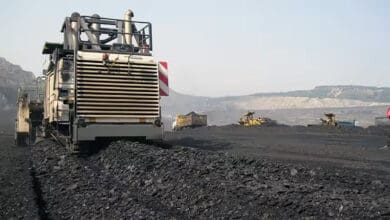
Coal India Limited is aggressively adopting advanced technologies in both underground and opencast mines to boost productivity. The company is utilising Continuous Miners and exploring the potential of Highwall mining in abandoned sites. Plans for large-capacity underground mines are also underway. Its opencast operations already deploy state-of-the-art machinery including high-capacity excavators, dumpers, and surface miners.
Singareni Collieries Company Limited (SCCL) is simultaneously working on expediting new project developments and upgrading infrastructure for coal evacuation, including the installation of coal handling plants, crushers, and weigh bins.
With this multi-pronged approach involving policy reforms, technological upgrades, and strategic planning, the Government of India aims to meet the nation’s growing coal demand through indigenous resources while phasing out non-essential imports.