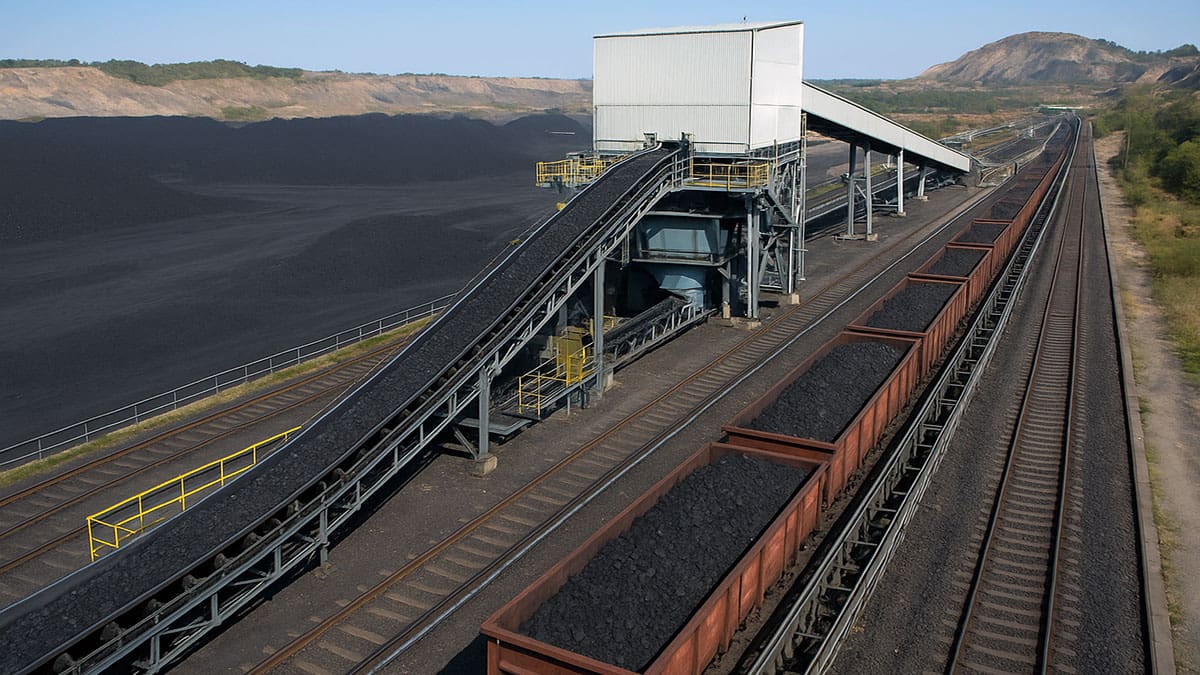

The Ministry of Coal is advancing an ambitious plan to modernise coal evacuation through the implementation of First Mile Connectivity (FMC) projects, which are set to transform the way coal is transported across the country. These projects aim to replace traditional road-based coal movement with state-of-the-art mechanised systems such as conveyor belts, rapid loading systems, integrated silos, and coal handling plants. By doing so, they promise to make coal logistics faster, more efficient, and significantly more sustainable.
One of the most striking advantages of FMC projects lies in their environmental benefits. By eliminating the need for diesel-based truck transport from mines, they drastically cut air pollution and greenhouse gas emissions. The enclosed and dust controlled systems further improve environmental performance by reducing particulate emissions. Alongside ecological gains, the mechanised systems enable faster, high-capacity loading and coal evacuation, helping reduce bottlenecks and improving turnaround times at loading points.
The projects are also expected to deliver notable economic advantages. With reduced manual handling and direct conveyance to rail sidings, FMC helps preserve coal quality, prevents losses during transit, and lowers operational and transportation costs. This mechanised approach also improves safety in mining regions by reducing road traffic, thereby lowering accident risks and enhancing working conditions for workers. End users such as power plants and industries are set to benefit as well, receiving cleaner, more consistent coal with improved combustion efficiency.
The government has outlined a plan to commission 102 FMC projects with a combined capacity of 1,092 million tonnes per annum (MTPA) by 2030. Currently, 44 projects with a total capacity of 429.5 MTPA are operational. Between FY 2025–26 and FY 2029–30, another 58 projects with a cumulative capacity of 662 MTPA are scheduled for completion. This includes 11 projects with 88 MTPA capacity by FY 2025–26, 12 projects with 102 MTPA in FY 2026–27, 15 projects with 201 MTPA in FY 2027–28, 18 projects with 229 MTPA in FY 2028–29, and two projects with 42 MTPA in FY 2029–30.
Once completed, nearly 90 percent of coal produced by three major public sector undertakings Coal India Limited (CIL), NLC India Limited (NLCIL), and Singareni Collieries Company Limited (SCCL) will be dispatched through FMC systems. By FY 2029–30, CIL is projected to dispatch 994 MTPA of coal via FMC out of its 1,042.8 MTPA production, accounting for 95.3%. NLCIL will transport 63.5 MTPA through FMC against its 75.5 MTPA output, representing 84.1%. SCCL, meanwhile, will dispatch 34.5 MTPA via FMC out of its 90 MTPA production, amounting to 38.3%. Altogether, 1,092 MTPA of coal is expected to be evacuated through FMC by the end of the decade, covering 90.5% of the projected coal output from the three PSUs.
The total investment earmarked for these projects stands at ₹31,367.66 crore. This capital expenditure will fund the construction of conveyor networks, integrated silos, rapid loading systems, railway sidings, and advanced coal handling plants, all designed to create seamless and sustainable mechanised coal evacuation infrastructure.
With their ability to reduce environmental impact, preserve coal quality, and enhance logistical efficiency, First Mile Connectivity projects represent a critical step in ensuring that India’s coal sector remains reliable and future-ready, while aligning with broader sustainability goals.